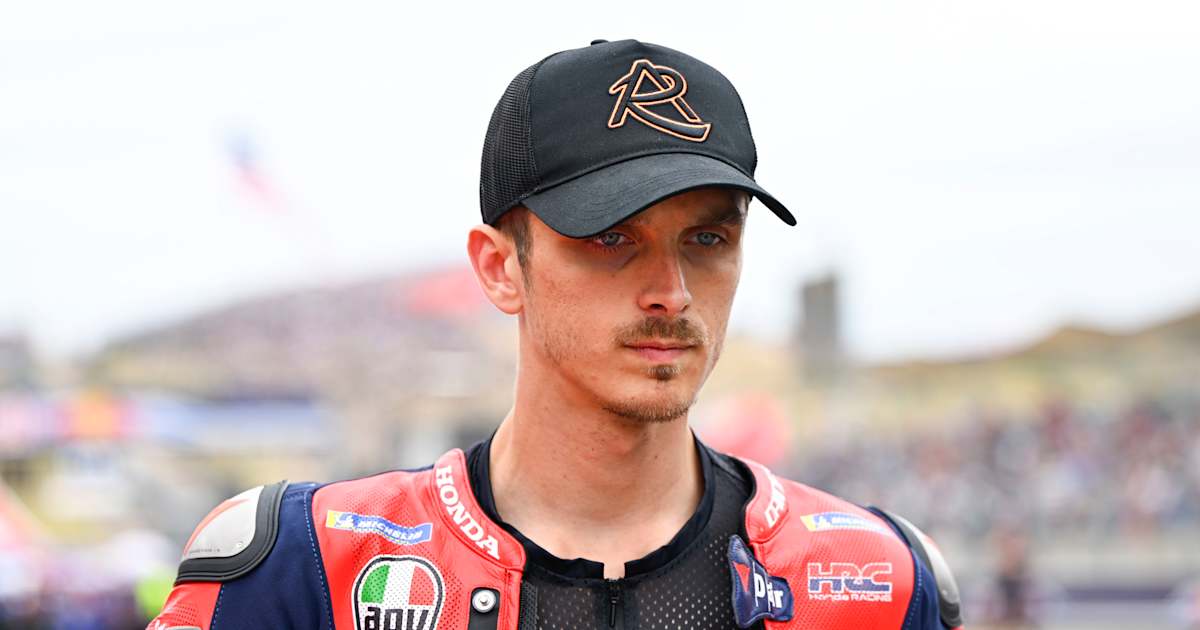
Luca Marini’s recent performance at the Circuit of the Americas in Austin has drawn attention as one of his stronger showings during the 2026 MotoGP season, though his broader outlook remains uncertain amid Honda’s ongoing struggles to regain competitiveness. The Italian rider finished ninth in the Grand Prix race after securing fifth place in the Sprint event, marking his best result with the factory Honda HRC team in recent rounds. This outcome came after a penalty promoted him from sixth in the Sprint, highlighting both his ability to capitalize on opportunities and the fine margins that define modern Grand Prix racing.
Despite this positive result, Marini has expressed frustration over the lack of progress across the manufacturer’s lineup, stating that every other constructor has made advancements while Honda has stagnated. His comments reflect growing concern within the HRC camp about their ability to close the gap to rivals such as Ducati, Aprilia, and KTM, all of whom have introduced meaningful upgrades during the off-season. The sentiment echoes broader anxieties about Honda’s long-term commitment to MotoGP, particularly as several riders face contract uncertainty heading into 2027.
Marini’s situation is further complicated by his status as one of multiple Honda-affiliated riders set to become free agents at the end of the 2026 season. While he was retained by Honda for the 2025 campaign after securing the manufacturer’s C-rank in the concession system, no official confirmation has been made regarding a 2027 contract offer. Reports indicate that Honda has not yet extended deals to several out-of-contract riders, raising questions about their planning for the next regulatory cycle.
The Austin weekend itself provided a mixed picture for Honda’s efforts. Although Marini showed consistency by converting a ninth-place grid position into a top-ten finish in both the Sprint and main race, his teammate Joan Mir experienced a dramatic turn of fortune. After qualifying fifth and briefly challenging for a podium in the Sprint, Mir lost front-wheel traction at Turn One on the final lap, crashing out of contention. The incident underscored the persistent challenges Honda riders face with bike stability under braking, a known weakness of the RC213V package.
Marini’s Sprint performance was notable for its tactical execution. Starting from ninth, he made a clean getaway and gradually worked his way into the leading group, chasing down Enea Bastianini and Alex Márquez before settling into sixth place at the checkered flag. A post-race penalty applied to another rider promoted him to fifth, marking his second-best Sprint result with the factory team. This result contrasted sharply with earlier rounds in Thailand and Brazil, where both Marini and Mir struggled to score points due to mechanical issues and crashes.
On the Grand Prix Sunday, Marini’s race was affected by a penalty incurred during qualifying. A sanction for slow riding on the racing line in Q2 demoted him from ninth to eleventh on the grid, complicating his race strategy. Despite this setback, he managed to recover to ninth place by the finish, demonstrating resilience in difficult circumstances. His ability to gain positions despite starting further back highlighted his racecraft, even as the underlying performance deficit of the Honda machine remained evident.
These results contribute to a season-long narrative of inconsistency for Honda’s factory squad. While Marini has managed to score points in most races he has finished, the team as a whole continues to lag behind the pace set by the leading manufacturers. Johann Zarco, the other full-time Honda HRC rider, currently sits just ahead of Marini in the championship standings with 13 points, illustrating the narrow battle for positions outside the top ten.
The manufacturer’s struggles are not limited to rider performance but extend to broader technical and strategic challenges. Honda has acknowledged difficulties in adapting to the current generation of Michelin tires and the increased emphasis on aerodynamic efficiency across the grid. Unlike their rivals, who have pursued aggressive fairing and winglet developments, Honda has taken a more conservative approach, prioritizing mechanical grip over downforce—a strategy that has yet to yield competitive results on varied circuits.
Looking ahead, the immediate focus for Marini and Honda shifts to the upcoming Spanish Grand Prix at Jerez, scheduled for late April following a three-week break. The Andalusian circuit has historically posed difficulties for the Japanese manufacturer, particularly due to its combination of high-speed sectors and demanding corner entry requirements. A strong showing at Jerez could provide crucial momentum heading into the European leg of the calendar, while another disappointing result may intensify scrutiny on Honda’s development path.
For now, Marini remains committed to extracting the maximum from his current package, emphasizing the importance of consistency and data collection during races. His public statements reflect a rider who is frustrated but not disillusioned, urging his team to recognize that progress elsewhere in the paddock demands a corresponding response from HRC. Whether Honda can deliver such a response in time to secure Marini’s future—and that of their broader MotoGP program—remains one of the season’s most pressing unresolved questions.
Related reading