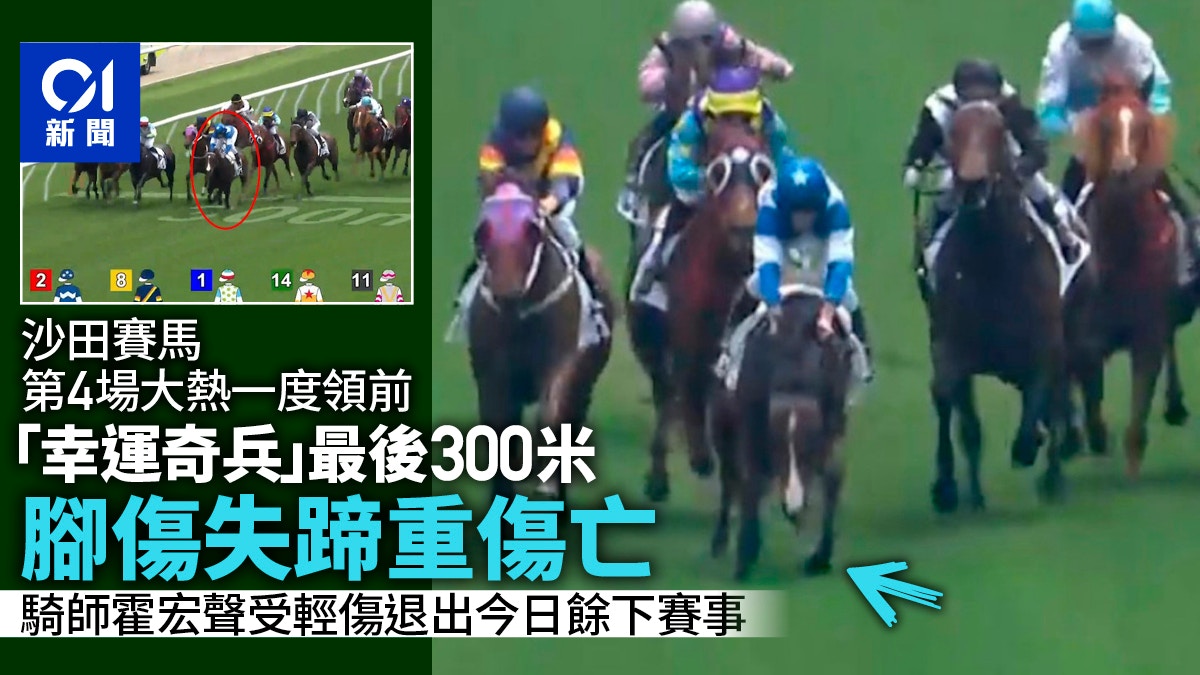
A tragic accident at the Sha Tin racecourse on Monday, April 6, 2026, resulted in the death of a favorite horse and the injury of its rider, casting a somber shadow over the day’s racing events.
The horse, known as “Lucky Soldier” (幸運奇兵), suffered a catastrophic leg injury during the fourth race of the day, a 1,400-meter event. Despite immediate intervention by veterinary staff, the animal could not be saved and was humanely euthanized following an assessment that the injuries were too severe for treatment via myTV Super.
The incident also affected jockey Carson Wong (霍宏聲), who sustained minor injuries during the fall. After undergoing medical examinations, Wong was deemed unfit to continue his riding engagements for the remainder of the day’s schedule via RacingGPS.
Chronology of the Race Incident
The tragedy unfolded during the fourth race, where “Lucky Soldier” entered as a strong favorite. The event began with tension at the starting gates when the horse in stall 7, “Mechanical Star” (機械之星), drifted outward, causing a collision with “Lucky Soldier,” who was positioned in stall 8.
Despite the initial clash, “Lucky Soldier” maintained a prominent position throughout the race and was leading the pack as the horses entered the final straight. However, with approximately 300 meters remaining in the race, the horse suddenly suffered a breakdown. Witnesses and patrol footage indicate the horse’s front leg buckled, appearing as though it had knelt on the turf.
Whereas the horse briefly attempted to stand, it was clearly unstable and gradually came to a halt. Other horses in the field were able to avoid “Lucky Soldier,” preventing a larger pile-up or more extensive casualties among the other competitors.
Immediate Response and Veterinary Assessment
Upon the horse coming to a stop, Carson Wong immediately dismounted. Hong Kong Jockey Club (HKJC) staff arrived quickly on the scene to remove the saddle and related equipment. Reports indicate the horse struggled during this process as staff worked to stabilize it.
The HKJC confirmed that veterinary surgeons provided immediate on-site treatment for the leg injury. However, a subsequent detailed evaluation confirmed that the horse had suffered a severe injury to its left front leg. Due to the extent of the trauma, the club determined that the horse was beyond recovery and proceeded with humane euthanasia via myTV Super.
Impact on Personnel and Stakeholders
The loss of “Lucky Soldier” has deeply affected the racing community. The Hong Kong Jockey Club stated that they have contacted the owner of the horse and extended their condolences to the individuals who had been dedicated to the care of the animal.

For jockey Carson Wong, the physical and emotional toll of the accident led to his immediate withdrawal from the day’s remaining races. While his injuries were classified as minor, the medical team’s assessment ensured that he would not risk further injury or compete while compromised.
Understanding Humane Euthanasia in Racing
In professional horse racing, humane euthanasia is a difficult but necessary protocol used when a horse suffers a “catastrophic” injury—typically involving multiple fractures or joint dislocations in the leg—that makes recovery impossible or would result in prolonged suffering. In this instance, the HKJC’s racing event report specifically cited the injury to the left front leg as the reason for the action.
Summary of the Event
| Detail | Information |
|---|---|
| Horse Name | Lucky Soldier (幸運奇兵) |
| Race Number | Race 4 |
| Distance | 1,400 Meters |
| Jockey | Carson Wong (霍宏聲) |
| Injury Site | Left front leg |
| Outcome | Humanely euthanized; Jockey withdrew from remaining races |
The Hong Kong Jockey Club has not announced further investigations into the track conditions or the collision at the start, but the event report remains the primary record of the incident.
We invite our readers to share their thoughts on equine safety and the challenges facing professional jockeys in the comments section below.
Keep reading