
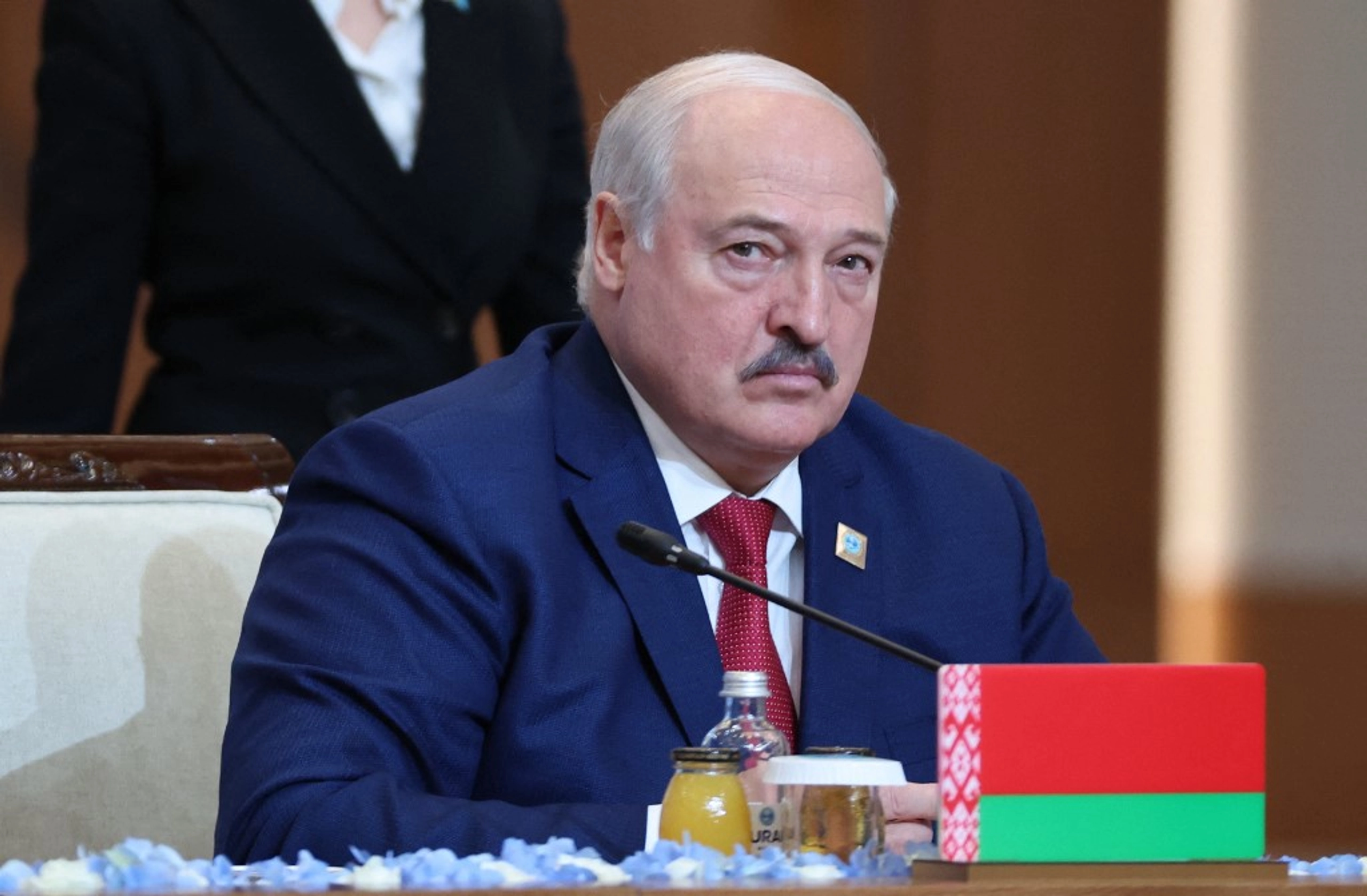
Belarusian President Alexander Lukashenko has stated that Ukraine faces no military threat from his country, dismissing concerns over potential cross-border incursions. During recent public remarks, Lukashenko emphasized that Belarus remains vulnerable to Ukrainian surveillance and military observation, asserting that any aggressive action from Minsk would be counterproductive to regional stability. His comments follow a series of shifting diplomatic signals regarding the ongoing conflict between Russia and Ukraine.
The Belarusian leader, who has maintained a close political and military alliance with Moscow since the invasion of Ukraine began in February 2022, characterized the current border situation as one where Ukrainian forces have clear visibility into Belarusian territory. According to reports from the international news agency Reuters, Lukashenko described the Belarusian military posture as defensive, explicitly stating that Ukraine has “absolutely nothing” to fear from his nation. This stance marks a notable rhetorical shift in how Minsk addresses its role in the broader regional security architecture.
Diplomatic Rhetoric and Regional Tensions
Lukashenko’s recent comments included a pointed request for neighboring leadership to avoid provocation, while simultaneously offering what some observers have characterized as a diplomatic overture toward Ukrainian President Volodymyr Zelenskyy. The Belarusian president suggested that current military tensions are not in the interest of either nation. These remarks were delivered amid ongoing international monitoring of the border region, where both sides have maintained significant troop presence since the start of the full-scale war.
Analysts have noted that Lukashenko frequently balances his support for the Kremlin with attempts to maintain a degree of domestic autonomy. By publicly framing Belarus as a non-aggressor, the government in Minsk aims to avoid further international sanctions or direct involvement in the combat operations that have devastated parts of eastern and southern Ukraine. However, the United Nations and various human rights organizations have previously documented the use of Belarusian territory as a staging ground for Russian forces, a fact that continues to complicate the diplomatic landscape between Kyiv and Minsk.
The Question of Military Escalation
When addressing the possibility of direct Belarusian participation in the war, Lukashenko maintained that there is no military solution to the current conflict. He argued that the path to peace lies through negotiation rather than battlefield expansion. This perspective contrasts with the official positions of the Ukrainian government, which has consistently stated that security guarantees and the withdrawal of foreign forces are prerequisites for any lasting settlement. The Ukrainian President’s office continues to emphasize that sovereignty and territorial integrity remain the primary objectives of their defense strategy.
Lukashenko’s rhetoric also touched upon the internal dynamics of the Russian leadership, suggesting that the complexity of the conflict was compounded by misinformation provided to the Kremlin. Such claims have been met with skepticism by Western intelligence agencies, which view Minsk as a subordinate partner in the Russian military effort. Despite the lack of direct Belarusian combat forces in Ukraine, the North Atlantic Treaty Organization (NATO) maintains a heightened state of alert along the borders of Poland, Lithuania, and Latvia—all of which share frontiers with Belarus—due to the deployment of tactical nuclear weapons and joint military exercises conducted by Russian and Belarusian forces.
What Happens Next at the Border
The immediate future of the Belarus-Ukraine border remains defined by defensive posturing rather than active offensive maneuvers. Both nations have reinforced their border guards and surveillance systems, utilizing drone technology to monitor movements on either side of the divide. The State Border Guard Service of Ukraine has reported consistent, albeit static, pressure along the northern frontier, noting that while the threat of a ground invasion from the north has fluctuated, the border remains a site of high-stakes military observation.
For the international community, the focus remains on whether these rhetorical shifts signify a genuine change in policy or a strategic attempt by Minsk to mitigate Western pressure. Observers are closely watching for any changes in the frequency of joint Russian-Belarusian military drills, which are often used as a barometer for regional escalation. Official updates regarding border security and diplomatic communications are expected to continue through the respective ministries of foreign affairs. Readers interested in the latest developments are encouraged to monitor verified government portals for updates on regional security and diplomatic status.
Worth a look