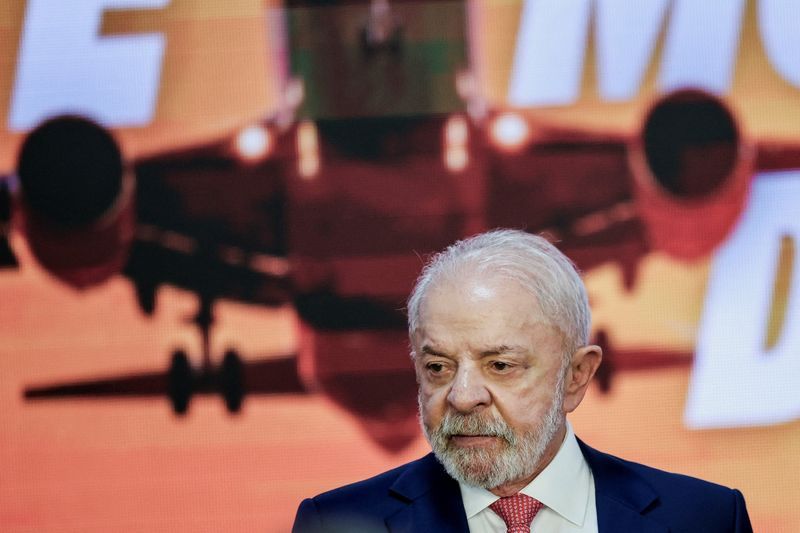
São Paulo, Brazil – As Brazil approaches its October presidential election, a new poll released Wednesday indicates a tightening race between incumbent President Luiz Inácio Lula da Silva and Senator Flávio Bolsonaro. The AtlasIntel/Bloomberg survey reveals that Lula da Silva maintains a lead in initial first-round scenarios, but his advantage over Bolsonaro has significantly diminished in potential head-to-head runoff simulations. This shift in momentum raises questions about the direction of the election and the potential for a closely contested outcome.
The poll, conducted between February 19 and 24, surveyed 4,986 Brazilian voters across all regions of the country, with a margin of error of ±1 percentage point and a 95% confidence level. The research is officially registered with the Justice Electoral under number BR-07600/2026. Veja reports the findings highlight a consolidation of support for the Bolsonaro political faction, even before formal candidacies are announced.
First Round Preferences Show Shifting Dynamics
In the first round of voting, Lula da Silva currently holds 45% of voter intentions, a decrease from 48.8% in January, according to Infomoney. Meanwhile, Flávio Bolsonaro has seen his support rise from 35% in January to 37.9% in the latest poll. This narrowing gap, which has shrunk from 13.8 percentage points to 7.1 percentage points, suggests a growing competitiveness in the early stages of the election cycle. Other potential candidates, such as governors Ronaldo Caiado (Goiás) with 4.9%, Ratinho Júnior (Paraná) with 3.8% and Eduardo Leite (Rio Grande do Sul) with 1.6%, are currently polling lower, indicating that the primary contest remains focused on Lula and Bolsonaro.
The AtlasIntel poll as well tested scenarios including other governors as potential presidential candidates. Governor Romeu Zema (Minas Gerais, Novo) received between 3.9% and 5.7% of the vote in these simulations. These figures suggest that while other candidates may draw some support, they are not currently positioned to significantly disrupt the Lula-Bolsonaro dynamic.
Runoff Scenario Reveals Statistical Tie
The most striking finding of the AtlasIntel/Bloomberg poll is the virtual tie in the potential second-round runoff between Lula da Silva and Flávio Bolsonaro. The poll shows Bolsonaro with 46.3% of voter intentions, narrowly edging out Lula da Silva at 46.2%. This represents a significant shift from January, when Lula held a 49.2% to 44.9% advantage over Bolsonaro in a hypothetical runoff. The current result falls within the poll’s margin of error, indicating a statistical dead heat.
This reversal represents a 3-point drop in support for Lula and a 1.4-point increase for Bolsonaro since the January survey. Cumulatively, the 4.3-point advantage Lula held at the beginning of the year has evaporated, creating a scenario of equilibrium. Analysts suggest this shift indicates a consolidation of the “Bolsonarista” electorate around Flávio Bolsonaro, potentially transferring political capital from his father, former President Jair Bolsonaro, despite the former president’s current ineligibility to run for office.
Implications for the Election and Brazilian Politics
The tightening race has significant implications for the upcoming election and the broader political landscape in Brazil. The poll suggests that Lula da Silva, despite his initial lead, faces a formidable challenge from Flávio Bolsonaro. The narrowing gap in both the first and second-round scenarios points to a highly polarized electorate and a potentially unpredictable outcome.
The decline in Lula’s numbers could be attributed to several factors, including economic concerns and potential voter fatigue. While the current administration has implemented policies aimed at addressing social inequality and stimulating economic growth, challenges remain, and public perception may be shifting. The rise of Flávio Bolsonaro, meanwhile, reflects the enduring appeal of the conservative agenda and the continued influence of the Bolsonaro political base.
The poll also reinforces the persistent polarization within Brazilian society. Despite the presence of other candidates, the contest remains largely centered around the two dominant political camps. This polarization could make it difficult for any candidate to build a broad coalition of support and could lead to a deeply divisive election.
Understanding the AtlasIntel Methodology
AtlasIntel is a Brazilian political consulting and data analysis firm. Their polling methodology, as described in reports by Exame, involves surveying a representative sample of Brazilian voters using a combination of online and telephone interviews. The firm emphasizes its commitment to rigorous data collection and analysis, aiming to provide accurate and insightful assessments of the political landscape.
The Bolsonaro Factor and Future Scenarios
Despite being ineligible to run due to previous convictions, former President Jair Bolsonaro remains a significant figure in Brazilian politics. His endorsement of Flávio Bolsonaro as a potential candidate has undoubtedly played a role in the senator’s rising popularity. The transfer of political capital from father to son appears to be a key dynamic in the current election cycle.
Looking ahead, several scenarios could unfold. If Lula da Silva fails to regain momentum, Flávio Bolsonaro could emerge as a serious contender for the presidency. Alternatively, if another candidate gains traction, the election could become more unpredictable. The outcome will likely depend on a variety of factors, including economic conditions, political events, and the ability of each candidate to mobilize their base and appeal to undecided voters.
The next key date to watch is the formal announcement of candidacies, which is expected in the coming months. This will provide a clearer picture of the field of contenders and allow for a more focused assessment of their strengths and weaknesses. Further polling data will also be crucial in tracking the evolving dynamics of the election.
As Brazil prepares for a pivotal election, the latest poll from AtlasIntel/Bloomberg serves as a stark reminder of the challenges facing the country and the potential for a closely contested outcome. The race between Lula da Silva and Flávio Bolsonaro is poised to be one of the most closely watched political contests in the Americas, with implications that extend far beyond Brazil’s borders.
Stay informed: Follow World Today Journal for ongoing coverage of the Brazilian presidential election and its implications for global affairs. Share your thoughts and analysis in the comments below.
Related reading