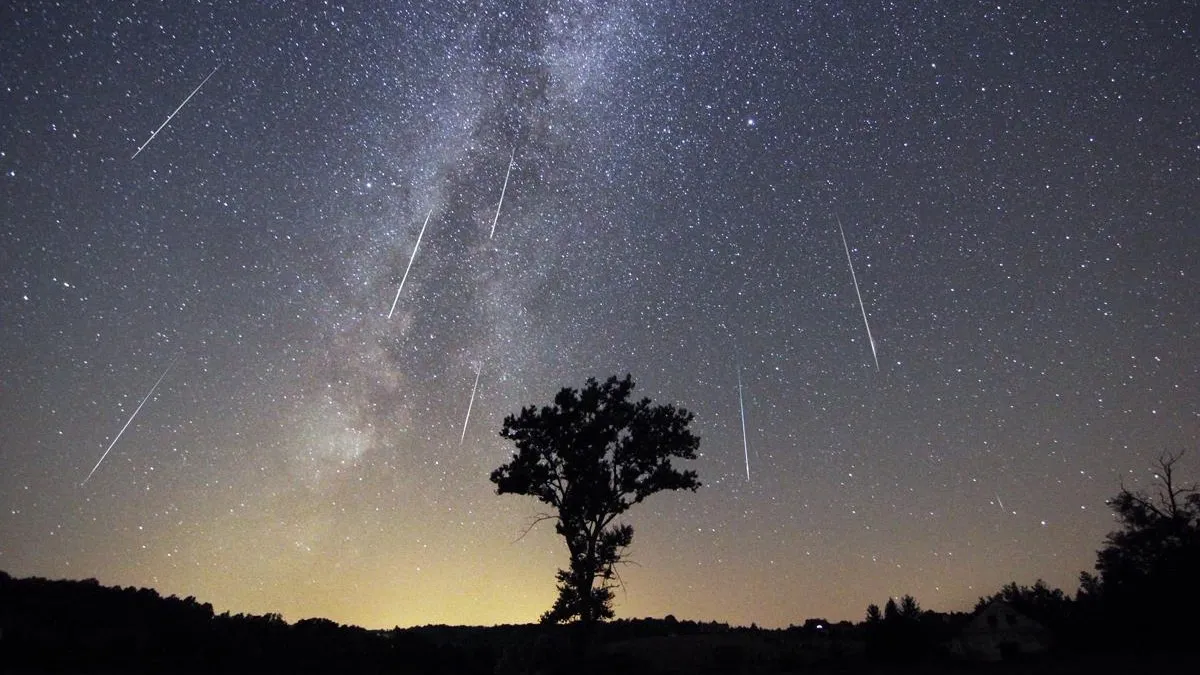
The Lyrid meteor shower, one of the oldest known meteor showers, is set to return in April 2026, offering skywatchers around the world a chance to witness a celestial display rooted in centuries of astronomical observation. Occurring annually when Earth passes through debris left by comet C/1861 G1 Thatcher, the Lyrids are expected to peak in the third week of April, with optimal viewing conditions dependent on lunar phase and local weather patterns.
According to multiple Turkish news outlets reporting on the 2026 event, the Lyrid meteor shower will be active between April 16 and April 25, with the peak anticipated on the night of April 22 into the early hours of April 23. During this period, observers under dark, clear skies may see between 10 and 20 meteors per hour, though bursts of higher activity are possible. The shower’s radiant point lies in the constellation Lyra, which rises in the northeastern sky after midnight and reaches its highest point just before dawn.
Visibility from Turkey is expected to be favorable, particularly in rural and mountainous regions with minimal light pollution. Experts recommend observing from locations away from city lights, allowing eyes to adapt to the darkness for at least 20 minutes, and lying flat on one’s back to take in as much of the sky as possible. No special equipment is needed—the meteors are visible to the naked eye—and the best viewing window is typically between midnight and 5:00 a.m. Local time.
The Lyrids are notable not only for their reliability but likewise for their historical significance; records of the shower date back over 2,700 years to ancient Chinese astronomers. While not as prolific as the Perseids or Geminids, the Lyrids occasionally produce bright fireballs and leave persistent trains, adding to their appeal for both casual observers and astrophotographers.
As with all meteor showers, success depends heavily on environmental factors. A bright moon can wash out fainter meteors, so checking the lunar phase for April 2026 is advised. Weather conditions, particularly cloud cover, will also play a decisive role in visibility. Enthusiasts are encouraged to monitor local forecasts in the days leading up to the peak and consider traveling to darker skies if necessary.
For those interested in tracking the shower’s progress, organizations such as the International Meteor Organization (IMO) and NASA’s Meteor Watch program provide real-time updates and viewing tips. While no major outburst is predicted for 2026, the Lyrids remain a dependable springtime event that connects modern observers with a long tradition of skywatching.
To make the most of the 2026 Lyrid meteor shower, plan ahead: check the moon phase, select a dark site, dress warmly for April nights, and allow time for your eyes to adjust. Whether you’re a seasoned astronomer or simply curious about the night sky, the Lyrids offer a accessible and awe-inspiring reminder of our place in the cosmos.
Stay updated on astronomical events through trusted sources like NASA’s SkyCal or the Royal Observatory Greenwich’s astronomy calendar, and share your observations with global skywatching communities to contribute to citizen science efforts.
Related reading