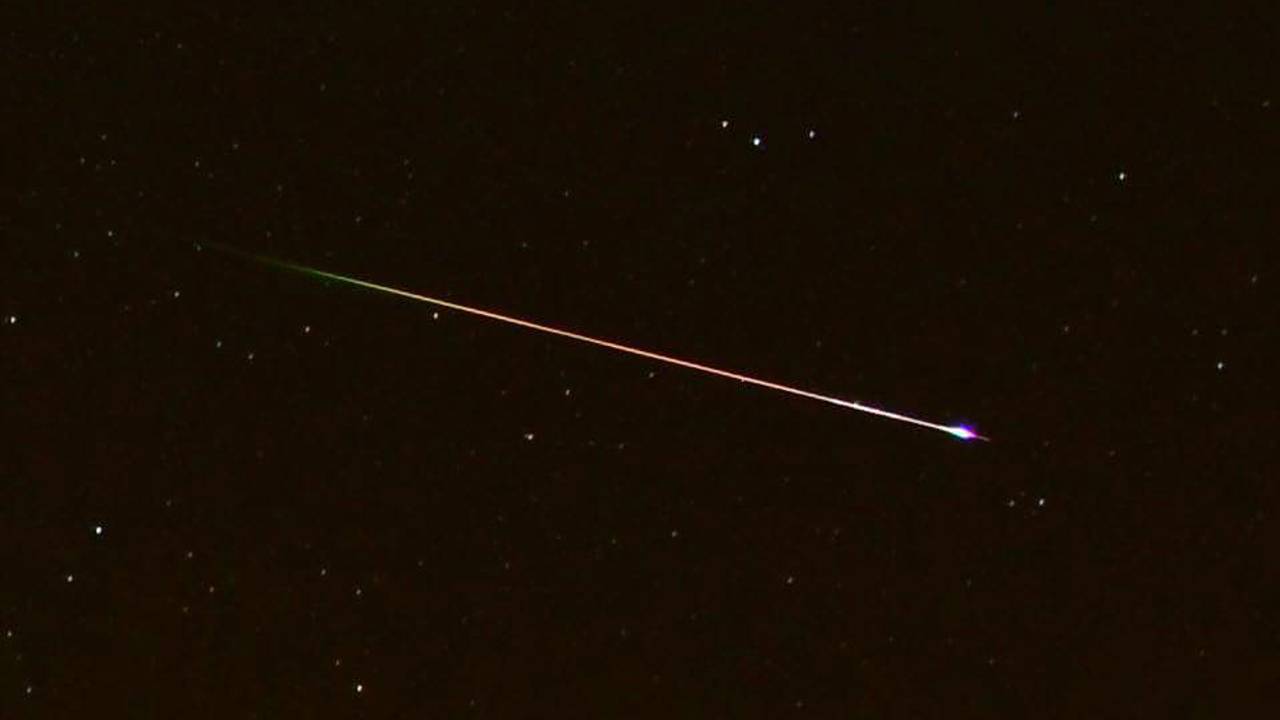
Stargazers across the Netherlands are in for a treat tonight as the annual Lyrid meteor shower reaches its peak, offering one of the best opportunities this year to witness shooting stars light up the night sky. With clear skies forecast in many regions and minimal moonlight interference, conditions are ideal for spotting the celestial display that occurs each April when Earth passes through debris left by comet Thatcher.
The meteor shower, active from approximately April 16 to 25, is expected to hit its highest activity between 2:00 and 4:00 a.m. Local time on the night of April 21–22, 2026. During this window, observers under dark, clear skies could witness anywhere from 15 to 18 meteors per hour streaking across the atmosphere, according to meteorological forecasts. These bright flashes occur when tiny particles from the comet’s trail enter Earth’s upper atmosphere at speeds of about 47 kilometers per second, burning up due to friction and creating the glowing trails commonly known as shooting stars.
Unlike some astronomical events requiring specialized equipment, the Lyrids are best viewed with the naked eye. Experts recommend finding a location away from city lights, allowing at least 20 minutes for eyes to adjust to the darkness, and looking toward the northeastern sky where the shower’s radiant point—located near the constellation Lyra—appears to originate. No telescopes or binoculars are needed; in fact, wider visibility without optical aids often yields better results.
“If you go outside tonight between 2 and 4 a.m., you’ll definitely see something,” said Jordi Huirne, a meteorologist with Buienradar, noting that the lack of a bright moon enhances visibility of fainter meteors. “Just build sure to dress warmly—temperatures in inland areas may drop close to freezing, so a warm jacket is essential.”
The Lyrids have been observed for more than 2,500 years, making them one of the oldest known meteor showers. While not the most intense of the year—August’s Perseids can produce up to 80 meteors per hour—the Lyrids remain a reliable spring spectacle, especially when atmospheric conditions cooperate. This year’s favorable forecast, combining clear skies and low lunar illumination, increases the likelihood of a memorable viewing experience.
For those planning to watch, safety and comfort are key. Observers should bring a reclining chair or blanket, avoid staring directly at the radiant point to see longer meteor trails, and remain patient—activity can fluctuate throughout the peak window. Cloud cover remains the biggest obstacle, with northern parts of the Netherlands expected to face more interference from mist and fog compared to central and southern regions.
As the shower fades after April 25, the next major meteor event to watch for will be the Eta Aquarids in early May, followed by the stronger Delta Aquarids in late July. But for now, all eyes turn upward tonight, where a quiet moment under the stars might just come with a fleeting wish—and a reminder of the dynamic motion happening far above our heads.
Related reading