For aspiring podcasters and home studio enthusiasts, the barrier to entry has never been lower, yet the market is saturated with complex gear that often promises more than it delivers. Finding a reliable, budget-friendly audio interface is the first hurdle for anyone looking to produce professional-grade content. While many entry-level devices cut corners on build quality or preamp performance, the M-Audio M-Track Duo has carved out a distinct niche in the competitive landscape of digital audio workstations (DAWs).
As a technology editor who has spent nearly a decade testing everything from high-end studio consoles to portable field recorders, I have found that the M-Track Duo remains a relevant case study in minimalist design. It provides exactly what a solo creator or a two-person podcast needs without the bloated feature set that often complicates the workflow for beginners. In this analysis, we will examine how this device balances functionality, price, and audio fidelity for the modern creator.
The Anatomy of a Compact Audio Interface
At its core, the M-Audio M-Track Duo is a 2-channel USB audio interface designed for simplicity. It features two combo inputs that accommodate both XLR microphones and 1/4-inch line-level instruments. This is a critical design choice for podcasters who might want to record a guest or incorporate a musical element into their show. According to the official product specifications provided by M-Audio, the unit utilizes Crystal Preamps, which are engineered to provide transparent, low-noise gain—a necessity when dealing with dynamic or condenser microphones that require a clean signal chain.
The device is bus-powered, meaning it draws all the necessary electricity from your computer via a single USB connection. This eliminates the need for bulky external power bricks, making it an ideal solution for mobile podcasting setups or crowded desks. In my own testing of similar interfaces, the “plug-and-play” nature of class-compliant devices like the M-Track Duo is a significant advantage for users who are not sound engineers by trade and prefer to focus on content creation rather than troubleshooting driver conflicts.
Key Features for Podcasting Success
When evaluating hardware for podcasting, the ability to monitor your audio in real-time is non-negotiable. The M-Track Duo includes a direct monitor switch, which allows you to hear your voice or instrument directly through your headphones without the latency—or delay—that occurs when audio signals are processed through a computer’s software. This feature is essential for maintaining a natural speaking rhythm during a recording session.
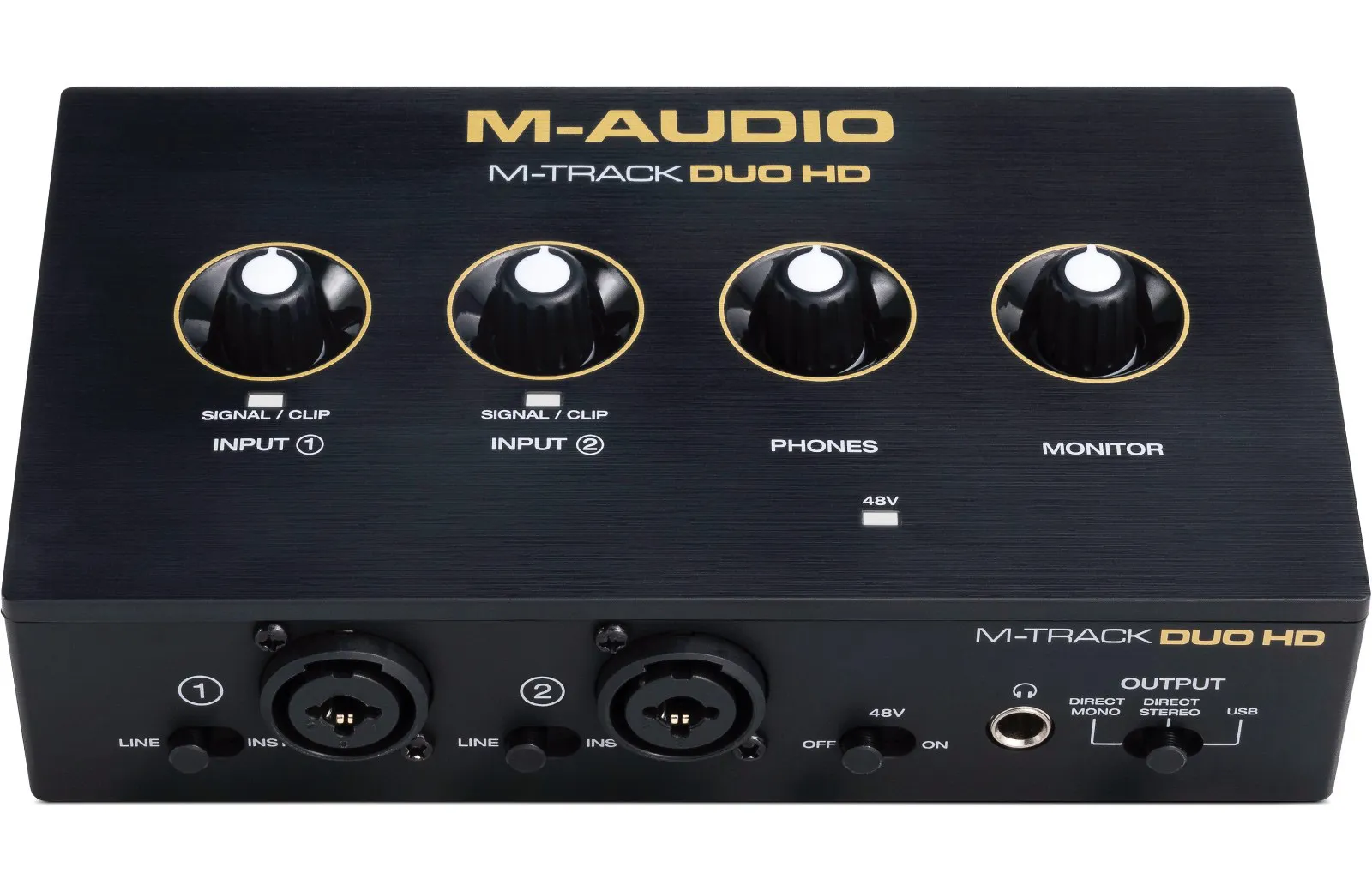
the device offers phantom power (+48V) on both channels, which is required for high-quality condenser microphones. This ensures that you aren’t limited to specific microphone types as your production quality grows. The chassis, while compact, is built with a metal construction that provides a level of durability often missing in plastic-heavy budget gear. For creators interested in the technical benchmarks, the interface supports up to 48 kHz / 16-bit audio resolution, which is the standard for web-based distribution and podcast hosting platforms.
Essential Technical Specifications
- Inputs: 2 Combo inputs (XLR/TRS) with Crystal Preamps.
- Outputs: 1/4-inch main outputs for studio monitors and a 1/4-inch headphone jack.
- Power: USB bus-powered, requiring no external adapter.
- Compatibility: Class-compliant for Windows and macOS, ensuring broad software support.
- Included Software: Often bundled with DAW software like MPC Beats or Pro Tools | First M-Audio Edition to get users started immediately.
Why Workflow Matters More Than Specs
In the world of technology journalism, we often get caught up in “spec wars,” arguing over bit-depth and sample rates. However, for a podcast, the most important metric is the ease of use. A complex interface that takes an hour to configure is an interface that will likely sit in a drawer. The M-Track Duo succeeds because it removes the friction between a thought and a recording.
The interface includes a dedicated headphone volume knob and a main monitor knob, allowing for independent control of your levels. This is a subtle but vital feature for podcasters who need to balance their volume levels against the playback of background music or sound effects. By keeping the controls physical and tactile, the device allows for “on-the-fly” adjustments without the need to navigate through complex software menus or deep-level settings within an operating system.
Navigating the Market: Who is This For?
We see important to acknowledge that the M-Track Duo is an entry-level device. It is not designed for tracking full bands or recording complex multi-mic setups where individual channel processing (such as built-in compression or EQ) is required. If your podcast involves more than two people or requires specialized routing, you might eventually need to look toward larger interfaces with more I/O capabilities.
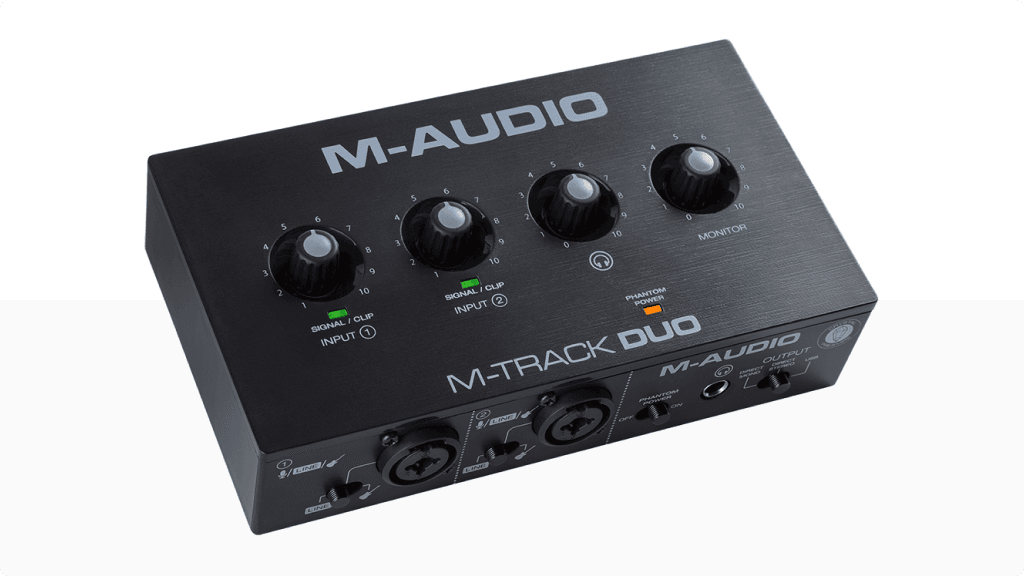
However, for the solo podcaster, the interview-style show, or the content creator looking to improve their audio quality from a standard USB microphone, this interface represents a significant step up. By providing a stable, low-noise platform for your microphone, it allows your audio to reach a level of clarity that is often expected by modern listeners who are increasingly discerning about production quality. As noted in recent industry trends reported by Sound on Sound, the democratization of recording hardware has allowed independent creators to compete with professional broadcast studios in terms of raw audio fidelity.
Final Thoughts for the Aspiring Creator
Choosing an audio interface is the first major commitment to your podcasting journey. It is a decision that affects your sound every single time you hit record. The M-Audio M-Track Duo stands out because it respects the user’s need for simplicity and reliability. It is a tool that stays out of the way, allowing the focus to remain on the story, the interview, and the message.
As you begin your journey, remember that your environment and your microphone technique are just as important as the interface itself. Ensure that you are recording in a space with minimal echo and that you are maintaining a consistent distance from your microphone. These fundamentals, paired with a reliable interface, will provide the foundation for a professional-sounding podcast that resonates with your audience.
For those looking for the latest updates on audio production standards or further technical guidance, I recommend keeping an eye on official manufacturer support pages and established audio engineering forums. We will continue to track developments in home recording technology as more portable and high-fidelity options enter the market. Have you recently upgraded your podcasting setup? Join the conversation in the comments section below and share your experience with different hardware setups.
Keep reading