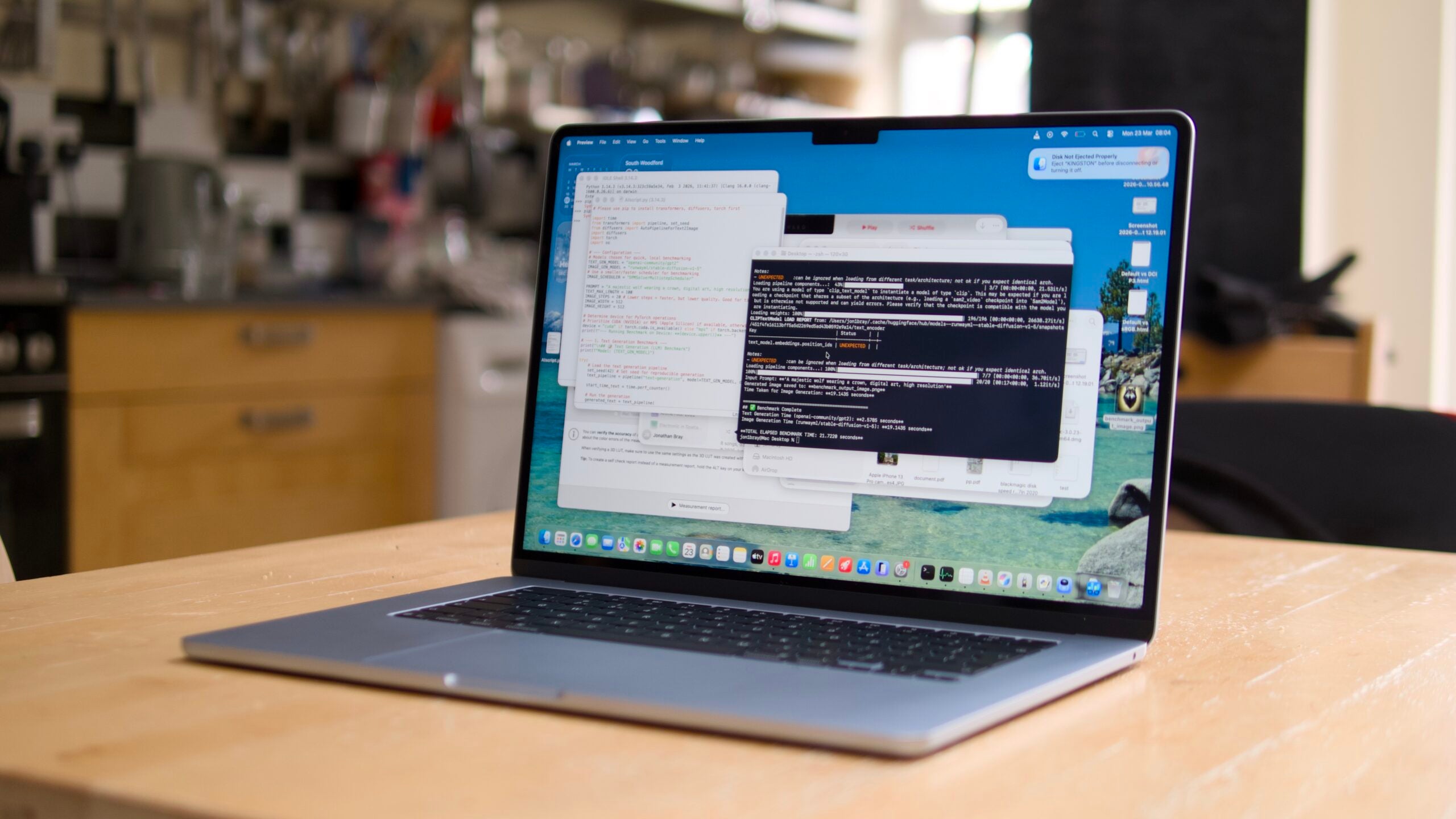
While the MacBook Air delivers improved power and battery life, rising costs and a stagnant design leave room for rivals to capture budget and power-conscious shoppers.
The laptop market is shifting underneath Apple’s feet. For the first time since Apple Silicon launched in 2020, the MacBook Air has taken a back seat, overshadowed by the budget-friendly MacBook Neo and a series of price increases that make Apple’s mainstream machine less appealing as an everyman device, according to Expertreviews. With base prices for the 13.6-inch model rising to £1,099 and the 15.3-inch model hitting £1,299, potential buyers are increasingly looking at Windows competitors that offer higher performance or OLED displays for similar money.
Evaluating the M5 MacBook Air Performance and Price Hikes
Under the hood, the M5 MacBook Air packs serious upgrades. The device runs on an upgraded Apple M5 processor that delivers superb all-round performance, backed by more RAM and storage as standard. Its Liquid Retina display supports P3 wide color, a feature missing on the budget Neo. Battery life also impresses with a claimed 18 hours of video playback, outlasting the Neo’s 15-hour mark.
Yet these upgrades come with a financial penalty. The base 13.6-inch Air has risen by £100, while the 15.3-inch version costs £200 more than its predecessor. Buyers seeking ultimate configuration can push the machine up to 32GB of RAM and a 4TB SSD, though the testing configuration featuring the 15-inch display, 32GB of RAM, and a 2TB SSD reaches £2,299, as detailed by Expertreviews.
Dell XPS 14 and Windows Rivals Challenge Apple Dominance
For shoppers willing to consider Windows 11, the market offers compelling alternatives that match or exceed Apple’s hardware in key categories. Dell has reintroduced its premium line with the Dell XPS 14, a machine that mirrors the MacBook Pro in price but occupies a unique space for Windows users seeking premium build quality.
Direct Comparison: Battery Life, Displays, and Portability
When stacking Apple’s latest hardware against top-tier Windows laptops, the choice hinges on whether buyers prioritize raw multi-core application performance, AI processing, or display technology. Lenovo’s Yoga Slim 7x delivers application and AI performance that outpaces the M5 MacBook Air, alongside nearly 24 hours of battery life and an accurate OLED display.
| Laptop Model | Display Type | Starting Price / Tested Config | Key Advantage |
|---|---|---|---|
| Apple M5 MacBook Air (15in) | Liquid Retina (P3 Wide Color) | £1,299 / £2,299 | Ecosystem integration, Face ID, up to 32GB RAM / 4TB SSD |
| Dell XPS 14 | Not specified | MacBook Pro-tier pricing | Intel Panther Lake performance, haptic touchpad, quad speakers |
| Lenovo Yoga Slim 7x | OLED | Midrange pricing | Nearly 24 hours of battery life, strong multi-core and AI output |
| Asus Zenbook A16 | OLED (16-inch) | Sub-3-pound weight | Snapdragon X2 Elite Extreme processor, massive crisp display |
Meanwhile, buyers eyeing a larger workstation can turn to the Asus Zenbook A16, which utilizes a Qualcomm Snapdragon X2 Elite Extreme processor to deliver leading application and AI performance inside a sub-3-pound chassis. For creators needing dedicated graphics, the Asus ProArt P16 offers a 4K OLED touchscreen and an RTX 5070 GPU.
Navigating the 2026 Laptop Market
Budget-conscious consumers finding themselves priced out of the latest Apple releases have viable fallback options. Savvy buyers can hunt for discounts on outgoing models, such as the M4 MacBook Air, which John Lewis has listed at £899 with 16GB of RAM and a 256GB SSD. Alternatively, Microsoft’s Snapdragon X Plus-powered Surface Laptop 7 provides strong battery life and repairability for users stepping away from macOS.

Ultimately, the 2026 lineup proves that buyers no longer need to sacrifice performance or display quality when bypassing Apple. Whether choosing the power-efficient Lenovo Yoga Slim or the sleek Dell XPS 14, Windows competitors have closed the gap on Apple’s premium dominance.
- Apple Extends 2026 Back to School Promotion: Get Gift Cards on Mac and iPad Until Sept. 24
- Nintendo Switch 2 Zelda Ocarina of Time Edition and Pro Controller Leaked
- Tariff vs. Price Floor: What Trump's New Solar Rule Does (daybreakwire.com)
- Helena Man Faces Felony Charges for Child Sexual Abuse Material (news-usa.today)