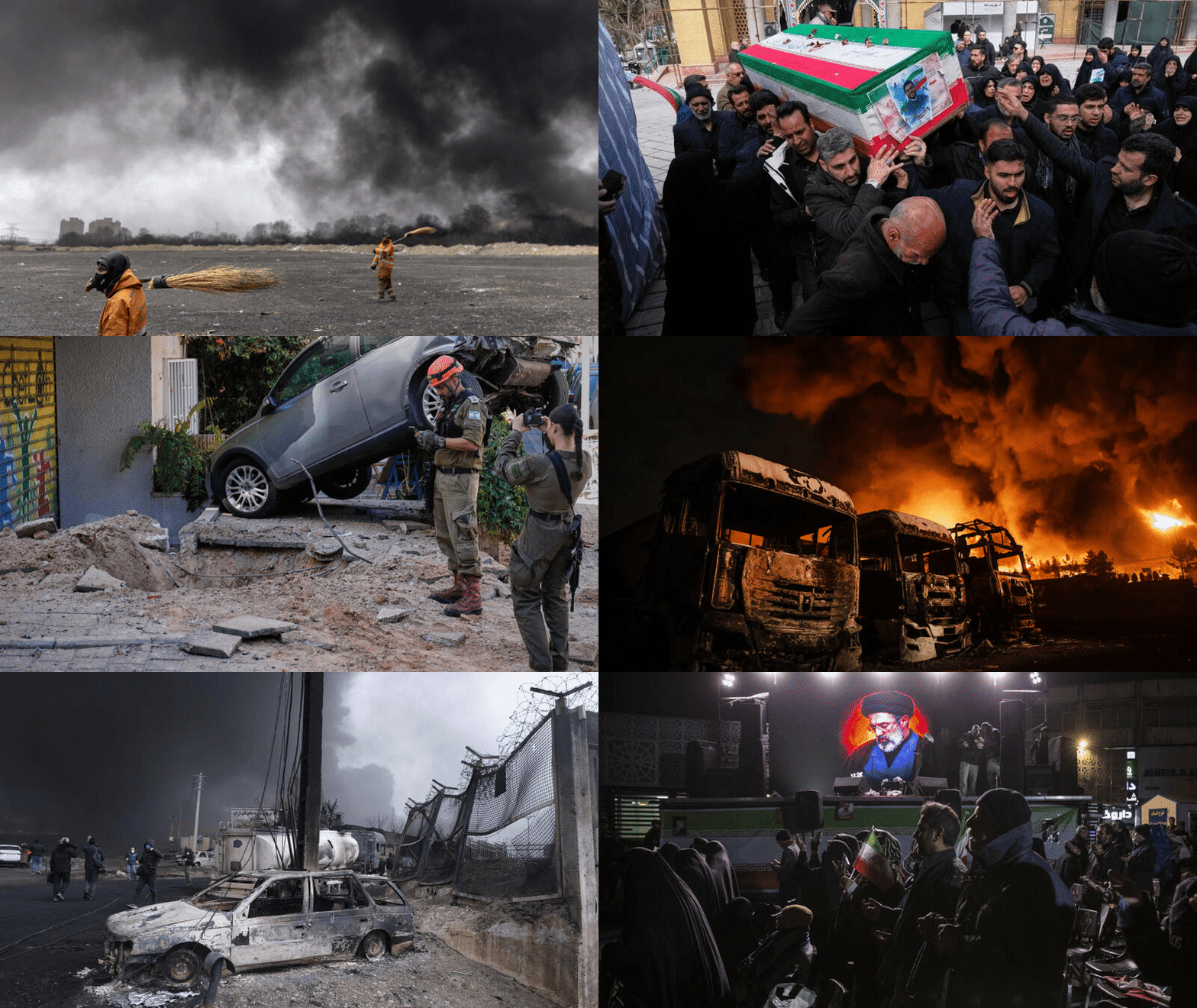
The escalating tensions in the Middle East are prompting a significant international response, with France poised to deploy a substantial naval force to the Mediterranean Sea and potentially the Strait of Hormuz. This move, announced by President Emmanuel Macron, comes amid growing concerns over the security of vital shipping lanes and follows recent attacks targeting the region, including drone and missile strikes against Cyprus and the interception of Iranian missiles by NATO member Turkey. The situation is further complicated by disruptions to oil supplies, pushing prices above $100 a barrel, and the broader impact on global trade.
Macron’s announcement signals a heightened European commitment to safeguarding maritime security in a region increasingly destabilized by the conflict between the United States, Israel, and Iran. For weeks, European nations have largely observed from the sidelines as the conflict intensified, impacting Gulf states and drawing Lebanon into the crossfire following attacks by the Iran-backed Hezbollah group. The French deployment, described as “unprecedented” by Macron, aims to build an international coalition dedicated to securing commercial shipping routes deemed “essential to the global economy.” This commitment reflects a growing recognition that the instability in the Middle East poses a direct threat to European economic interests.
French Naval Deployment: A Show of Force
The French naval deployment will center around the Charles de Gaulle aircraft carrier, France’s flagship and the only non-American nuclear-powered carrier in operation. The carrier, already positioned in the Mediterranean, will be joined by an additional eight frigates and two amphibious helicopter carriers, significantly bolstering France’s presence in the region. According to the French Ministry of the Armed Forces, the Charles de Gaulle hosts approximately 20 Rafale fighter aircraft, along with Hawkeye airborne early warning and control aircraft, Dauphin search-and-rescue helicopters, and Caiman multirole helicopters. The Rafale is a highly capable air-to-air fighter, designed for independent operation with limited reliance on external intelligence support.
Speaking at a military base in Cyprus on Monday, Macron indicated that French warships could collaborate with U.S. Forces in efforts to reopen the Strait of Hormuz, a critical waterway through which roughly one-fifth of the world’s oil supply passes. The Strait has faced significant disruption following recent Iranian missile and drone strikes, raising fears of a wider regional conflict and a potential global energy crisis. The deployment is intended to deter further aggression and ensure the free flow of commerce through this vital maritime chokepoint. The timing of the deployment follows days after Cyprus was targeted by Iranian-made drones and missiles, highlighting the expanding reach of the conflict.
NATO Interception and Rising Regional Tensions
The situation was further underscored by recent reports of Iranian missile interceptions by NATO forces. On March 10, 2026, Turkey reportedly shot down a second Iranian missile in as many days, demonstrating the escalating military activity in the region and the potential for miscalculation. The Sydney Morning Herald reported on the incident, highlighting the increased risk to regional stability. This interception, coupled with the attacks on Cyprus, underscores the growing complexity of the security landscape in the Middle East and the need for a coordinated international response.
The increased tensions are similarly impacting Lebanon, which has been drawn into the conflict following attacks by Hezbollah, an Iran-backed militant group. As reported by the Sydney Morning Herald, civilians are fleeing southern Lebanon seeking safety, illustrating the human cost of the escalating conflict. The situation in Lebanon remains precarious, with the potential for further escalation if Hezbollah continues to engage in cross-border attacks.
Economic Implications: Oil Prices and Global Trade
The disruptions to shipping lanes in the Strait of Hormuz are having a significant impact on global energy markets. Oil prices have surged above $100 a barrel, raising concerns about inflation and economic slowdown. The Sydney Morning Herald notes that soaring jet fuel prices are also contributing to rising airfares, further impacting the global economy. The potential for a prolonged disruption to oil supplies could have far-reaching consequences, affecting industries and consumers worldwide.
The French-led initiative to secure commercial shipping routes is therefore seen as crucial not only for regional stability but also for maintaining the global economic order. Macron’s call for an international coalition reflects a growing recognition that a collective response is necessary to address the multifaceted challenges posed by the escalating conflict in the Middle East. The success of this effort will depend on the willingness of other nations to contribute resources and expertise to ensure the safety and security of vital trade routes.
The Broader Geopolitical Context
The current crisis unfolds against a backdrop of complex geopolitical dynamics, including strained relations between the United States and Iran, the ongoing conflict in Yemen, and the broader competition for influence in the Middle East. The United States has been a key player in the region for decades, maintaining a strong military presence and forging close alliances with countries like Israel and Saudi Arabia. Iran, meanwhile, has sought to expand its regional influence through support for proxy groups like Hezbollah and the Houthis in Yemen.
The recent escalation of tensions has raised concerns about a potential direct confrontation between the United States and Iran, which could have catastrophic consequences for the region and the world. While both sides have expressed a desire to avoid war, the risk of miscalculation remains high. The French deployment, along with other international efforts to de-escalate the situation, is aimed at preventing a further deterioration of the security environment and creating space for diplomatic solutions.
the situation is being closely watched by other major powers, including Russia and China, both of which have significant economic and strategic interests in the Middle East. Russia has maintained close ties with the Syrian government and has been involved in the conflict in Yemen, while China is a major importer of oil from the region. The actions of these powers could significantly influence the trajectory of the crisis.
Key Takeaways
- France is deploying a significant naval force to the Mediterranean and potentially the Strait of Hormuz in response to escalating tensions in the Middle East.
- NATO forces, specifically Turkey, have intercepted Iranian missiles, highlighting the increased military activity in the region.
- Disruptions to shipping lanes in the Strait of Hormuz are driving up oil prices and impacting the global economy.
- The crisis is unfolding against a complex geopolitical backdrop, with the potential for a wider regional conflict.
- An international coalition is being sought to secure commercial shipping routes and de-escalate the situation.
Looking ahead, the situation in the Middle East remains highly volatile. The next key development to watch will be the outcome of ongoing diplomatic efforts to de-escalate tensions and prevent a further escalation of the conflict. Continued monitoring of shipping routes through the Strait of Hormuz will also be critical. We encourage readers to share their thoughts and perspectives on this evolving situation in the comments below.
Worth a look
- Nancy Guthrie Disappearance: Arizona Authorities Release First Ransom Demand
- Dangote Petrol Price Beats Imported Fuel Cost as MEMAN Reports Inversion
- US Warns Citizens to Leave Middle East Amid Potential Iran Escalation (newsdirectory3.com)
- Tau Robotics Deploys Home-Cleaning Robots in San Francisco (archynewsy.com)