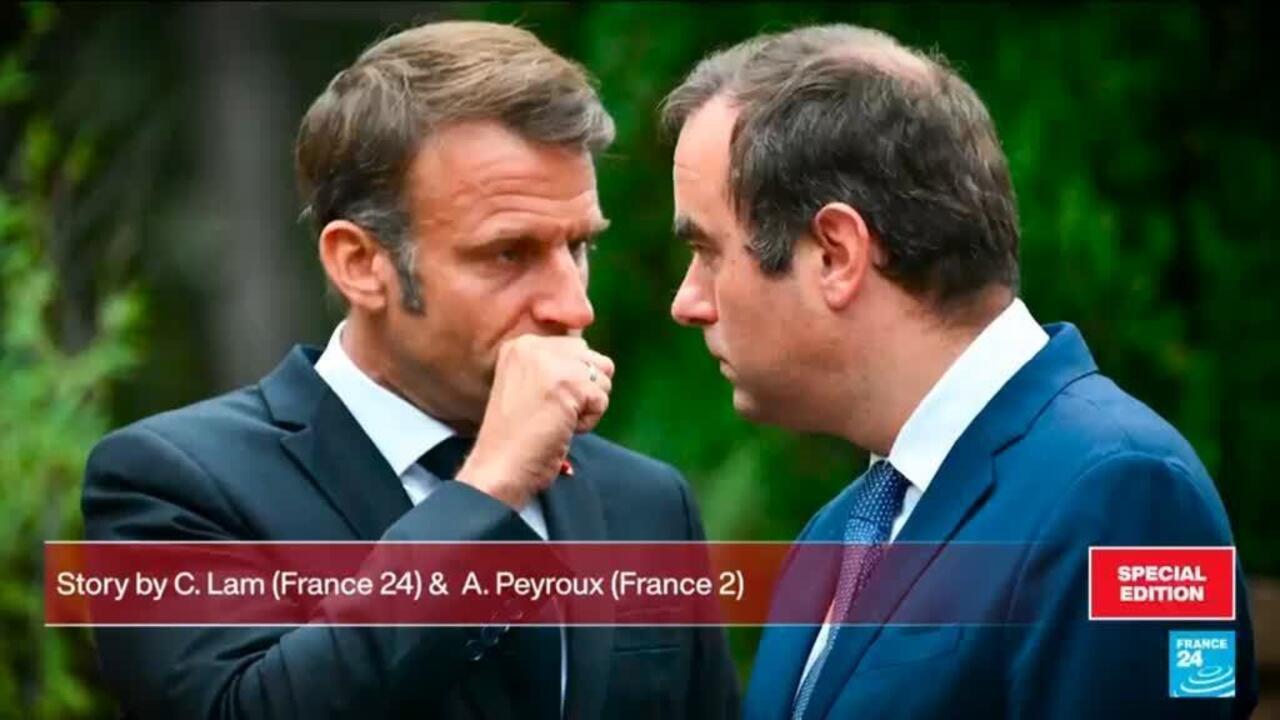
France’s Political Turmoil: A Prime Minister Resigns and a Nation Questions Its Leadership
France is once again grappling with political instability. The recent resignation of Prime minister Sébastien Lecornu, after less than a month in office, has sent shockwaves through the nation. This marks the fifth change in the prime ministerial role in just two years, raising serious questions about the direction of French governance and the leadership of President Emmanuel Macron. Are we witnessing a systemic crisis, or simply a period of intense political maneuvering?
A Rapidly Shifting Political Landscape
Lecornu’s departure isn’t an isolated event. It’s the latest chapter in a period of prolonged political uncertainty for France. Recent legislative elections have failed to deliver a clear majority for any single party,leading to a fractured National Assembly and a government struggling to implement its agenda. this instability is fueled by growing public discontent over economic issues, social reforms, and a perceived disconnect between the political elite and everyday citizens.
The current situation echoes similar periods in French history, but the speed of change is unprecedented. consider this: since 2022, France has seen a revolving door of prime ministers, each attempting to navigate a complex and increasingly polarized political environment. This constant turnover hinders long-term planning and erodes public trust.
macron Under Pressure: Dissolution or Departure?
President Macron now faces a critical juncture. He has two primary options: dissolve the National Assembly and call for new elections, or resign himself. Dissolving the Assembly, as he did in 2023, is a risky gamble. It could perhaps lead to a further strengthening of opposition parties, particularly the far-right National Rally, currently polling strongly with voters concerned about immigration and cost of living.
Alternatively, Macron could choose to step down, potentially paving the way for a new presidential election. However, this would be an admission of failure and could further destabilize the country. According to a recent Ipsos poll (October 2024), 63% of French citizens believe the country is heading in the wrong direction, adding to the pressure on the President. The decision he makes will undoubtedly shape the future of France for years to come.
Understanding the Underlying Issues: Beyond the Headlines
To truly understand this crisis, you need to look beyond the immediate resignation. Several key factors are at play:
* Economic anxieties: Rising inflation, particularly impacting essential goods, is fueling public frustration. Concerns about purchasing power and job security are widespread.
* Pension reforms: The controversial pension reforms, raising the retirement age, sparked massive protests and continue to be a source of tension.
* Immigration debates: Divisive debates surrounding immigration policy are exacerbating social divisions and providing ammunition for far-right parties.
* Erosion of trust: A growing sense of disillusionment with customary political institutions is contributing to voter apathy and the rise of populist movements.
* Political fragmentation: The lack of a clear parliamentary majority makes it incredibly difficult to govern effectively and implement meaningful reforms.
What Does This Mean for You?
This political instability has real-world consequences for everyday French citizens.It impacts everything from economic policy and social programs to international relations. You might experience:
* Policy uncertainty: Delays in implementing crucial policies due to political gridlock.
* Economic volatility: Increased market uncertainty and potential impacts on investments and savings.
* Social unrest: The possibility of further protests and social disruptions.
* Shifting political priorities: A change in government could lead to a notable shift in policy direction.
Navigating the Crisis: A Path Forward
France needs a period of stability and decisive leadership. Here are some potential steps that could help navigate this crisis:
- Cross-party dialogue: Encouraging genuine dialogue between different political factions to find common ground and build consensus.
- Economic reforms: Implementing targeted economic reforms to address inflation, boost job creation, and improve living standards.
- Social cohesion: