Strengthening Sino-French Ties: Macron’s Strategic visit to China in 2025
As of December 4th, 2025, at 09:54:31, the international stage witnessed a notable diplomatic event: French President Emmanuel Macron’s three-day state visit to China. This engagement, marked by a formal greeting from Chinese President Xi Jinping at the iconic Great Hall of the People, underscores the increasingly complex and vital relationship between Europe and Asia. The visit isn’t merely a ceremonial exchange; it’s a strategically timed maneuver occurring as France prepares to lead the 2026 G7 summit and China assumes the chairmanship of the APEC forum – a confluence of events demanding careful navigation of global economic and political currents. This article delves into the nuances of Macron’s trip,examining it’s context,objectives,and potential implications for international trade and diplomacy. The core of this discussion revolves around international relations,a field constantly reshaped by evolving power dynamics and economic interdependence.
The Arrival and Symbolic Meaning
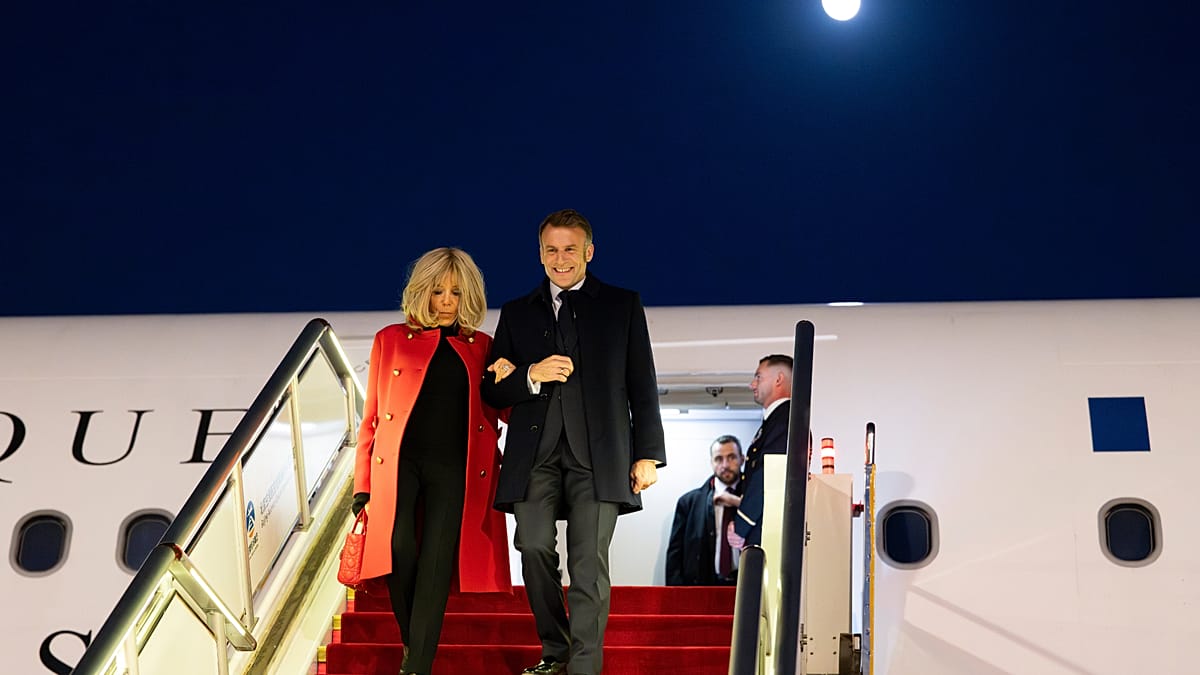
President Macron, accompanied by his wife Brigitte, received a warm welcome upon arrival, initially greeted by Chinese Foreign Minister Wang Yi at the airport. This initial courtesy extended to a scheduled tour of the Qianlong Garden within the historic Forbidden City – a deliberate choice of location steeped in cultural significance. The Forbidden City, once the exclusive domain of emperors, now serves as a backdrop for discussions shaping the future of global power. This symbolic gesture highlights China’s desire to present itself as a nation that respects history while together asserting its modern influence.
From a logistical standpoint, the choice of the Qianlong garden is noteworthy. Restored in recent years, it represents a commitment to preserving cultural heritage, a theme often emphasized in Chinese statecraft. My own experience observing similar diplomatic visits suggests that these carefully curated environments aren’t accidental; they’re designed to foster a sense of shared values and mutual respect.
Navigating trade Imbalances and Geopolitical Concerns
The timing of Macron’s visit is particularly crucial given the existing economic tensions. The European Union, and France specifically, has voiced increasing concerns regarding a substantial trade deficit with China. This imbalance, a key point of contention, is not simply a matter of economics; it represents a perceived vulnerability within the European economic structure. Recent reports from the Peterson institute for International Economics (October 2025) indicate that the EU’s trade deficit with China has widened by 15% in the last year alone, prompting calls for a more assertive trade policy.
Beyond trade,the visit occurs against a backdrop of broader geopolitical considerations. China’s growing assertiveness in the South China Sea, its stance on Taiwan, and its relationship with Russia are all factors influencing European perceptions. Macron’s trip provides an possibility for direct dialog on these sensitive issues, potentially paving the way for a more stable and predictable international order. The visit also comes at a time when the US is focused on domestic issues and the upcoming presidential election, creating a window for Europe to strengthen its own relationships with key global players.
The 2026 G7 and 2025 APEC Forums: A Shared Agenda?
France’s upcoming presidency of the G7 in 2026 and China’s chairmanship of APEC in the same timeframe present a unique opportunity for collaboration. Both forums address critical global challenges, including climate change, economic stability, and global health security. Macron’s visit likely involved discussions on aligning priorities and coordinating efforts within these frameworks.
Consider the potential for joint initiatives on sustainable development. China is a leader in renewable energy technologies, while France has a strong commitment to environmental regulations.A collaborative approach could accelerate the transition to a greener economy and address the urgent threat of climate change. I’ve seen