
Main Street Capital is currently navigating a complex intersection of analyst skepticism and corporate optimism. While the company’s stock has recently touched a 52-week low, management is signaling strength through record valuations and a commitment to shareholder returns, creating a divergent narrative for investors.
The tension comes to a head following a revised outlook from RBC Capital, which has lowered its price target for the firm. This adjustment arrives amidst a broader dampening of sentiment across the sector, leaving the market to weigh disappointing quarterly figures against the company’s internal metrics of success.
For global investors, the situation serves as a case study in how legacy loan portfolios from the low-interest era of 2021 and 2022 can create headwinds in a higher-rate environment, even when a firm maintains a strong net asset position.
RBC Capital Lowers Price Target Amid Sector Headwinds
In a recent move reflecting the current market mood, RBC Capital has reduced its price target for Main Street Capital from $66 to $58. Despite the reduction, analyst Kenneth Lee has maintained a “Buy” recommendation, suggesting that while the immediate ceiling has lowered, the long-term value proposition remains intact.
This adjustment is not an isolated outlier but part of a wider range of analyst perspectives. The current consensus price target for the company stands at $64, with estimates spanning from a low of $58 to a high of $70. This broad spread highlights a significant divide among market observers regarding the firm’s trajectory and its ability to navigate current economic pressures.
The downward revision follows a first quarter in 2026 that failed to meet certain market expectations, reflecting a broader trend of volatility within the investment and lending sector.
Q1 2026 Financials: A Mixed Performance
The financial results for the first quarter of 2026 present a contradictory picture of growth and decline. Total investment income for the period reached $140.1 million. While this represents a 2.2 percent increase compared to the same period last year, it marks a 3.7 percent decline when compared to the fourth quarter of 2025.
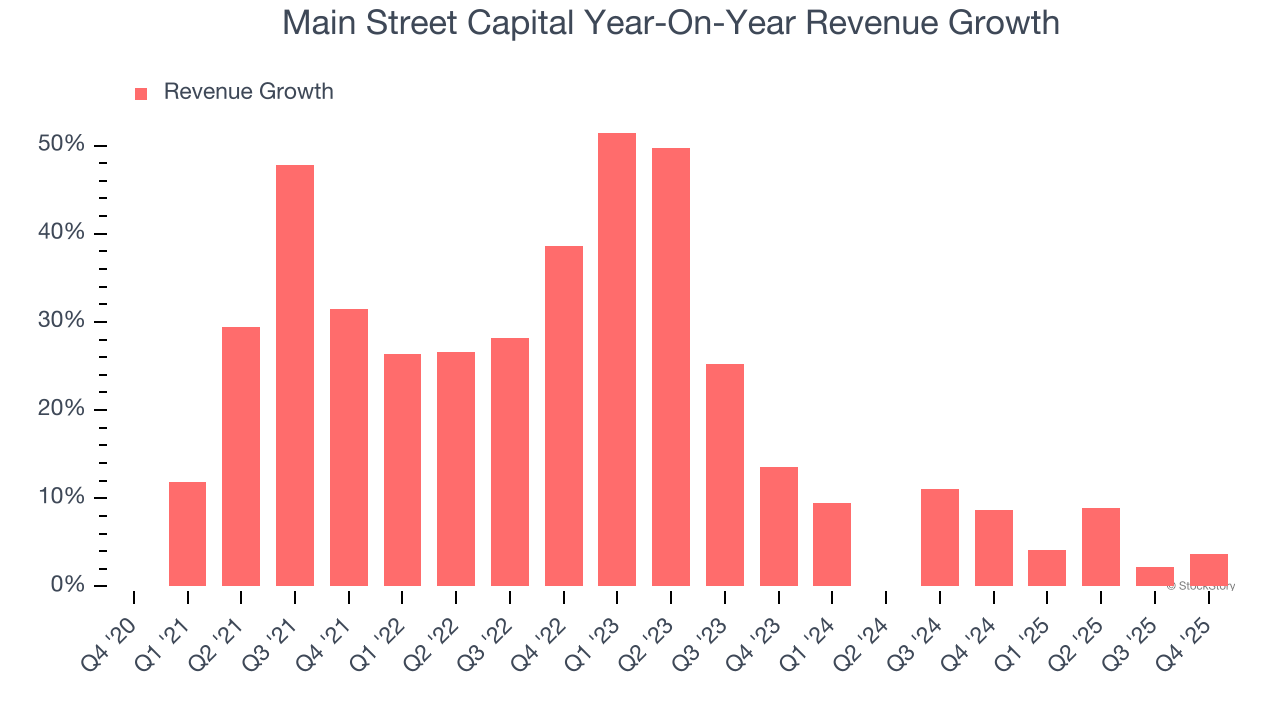
A more concerning trend emerged in the company’s dividend income, which saw a year-over-year decrease of $7.8 million. This decline is attributed to two primary factors: a reduction in special distributions from the portfolio and shifts in capital allocation strategies regarding smaller portfolio companies.
The underlying struggle is tied to the timing of the company’s lending activities. Loans originated in 2021 and 2022—during a period of historically low interest rates—are now posing challenges. Companies that were financed in that low-rate environment are currently struggling to manage the increased costs associated with higher interest rates, which in turn puts pressure on the returns Main Street Capital can extract from those assets.
Market Valuation Hits 52-Week Low
The market’s reaction to these headwinds has been sharp. The stock recently hit a 52-week low of 43.40 Euro, a figure that places it approximately 25 percent below its annual peak reached in August 2025. The downward trend is further evidenced by a loss of nearly 18 percent in value since the start of the year.
This decline suggests that investors are currently prioritizing the immediate risks associated with loan performance and quarterly income dips over the long-term stability the company claims to possess. The gap between the current trading price and the analyst consensus targets suggests a significant disconnect between market sentiment and professional valuation.
Management Signals Strength Through Dividends and NAV
Despite the plummeting share price and the RBC target cut, Main Street Capital’s management is projecting confidence. The company recently reported a record Net Asset Value (NAV) per share of $33.46, a key metric that indicates the intrinsic value of the company’s assets minus its liabilities.
In a bold move to support shareholder confidence, management has announced another special dividend. By maintaining its dividend course despite the “counter-winds” of the current economy, the company is attempting to signal that its fundamental health is stronger than the current stock price suggests.
This strategy is designed to reassure investors that the current dip is a result of sectoral sentiment and temporary loan struggles rather than a systemic failure of the company’s business model.
Key Takeaways for Investors
- Price Target Revision: RBC Capital lowered its target to $58 (from $66), though it retains a “Buy” rating.
- Income Divergence: Q1 2026 investment income rose 2.2% year-over-year but fell 3.7% sequentially.
- Interest Rate Pressure: Loans from 2021-2022 are underperforming as borrowers struggle with higher borrowing costs.
- Intrinsic Value: Management reports a record NAV per share of $33.46.
- Shareholder Returns: The company is continuing its strategy of special dividends to offset negative market sentiment.
The next critical milestone for investors will be the release of the second-quarter financial filings, which will reveal whether the management’s confidence in its NAV and dividend strategy is supported by an improvement in investment income and a stabilization of the loan portfolio.
We invite our readers to share their perspectives on the impact of interest rate shifts on BDC-style portfolios in the comments section below.
Related reading