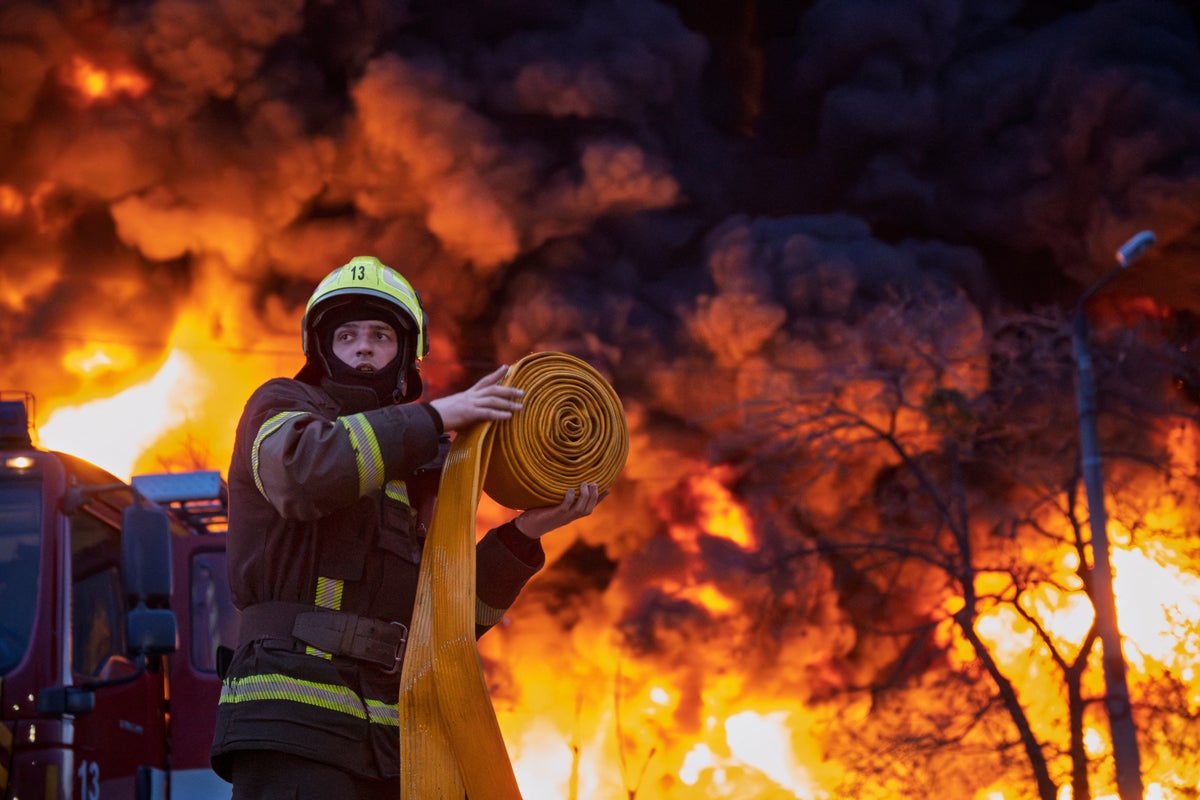
The conflict between Russia and Ukraine has entered another devastating phase this week, as a wave of Russian drone and missile attacks has left 15 people dead across Ukraine according to BBC News. The strikes, which targeted multiple cities, come at a moment of profound fragility following a short-lived and heavily contested truce intended to honor the Orthodox Easter festivities.
This latest escalation underscores the volatility of the frontlines and the precarious nature of diplomatic gestures in a war of attrition. While the international community focuses on shifting geopolitical tensions in the Middle East, the intensity of the aerial campaign against Ukrainian infrastructure and population centers remains a primary concern for humanitarian organizations and global leaders alike.
The timing of these attacks is particularly poignant, occurring just as both nations had nominally agreed to a pause in hostilities. However, the reality on the ground suggests that the agreement was little more than a formal gesture, with both Kyiv and Moscow trading accusations of systemic violations throughout the holiday weekend.
A Shattered Easter Ceasefire
The current violence follows a 32-hour ceasefire declared by Russian President Vladimir Putin, which was intended to halt hostilities from 4 p.m. On Saturday through the end of Easter Sunday as reported by CBS News. While Ukrainian President Volodymyr Zelenskyy initially promised to abide by the truce, he warned that any Russian violations would be met with a swift and symmetrical military response.
The truce collapsed almost immediately, with both militaries reporting thousands of breaches. Ukraine’s general staff stated that by 7 a.m. On Sunday, they had recorded 2,299 ceasefire violations per CBS News. These violations included 28 enemy assault actions, 479 shellings, 747 attack drone strikes and 1,045 FPV drone strikes.

Conversely, the Russian Defense Ministry claimed it recorded 1,971 violations by Ukrainian forces according to CBS News. Russia alleged that Kyiv launched 258 artillery or tank fires, 1,329 FPV drone strikes, and dropped various munitions on 375 separate occasions.
The human cost of this failure is stark. Beyond the 15 deaths reported in Ukraine, officials have noted that a Ukrainian drone attack killed two children in Russia via BBC News. The cycle of retaliation continues to claim non-combatant lives, leaving civilians in cities like Kharkiv in a state of constant anxiety, where Easter festivities were muted due to expectations that fighting would flare up immediately after the weekend.
Technological Escalation and Foreign Aid
As the Ukraine-Russia war latest developments show, the nature of the battlefield is evolving rapidly through the integration of autonomous systems. President Zelenskyy recently highlighted the deployment of army robots into the most dangerous areas of the frontline, noting that some Russian forces have surrendered to these robotic units in a battlefield first according to MSN.
Parallel to the rise of robotics, the UK is significantly increasing its support for Ukraine’s aerial capabilities. Defence Secretary John Healey announced that Ukraine’s military is set to receive its biggest-ever shipment of UK drones per BBC News. Healey cautioned that the timing of these shipments is critical, suggesting that Vladimir Putin intends to distract Western allies by leveraging tensions in the Middle East.
The logistical effort to support Ukraine remains a grassroots priority in several Western nations. In a display of civilian solidarity, a trio from Guernsey has sent a third aid vehicle to Mykolaiv, where it will be converted into an ambulance as reported by the BBC. Similarly, efforts to provide basic survival tools continue, with handmade candle stoves being delivered to those without power to provide essential heat and light.
The Diplomacy of Deadlock
The failure of the Easter truce highlights the deep diplomatic chasm between the Kremlin and the Ukrainian government. Kremlin spokesman Dmitry Peskov has stated that Russia will not extend temporary truces unless President Zelenskyy accepts Russian terms according to CBS News.
Peskov asserted that “sustainable peace” is possible only when Russia secures its interests and achieves the goals it set at the start of the “special military operation.” He placed the responsibility for the continuation of the conflict squarely on Zelenskyy, claiming the Ukrainian leader must “muster the courage” to accept Russian solutions.
For Ukrainians, these demands are viewed as an ultimatum rather than a negotiation. The lack of faith in temporary truces is widespread, as the pattern of “ceasefire-violation-escalation” has grow a predictable cycle. The current atmosphere is one of grim determination, where military readiness takes precedence over the hope of a diplomatic breakthrough.
Key Takeaways from the Current Escalation
- Casualties: A recent wave of Russian drone and missile attacks killed 15 people in Ukraine per BBC News, while two children were killed in Russia by a Ukrainian drone attack.
- Ceasefire Failure: A 32-hour Orthodox Easter truce declared by Vladimir Putin was widely violated, with Ukraine reporting 2,299 breaches and Russia reporting 1,971 via CBS News.
- Military Evolution: Ukraine is integrating army robots into high-risk frontline areas, and the UK is preparing its largest-ever shipment of drones to Kyiv via BBC News.
- Diplomatic Stance: The Kremlin maintains that the conflict will continue until Ukraine accepts Russia’s stated goals and interests.
As the situation evolves, the international community remains watchful of the strategic shifts in the conflict. The next critical checkpoint will be the arrival and deployment of the new UK drone shipments, which are expected to alter the tactical landscape of the drone war. We will continue to monitor official updates from the Ukrainian General Staff and the Kremlin regarding any further attempts at temporary truces or shifts in territorial control.
Do you believe temporary truces in this conflict serve a humanitarian purpose, or do they provide a tactical advantage for repositioning? Share your thoughts in the comments below.