
The Octopus’s Secret Arm: Evolutionary Adaptation Ensures Reproduction
In the intricate world of marine biology, the reproductive strategies of cephalopods continue to reveal surprising complexities. Recent research has focused on the octopus, specifically the California two-spot octopus (Octopus bimaculoides) and a remarkable specialization in males: the consistent use of a single arm – the third arm on the right side, known as R3 – for mating. This isn’t simply a preference; it’s a deeply ingrained behavioral and anatomical adaptation that highlights the power of natural selection. The discovery, detailed in studies from early April 2026, sheds light on how these intelligent invertebrates ensure reproductive success in a challenging environment.
For decades, scientists have observed the unique behaviors of octopuses, but the systematic preference for the R3 arm in males hadn’t been fully understood. Researchers have now confirmed that this arm isn’t just favored; it’s structurally different and appears specifically adapted for the transfer of spermatophores – packets containing sperm – to the female during copulation. This specialization suggests a directed evolutionary path, where a single appendage has taken on the primary responsibility for reproduction, maximizing efficiency, and success. The findings challenge previous assumptions about octopus mating rituals and open new avenues for understanding cephalopod evolution.
The Hectocotylus: A Dedicated Reproductive Arm
The R3 arm in male octopuses isn’t just a regular tentacle. It’s a modified structure called a hectocotylus, a term derived from Greek meaning “eight arms.” This adaptation is common among male cephalopods, including octopuses, squid, and cuttlefish. The hectocotylus differs from the other seven arms in several key ways. It’s typically longer and possesses a unique internal structure designed for storing and transferring spermatophores. As reported by Infobae, the hectocotylus can directly introduce sperm into the female’s cavity, facilitating fertilization.
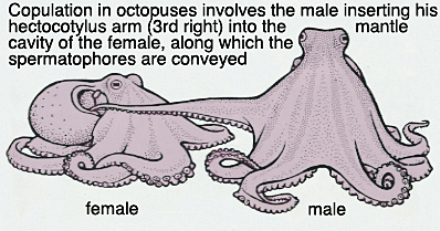
The evolution of the hectocotylus represents a significant step in cephalopod reproductive biology. Instead of simply releasing sperm into the water, relying on chance encounters with a female, the hectocotylus allows for a targeted and efficient transfer, increasing the likelihood of successful fertilization. This is particularly important in the vastness of the ocean, where finding a mate can be a difficult task. The specialized structure ensures that the genetic material reaches its intended destination, contributing to the continuation of the species.
Chemical and Tactile Precision in Mate Location
The sophistication of octopus reproduction extends beyond the physical structure of the hectocotylus. Males don’t simply stumble upon a female; they actively seek them out, utilizing a remarkable combination of chemical and tactile senses. According to Mundiario, male Octopus bimaculoides use their specialized arm to detect hormones released by females, specifically progesterona, a key indicator of reproductive readiness. This detection isn’t visual; experiments have shown that males can locate females even in complete darkness, relying solely on their sense of touch and chemical signals.
The hectocotylus is covered in specialized receptors, called CRT1, located on its suckers. These receptors are highly sensitive to the chemical cues released by females, allowing the male to navigate towards the source. The process is delicate and precise, taking approximately an hour for the male to locate the female’s oviduct and deposit the spermatophores. During this time, both animals remain remarkably still, highlighting the importance of maintaining a stable connection for successful reproduction. This level of precision is rarely seen in the animal kingdom and underscores the evolutionary pressures that have shaped octopus mating behavior.
Female Reproductive Strategy: Multiple Paternity
While the male octopus focuses on precise sperm delivery, the female employs a different, equally fascinating reproductive strategy. Females are capable of storing spermatophores from multiple males, and they don’t fertilize their eggs immediately upon receiving them. Instead, they hold onto these packets of sperm for an extended period, carefully selecting which ones to use for fertilization. Mundiario reports that females only fertilize their eggs towards the end of their lives.
This strategy, known as multiple paternity, allows females to maximize genetic diversity in their offspring. By choosing sperm from different males, they increase the chances that some of their young will possess traits that are better suited to survive in a changing environment. It also provides a form of reproductive insurance, ensuring that even if some of the sperm are not viable, others will be available for fertilization. This complex interplay between male precision and female choice highlights the sophisticated evolutionary dynamics at play in octopus reproduction.
The “Amorous Arm” and Sensory Integration
The third right arm has been aptly described as an “amorous arm” due to its exclusive role in reproduction. Researchers at Harvard University, led by Pablo Villar, have been instrumental in unraveling the intricacies of this specialized appendage. As detailed in El País, the arm functions as a remarkable combination of touch, smell, and taste, integrating multiple sensory inputs to locate the female’s oviduct.
Villar’s team discovered that the suckers on the hectocotylus are equipped with specialized nerve endings that allow the male to “smell” and “taste” the chemical signals released by the female. This sensory integration is unique to octopuses and represents a significant advancement in our understanding of cephalopod biology. The ability to combine tactile and chemical cues allows for a highly accurate and efficient search for the oviduct, even in the absence of visual cues. The researchers demonstrated this by conducting experiments in which males successfully located females even when separated by a dark barrier.
Implications for Understanding Cephalopod Evolution
The discovery of the octopus’s “secret arm” and its sophisticated reproductive strategies has significant implications for our understanding of cephalopod evolution. It demonstrates the power of natural selection to shape complex behaviors and anatomical adaptations. The specialization of the R3 arm and the development of the hectocotylus represent a clear example of directed evolution, where a specific trait has been refined over time to enhance reproductive success.
Further research is needed to fully understand the genetic and neurological mechanisms underlying these behaviors. However, the current findings provide a valuable foundation for future studies. By continuing to investigate the reproductive strategies of octopuses and other cephalopods, scientists can gain insights into the evolutionary processes that have shaped these remarkable creatures and their place in the marine ecosystem.
Key Takeaways
- Male Octopus bimaculoides consistently use their third right arm (R3) for mating.
- The R3 arm is a modified structure called a hectocotylus, specifically adapted for sperm transfer.
- Males locate females using a combination of chemical and tactile senses, detecting hormones released by the female.
- Female octopuses can store sperm from multiple males and selectively fertilize their eggs.
- The octopus’s reproductive strategies highlight the power of natural selection and the complexity of cephalopod evolution.
Researchers continue to monitor octopus populations and study their reproductive behaviors. Further insights are expected as ongoing studies analyze the genetic basis of these adaptations and their impact on the long-term health of octopus populations. Readers interested in learning more about cephalopod research can follow updates from leading marine biology institutions and scientific journals. Share your thoughts and questions in the comments below.