
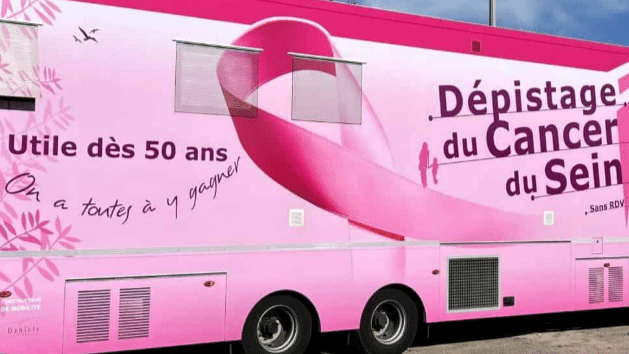
Across many rural landscapes, the distance between a patient and a life-saving diagnosis can be a matter of miles, transportation barriers, or simply a lack of local infrastructure. In the fight against breast cancer, where early detection is the most powerful tool for survival, these geographic hurdles often lead to dangerous delays. To bridge this gap, France is increasingly deploying “Mammobiles”—specialized mobile radiology units that bring high-tech screening directly to the doorsteps of women in underserved areas.
These mobile units are more than just convenient; they are a critical public health intervention designed to combat “medical deserts” and rising inequalities in healthcare access. By removing the need for long-distance travel to urban radiology centers, mobile breast cancer screening initiatives aim to increase participation rates among women aged 50 to 74, the primary demographic for organized screening programs.
The urgency of these initiatives is underscored by the prevalence of the disease. Breast cancer remains the most frequent cancer among women in France and is a leading cause of cancer-related mortality. However, when detected early via mammography, the majority of cases can be successfully treated, often before anomalies are even perceptible to the touch.
Bringing Care to the CCPHG Territory: April Screening Dates
In a targeted effort to facilitate access to care, a Mammobile is scheduled to visit the territory of the Communauté de Communes Pays de Haute-Garonne (CCPHG) in mid-April. This initiative, led by the association Ariège Prévention Mobile with support from local Maisons de Santé Pluriprofessionnelles and the Dispositif d’Appui à la Coordination de la Haute-Garonne, provides an essential service to women who may have missed their regular check-ups.

The mobile unit will be available to women aged 50 to 74, who can receive a control examination without a medical prescription. The schedule for these visits is as follows: on April 13 in Bagnères-de-Luchon (at the casino parking lot) and on April 14 and 15 in Saint-Béat-Lez (at the Maison de santé Serge Huet).
The unit will operate from 9:00 AM to 12:30 PM and from 1:00 PM to 5:50 PM. Women who have not had a mammography in more than one year and ten months are encouraged to book an appointment via Doctolib or by calling 05 32 74 14 43. To facilitate the process, patients should bring their Carte Vitale, a valid piece of identification, and their most recent mammography results if available.
Addressing the Decline in National Screening Rates
The deployment of mobile units is a response to a worrying trend in preventative health. Since 2004, France has maintained an organized screening program inviting women aged 50 to 74 to undergo a mammogram and clinical examination every two years. Despite this, participation has been declining since 2012. By 2021, the participation rate had fallen to 50.6%.
Medical professionals have identified significant disparities in screening rates within disadvantaged populations and those living far from radiology centers. In Normandy, for example, a 27-ton semi-trailer serves as a mobile radiology clinic to reach isolated communes. This effort is vital given that breast cancer was responsible for 12,000 deaths annually, with 58,000 cases diagnosed in 2018 alone.
By transforming a vehicle into a fully equipped medical suite, health authorities can proactively reach women who might otherwise opt out of screening due to the logistical burdens of rural life. This strategy shifts the burden of movement from the patient to the provider, effectively dismantling the barriers to early detection.
How Mobile Screening Works: Logistics and Access
A “mammotest” is essentially a specialized X-ray of both breasts. The procedure is designed to be quick—typically taking less than 20 minutes—and is used to detect unusual or abnormal images in women who do not currently feel ill. This allows for the identification of anomalies at a stage where they are most treatable, limiting the severity of subsequent treatments and improving long-term outcomes.

Depending on the region, the administrative process for accessing these mobile units may vary. In the Hérault region, for instance, the Mammobile operated by the Association Montpellier-Hérault pour le Dépistage du Cancer du Sein (AMHDCS) allows women aged 50 to 74 to receive free screenings funded by the State and the Caisses d’Assurance Maladie. In some cases, these units operate on a walk-in basis without the need for a prior invitation or appointment, provided the patient has their ID and Carte Vitale.
Key Requirements for Patients
- Age Eligibility: Generally targeted at women between 50 and 74 years ancient.
- Documentation: A valid ID (Passport or Residence Permit) and a Carte Vitale are mandatory.
- Medical History: Providing the results of the previous mammography is highly recommended to allow radiologists to compare images over time.
- Frequency: The standard recommendation is to undergo screening every two years.
The Public Health Impact of Mobile Radiology
The integration of mobile medical units represents a shift toward “proactive” rather than “reactive” healthcare. When screening is confined to urban hospitals, the system relies on the patient’s ability to navigate transportation, and scheduling. In contrast, the Mammobile model treats the community as the clinic.
This approach is particularly effective in rural areas where the closure of local clinics has created healthcare voids. By partnering with local health houses (Maisons de Santé) and coordination devices, these mobile units integrate into the existing local health ecosystem, ensuring that women are not only screened but as well referred to the appropriate follow-up care if an anomaly is detected.
the goal is to normalize preventative screening as a routine part of women’s health. By making the process painless, fast, and geographically accessible, health organizations hope to reverse the decline in participation and reduce the mortality rate associated with late-stage breast cancer diagnoses.
| Region/Territory | Primary Goal | Key Feature | Target Demographic |
|---|---|---|---|
| CCPHG (Luchon/Saint-Béat-Lez) | Rural access in Haute-Garonne | Appointment via Doctolib/Phone | Women 50-74 |
| Hérault | Free, accessible screening | Walk-in (no appointment needed) | Women 50-74 |
| Normandy | Reaching isolated communes | 27-ton mobile radiology semi-trailer | Women 50-74 |
The next confirmed checkpoint for the CCPHG territory is the arrival of the Mammobile in Bagnères-de-Luchon on April 13, 2026. Local residents are encouraged to review their medical records and schedule their appointments to take advantage of this limited-time service.
Do you live in an area with limited healthcare access? Share your experiences with mobile clinics in the comments below or share this article with someone who may benefit from these screening dates.