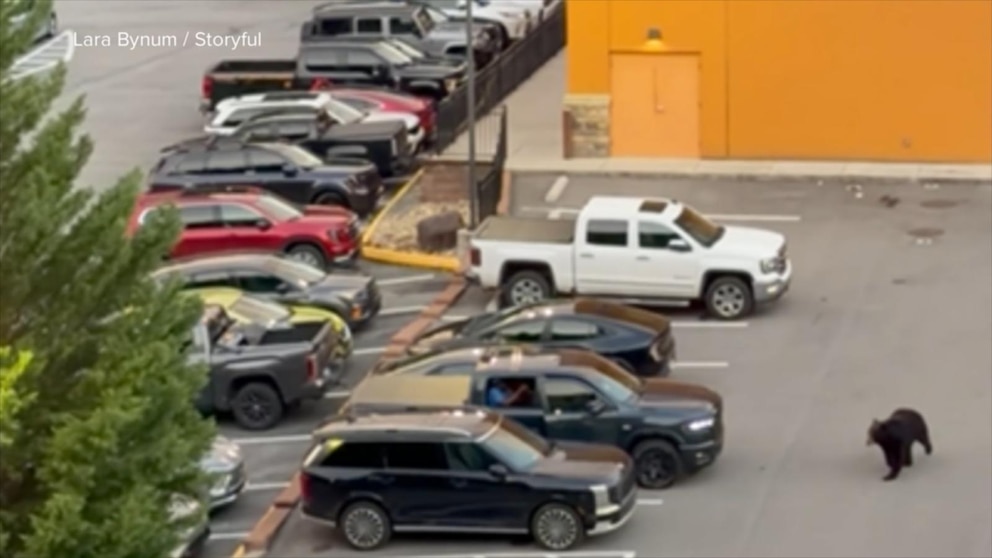
A black bear wandering through a Tennessee parking lot caused a brief commotion as shoppers retreated to their vehicles to avoid a direct encounter with the animal. The incident, which occurred in an area known for frequent human-bear interactions, highlights the ongoing safety challenges for residents and visitors in regions where wildlife habitats overlap with commercial centers.
According to the Tennessee Wildlife Resources Agency (TWRA), black bears are increasingly active in urban and suburban environments, particularly when seeking food sources. While the encounter in the parking lot did not result in injuries, officials consistently advise the public to maintain a significant distance from bears, as these animals can become unpredictable when they feel threatened or cornered.

During the event, onlookers observed one individual attempting to approach the bear at a close range, appearing to prioritize capturing a photograph over maintaining a safe distance. Wildlife experts warn that such behavior is not only dangerous to the individual but can also alter the animal’s natural behavior, potentially leading to a defensive response.
The TWRA emphasizes that humans should never approach a bear for any reason, including photography. When a bear is spotted in a public area, the recommended procedure is to remain in a secure vehicle or move to a safe building. If caught in the open, the agency suggests slowly backing away while keeping eyes on the bear, avoiding direct eye contact, and speaking in a calm, assertive tone.
Tennessee’s black bear population has seen a steady recovery over the last several decades, according to data provided by the Tennessee Wildlife Resources Agency. As the population expands, bears often follow natural corridors that lead them into developed areas. Management efforts in the state focus on “BearWise” initiatives, which encourage businesses and homeowners to secure trash, remove bird feeders, and eliminate other attractants that might draw bears into parking lots and residential streets.
The safety of both the public and the bears depends on these proactive measures. When bears become habituated to human food, they often lose their natural fear of people, which significantly increases the risk of negative encounters. State wildlife officers typically monitor such situations, and if a bear exhibits aggressive behavior, they may intervene to haze or relocate the animal to prevent further incidents.

For those living or traveling in Tennessee, the TWRA provides comprehensive safety guidelines and reporting tools on their official website. Residents are encouraged to report sightings of bears that appear to be causing property damage or acting aggressively, as these reports help officials track animal behavior and mitigate potential conflicts before they escalate.
As of this report, there have been no further updates regarding the specific location or the current status of the bear involved in the parking lot incident. Local law enforcement and wildlife agencies continue to monitor the area for recurring activity. Readers who have witnessed similar wildlife interactions are encouraged to share their experiences and stay informed by checking the latest advisories from regional conservation authorities.