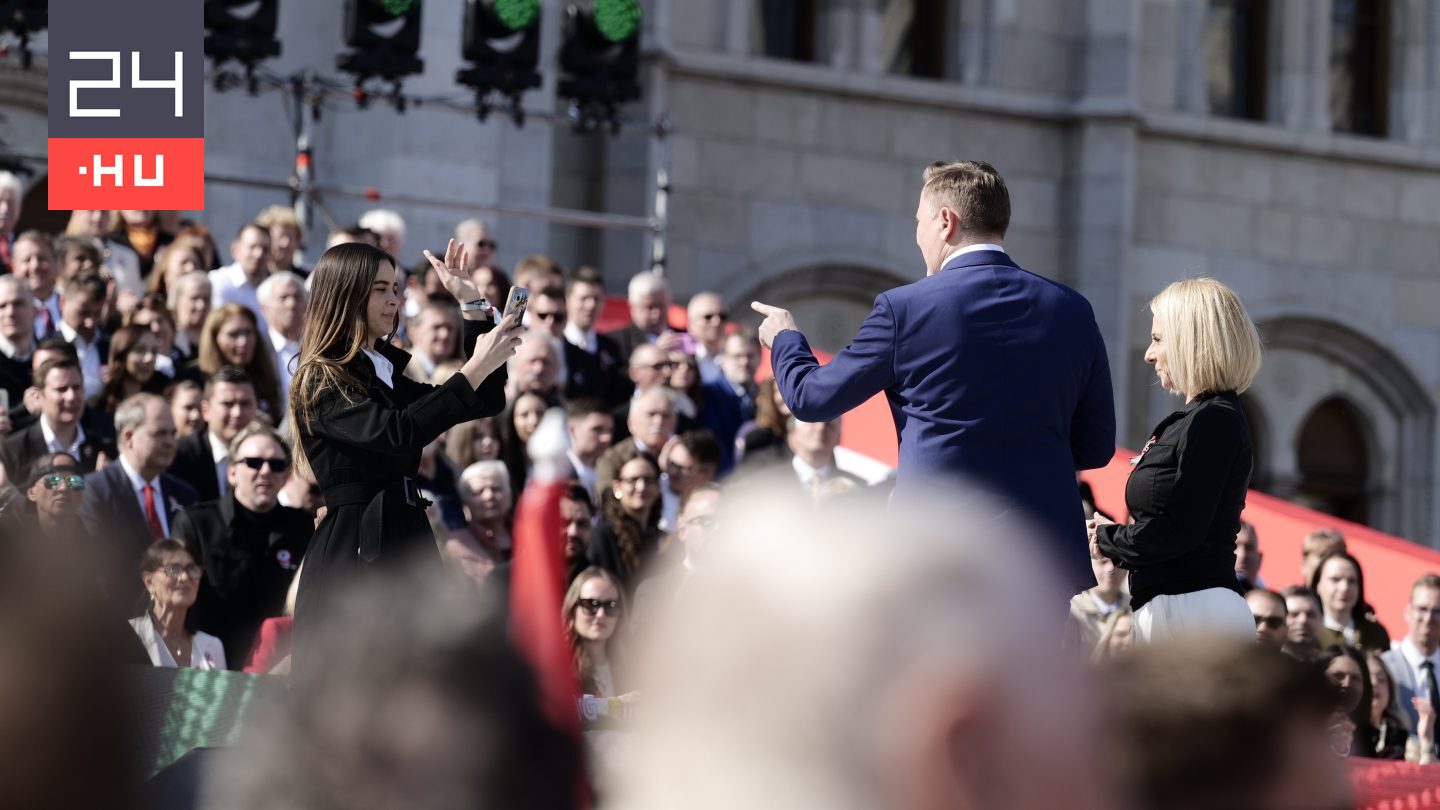
Budapest – As Hungary marked its national day on March 15th, 2026, celebrations and political demonstrations unfolded across the capital. Even as traditional commemorations took place, the day was also marked by a visible display of support for various political factions, including a notable gathering of public figures aligned with the current government. The presence of celebrities and athletes at a rally supporting Prime Minister Viktor Orbán sparked considerable discussion and media attention, highlighting the intersection of politics and popular culture in Hungary.
The annual commemoration of the 1848 Hungarian Revolution, a pivotal moment in the nation’s history, typically involves speeches, flag-raising ceremonies and cultural events. This year, Prime Minister Orbán addressed supporters at Kossuth Square, a traditional venue for national celebrations. Simultaneously, a counter-demonstration organized by the CÖF (Civic Forum) and a “National March” led by Péter Magyar, a recently prominent political figure, added another layer to the day’s events. The Tisza Party, a new political force, also held a demonstration, with supporters marching from Deák Ferenc tér to the Heroes’ Square. 24.hu provided live coverage of the day’s events, detailing the movements and speeches of key players.
A Notable Gathering of Supporters
Photographs and reports quickly circulated showing a diverse group of well-known Hungarians assembled in support of Prime Minister Orbán. The gathering included figures from the entertainment industry, sports, and public life. Among those present were VV Béci, a reality television personality, and Róka, an MMA fighter who recently came out publicly. The presence of these individuals, alongside established celebrities, signaled a deliberate effort to broaden the base of support for the ruling Fidesz party.
According to reports from Hírstart, the list of attendees extended to include Hajdú Péter, a television personality; Zoltán Erika, a singer; Kiki (Patkó Béla), a musician; Miklósi Erika, an actress; Nacsa Olivér, a television personality; and Sasvári Sándor, a singer. Several athletes were also in attendance, including Nagy Tímea, Szécsi Zoltán, Böde Dániel, and Gróf Dávid. TV2 personalities Marsi Anikó and Gönczi Gábor were also present, further demonstrating the reach of the government’s support network within the media landscape.
VV Béci’s Criticism of Péter Magyar
Adding another dimension to the day’s political discourse, VV Béci, following an appearance on TV2, publicly criticized Péter Magyar. Független Nemzet reported that Béci characterized Magyar’s behavior during a recent debate with Toroczkai László in Dorog as aggressive and disrespectful. The incident, which reportedly escalated into accusations of antisemitism and required police intervention, drew widespread condemnation. Béci’s criticism highlights the internal divisions and escalating tensions within the Hungarian political scene.
Béci specifically took issue with Magyar’s conduct during the Dorog debate, describing it as “tiszteletlen és beképzelt” (disrespectful and conceited). He further stated that Magyar’s actions were “rendesen óvodás mód” (like a preschooler) and questioned his suitability for leadership, suggesting that his aggressive demeanor raised concerns about his potential governance style. Béci’s comments reflect a broader sentiment among some observers who view Magyar’s populist rhetoric as divisive and potentially destabilizing.
The Dorog Incident and its Aftermath
The confrontation between Péter Magyar and Toroczkai László in Dorog on February 29th, 2026, became a focal point of political debate. Reports indicate that the exchange of words escalated into accusations of antisemitism, prompting the intervention of law enforcement officials. While details of the exchange remain contested, the incident underscored the increasingly polarized nature of Hungarian politics. The event prompted calls for greater civility and respect in political discourse, but also fueled further division among supporters of different factions. The exact nature of the accusations and the subsequent police investigation are still unfolding, but the incident has undoubtedly left a lasting impact on the political landscape.
The Significance of Celebrity Endorsements
The presence of prominent figures at the pro-Orbán rally raises questions about the role of celebrity endorsements in contemporary politics. While such endorsements are not uncommon, their impact can be significant, particularly in mobilizing support among specific demographics. The inclusion of individuals from diverse fields – entertainment, sports, and media – suggests a strategic effort to appeal to a broad spectrum of voters. The government’s ability to attract such high-profile supporters underscores its continued influence and reach within Hungarian society.
Political analysts suggest that celebrity endorsements can serve multiple purposes. They can enhance a candidate’s visibility, generate positive media coverage, and create a sense of momentum. However, they can also be met with skepticism, particularly if the endorsing celebrity is not perceived as politically engaged or knowledgeable. In the case of Hungary, the involvement of celebrities in political rallies reflects a broader trend of increasing polarization and the blurring of lines between entertainment and politics.
Looking Ahead: Continued Political Polarization
As Hungary navigates a period of heightened political tension, the events of March 15th, 2026, serve as a reminder of the deep divisions within the country. The upcoming months are likely to see continued political maneuvering as various factions vie for power and influence. The next key date to watch will be the upcoming local elections scheduled for October 2026, which will provide a crucial test of public sentiment and could reshape the political landscape. The ongoing debates surrounding issues such as immigration, national identity, and economic policy are likely to remain at the forefront of the political agenda.
The interplay between established political forces and emerging figures like Péter Magyar will continue to shape the direction of Hungarian politics. The role of social media and the dissemination of information through online platforms will also be critical in influencing public opinion. As Hungary moves forward, it will be essential to foster a climate of constructive dialogue and respect for diverse perspectives in order to address the challenges facing the nation.
What are your thoughts on the involvement of celebrities in political rallies? Share your opinions in the comments below, and don’t forget to share this article with your network.
Worth a look