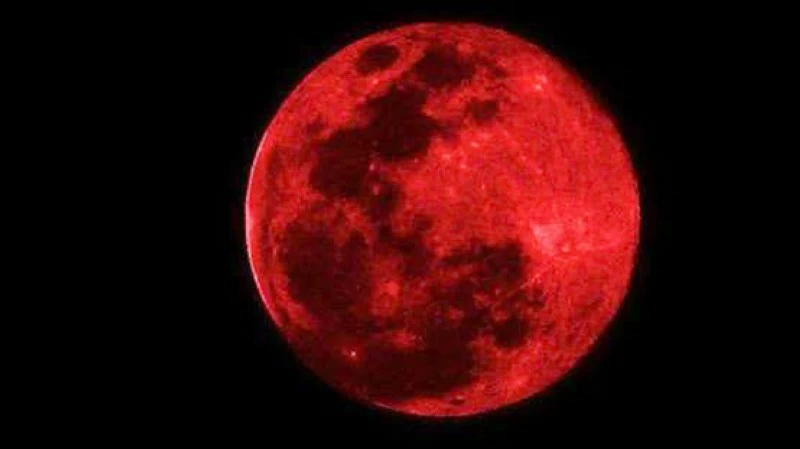
A ‘Blood Moon’ to Grace Skies Worldwide on March 3rd
Skywatchers across the globe are preparing for a spectacular celestial event: a total lunar eclipse, often referred to as a ‘blood moon,’ set to occur on March 3rd. This phenomenon, where the Moon takes on a reddish hue, isn’t a sign of cosmic upheaval, but a beautiful demonstration of physics at play. The distinctive color arises as sunlight filters through Earth’s atmosphere, scattering away most of the blue light and allowing the longer wavelengths of red and orange to reach the lunar surface. This upcoming eclipse promises to be a visually striking event, captivating both seasoned astronomers and casual observers alike.
Unlike a solar eclipse, which requires specialized eye protection, a lunar eclipse is perfectly safe to view with the naked eye. This makes it an accessible event for anyone with a clear view of the night sky. The total phase of the eclipse, when the Moon is fully immersed in Earth’s shadow, can last for over an hour in some locations, offering ample opportunity to witness the dramatic transformation of our celestial neighbor. The exact duration and visibility will vary depending on geographic location and weather conditions, but the eclipse will be visible across North and South America, Australia and parts of Europe and Asia, according to timeanddate.com. Time and Date provides detailed viewing information for specific locations.
Understanding the Science Behind the ‘Blood Moon’
A total lunar eclipse occurs when the Sun, Earth, and Moon align in a nearly straight line, with Earth positioned directly between the Sun and the Moon. This alignment casts Earth’s shadow onto the lunar surface. Yet, the shadow isn’t complete darkness. Earth’s atmosphere acts as a lens, bending some sunlight towards the Moon. As mentioned, the shorter wavelengths of light, like blue, are scattered away, while the longer wavelengths, like red and orange, are refracted and reach the Moon, giving it that characteristic reddish glow. This process is similar to why sunsets appear red – the sunlight travels through more of the atmosphere, scattering away the blue light.
The intensity of the red color can vary depending on the amount of dust and clouds in Earth’s atmosphere. A clearer atmosphere will result in a brighter, more vibrant red hue, while a more polluted or cloudy atmosphere can lead to a darker, more muted color. Scientists use the Bortle scale to measure the darkness of the night sky, and atmospheric conditions play a significant role in how the ‘blood moon’ appears. The phenomenon isn’t rare, occurring periodically as part of predictable lunar cycles, but its visual impact continues to fascinate and inspire.
Visibility and Timing: When and Where to Look
The March 3rd lunar eclipse will be visible across a wide swath of the globe. According to CTV News, the eclipse will be visible from anywhere in Canada. CTV News details the visibility across Canada. Inside Halton reports that the ‘blood moon’ will rise in Ontario and across Canada early tomorrow morning, providing specific timing details for Canadian viewers. Inside Halton’s article offers a regional perspective on viewing opportunities.
The exact timing of the eclipse phases will vary depending on your location. Generally, the penumbral phase – where the Moon enters the outer, fainter part of Earth’s shadow – will begin before the total eclipse. This phase is often subtle and difficult to notice. The partial phase, where a portion of the Moon is covered by Earth’s umbral shadow, will be more apparent. Finally, the total phase, when the entire Moon is within the umbra, will offer the most dramatic view. It’s crucial to check local astronomy resources or websites like Time and Date for precise timings specific to your location.
Beyond the Visual Spectacle: The Significance of Lunar Eclipses
While visually stunning, lunar eclipses also hold scientific value. Historically, they’ve been used to refine our understanding of Earth’s atmosphere and the Moon’s orbit. By studying how sunlight is filtered and refracted through Earth’s atmosphere during an eclipse, scientists can gain insights into the composition and dynamics of our planet’s atmospheric layers. Precise measurements of eclipse timings have contributed to our knowledge of the Moon’s orbital path and its subtle variations.
The increasing accessibility of high-resolution astronomical images and the growing public interest in space science have amplified the cultural impact of events like the ‘blood moon.’ Social media platforms are often flooded with stunning images captured by amateur and professional astronomers alike, fostering a sense of shared wonder and inspiring a deeper appreciation for the cosmos. The phenomenon isn’t scientifically rare, as experts confirm that these eclipses occur within known and precisely calculated cycles, but the striking visual display continues to capture the public imagination.
Key Takeaways
- A total lunar eclipse, or ‘blood moon,’ will occur on March 3rd, visible across much of the world.
- The reddish hue is caused by sunlight being filtered and refracted through Earth’s atmosphere.
- Lunar eclipses are safe to view with the naked eye and offer a captivating celestial spectacle.
- The timing and duration of the eclipse will vary depending on your location.
- Scientists use lunar eclipses to study Earth’s atmosphere and refine our understanding of the Moon’s orbit.
Looking ahead, astronomers are already tracking future lunar and solar eclipses. The next total solar eclipse, which will be visible across parts of North America, is scheduled for April 8, 2024. This event will offer a different, but equally awe-inspiring, celestial experience. For those interested in learning more about upcoming astronomical events, resources like NASA’s eclipse website provide detailed information and viewing guides. NASA’s eclipse website is a valuable resource for eclipse information.
The March 3rd ‘blood moon’ promises to be a memorable event for skywatchers around the world. Whether you’re an experienced astronomer or simply curious about the cosmos, take the opportunity to step outside and witness this beautiful demonstration of nature’s wonders. Share your photos and observations with us in the comments below, and don’t forget to share this article with your friends and family!
Keep reading