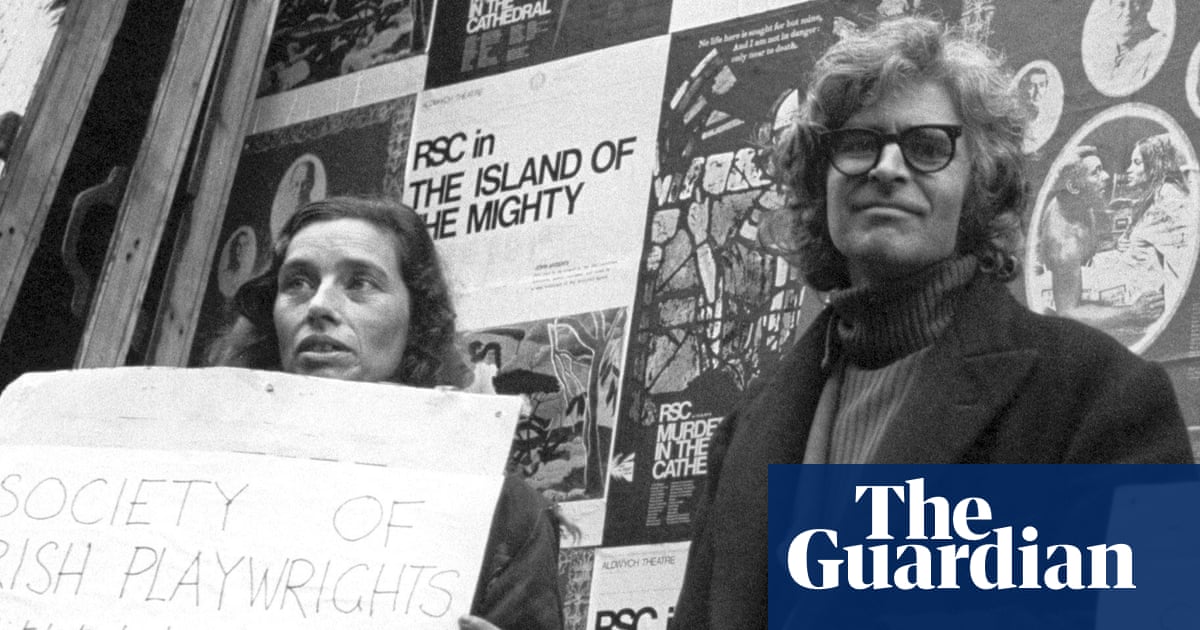
Remembering Margaretta D’Arcy: A Life Dedicated to Art and Activism
Margaretta D’Arcy, a prolific writer and dedicated activist, passed away on November 23, 2025, at the age of 91. Her life was a compelling blend of theatrical innovation and unwavering political commitment, leaving a significant mark on both the Irish and british cultural landscapes.
Born on June 14, 1934, D’Arcy’s early life was shaped by a family’s relocation to dublin following world War II. She received her education at school in Cabra and later at trinity College, where she pursued her passion for drama.
A brief stint at the newly established Pike Theater in 1953, known for its international outlook, preceded her return to London. There, she embarked on a career as an actor and, alongside her future partner John Arden, became a founding signatory of Bertrand Russell’s Committee of 100 in 1960. This group championed anti-war causes and included prominent figures like film director lindsay Anderson and CND co-founder Pat Arrowsmith.
A Return to Ireland and Deepening Activism
A pivotal move back to Ireland with Arden in 1968 saw the couple settle in Galway. Thay frequently traveled back to London for theatrical projects and demonstrations. D’Arcy actively joined the civil rights movement in Northern Ireland, as well as Sinn Féin, tho she was later expelled due to “political differences.” She also became involved with the Society of Irish Playwrights, which would later evolve into the Writers Guild of ireland.
You might recognize the couple’s most enterprising work, The Non-Stop Connolly Show (1975).This rousing, six-part chronicle of James Connolly‘s life, the Marxist union leader who fought in the 1916 Easter Rising, premiered in Dublin over Easter weekend and ran continuously for 26 hours.
Collaborative Works and Lasting Legacy
throughout her career, D’arcy collaborated extensively with Arden, creating impactful and thought-provoking pieces. Consider their touring production of vandaleur’s Folly (1978), which explored the anger and disillusionment surrounding communal farming, the rise of the Orange order, and the injustices of the slave trade.
Furthermore, their nine-play epic for BBC radio, Whose Is the Kingdom? (1988), offered a critical examination of the origins of Christendom and contrasted it with the concept of a deistic monarchy.
Arden’s passing in 2012 was a profound loss. D’Arcy also experienced personal tragedy, predeceased by two of her five sons: Gwalchmei, who died in infancy, and Jacob, who passed away in 2013. She is survived by her three remaining sons, Finn, Adam, and Neuss, and six grandchildren.
D’Arcy’s 2005 memoir, Loose Theatre, offered a deeply moving account of her life and experiences, including the heartbreaking loss of her son Gwalchmei. Her work continues to inspire and challenge audiences, solidifying her place as a vital voice in Irish and British arts and activism.
Margaretta D’Arcy‘s dedication to both artistic expression and social justice leaves behind a legacy that will resonate for generations to come.