
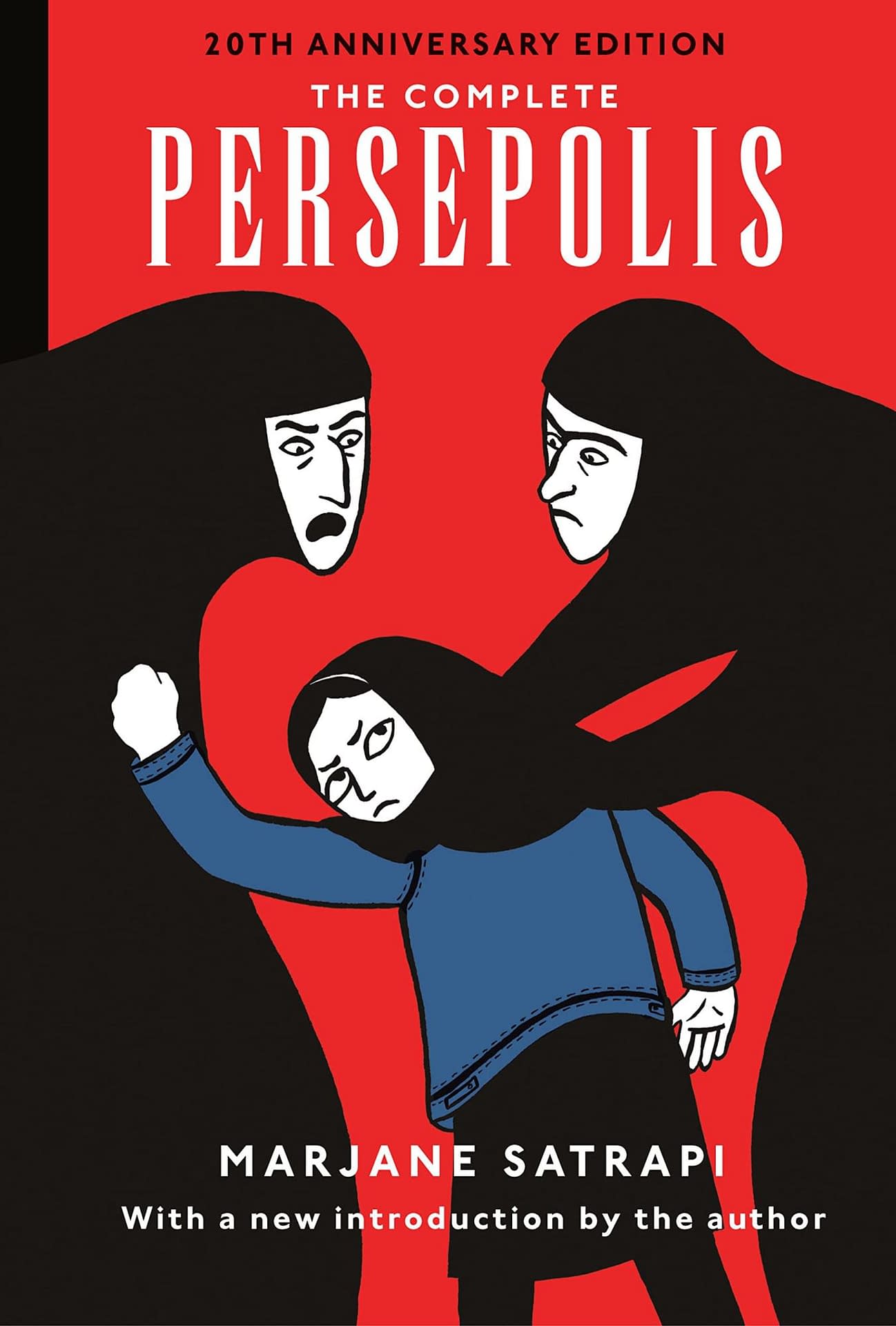
The international literary and artistic community is in mourning today following the announcement that Marjane Satrapi, the celebrated Iranian-French author and filmmaker, has died at the age of 56. Known globally for her pioneering graphic novel Persepolis, Satrapi’s work served as a bridge between cultures, transforming the personal narrative of her upbringing in Tehran into a universal fable that resonated with millions of readers.
Her passing was confirmed by her family in a statement provided to the French news agency AFP. According to reports from French media outlets, including accounts from those close to the artist, Satrapi died of “sadness,” following the death of her husband, the Swedish actor, producer, and screenwriter Mattias Ripa, just over a year ago. While no further details regarding a medical cause of death have been released, the news has prompted an outpouring of tributes from political and cultural leaders who recognize her profound impact on modern storytelling.
A Voice for Freedom and Universal Narrative
Born in 1969, Satrapi’s life was defined by a journey that spanned continents and ideologies. Raised in a communist-leaning household in Tehran, she navigated the tumultuous years of the 1979 Islamic Revolution. Her parents eventually sent her to Vienna as a teenager for her safety, a period of exile that would later become a central theme in her work. She eventually returned to Iran to pursue studies in fine arts before settling in France, where she continued her artistic training in Strasbourg.
The French presidency, led by Emmanuel Macron, issued an emotional tribute on Thursday, June 4, 2026, highlighting the loss of a “figure of French culture.” The statement from the Élysée Palace described Satrapi as an “artist enamored of freedom” whose work carried a message that transcended borders. “Her passing is that of a figure of French culture and of an artist enamored of freedom, whose work carried a universal message and had earned her immense international renown,” the official statement noted, as reported by the Associated Press.
The Legacy of ‘Persepolis’
Satrapi is perhaps best known for her 2000 autobiographical graphic novel Persepolis. Utilizing a stark, black-and-white visual style, the book chronicled her childhood during and after the 1979 Islamic Revolution. The memoir was lauded for its ability to mix political defiance with dark, intimate humor, effectively making her one of the most significant graphic novelists of her generation. The work was later adapted into an animated film, which secured the jury prize at the Cannes Film Festival and earned an Academy Award nomination.

Beyond her iconic graphic novel, Satrapi’s career was diverse and prolific. She directed several feature films, including Chicken with Plums and The Voices. In 2019, she explored the life of scientific pioneer Marie Curie in the biopic Radioactive. Her commitment to the arts extended to the next generation; she was a member of the French Academy of Fine Arts and, earlier in 2026, established a foundation dedicated to assisting international students in traveling to Paris to pursue film studies, according to USA Today.
An Enduring Artistic Influence
The French Academy of Fine Arts expressed its profound sorrow regarding the loss of a “passionate advocate for cinema and film education.” Colleagues and peers across the cultural landscape have noted that her influence reached far beyond the medium of the graphic novel. By centering the Iranian experience within a framework accessible to a global audience, Satrapi helped normalize the graphic memoir as a vehicle for serious political and social commentary.
Her death marks the end of a singular chapter in contemporary arts. As the world reflects on the career of a woman who turned the starkness of exile into a vibrant, enduring body of work, the tributes continue to emphasize her role as a voice for those living between cultures. Her ability to synthesize the political with the deeply personal ensured that her stories would remain relevant long after they were first published.
As of this writing, We find no further official events or public memorials announced by the family or the French government. Readers and admirers of her work continue to share their condolences through cultural organizations and social media platforms. We invite our readers to share their thoughts and memories of Marjane Satrapi’s work in the comments section below.