
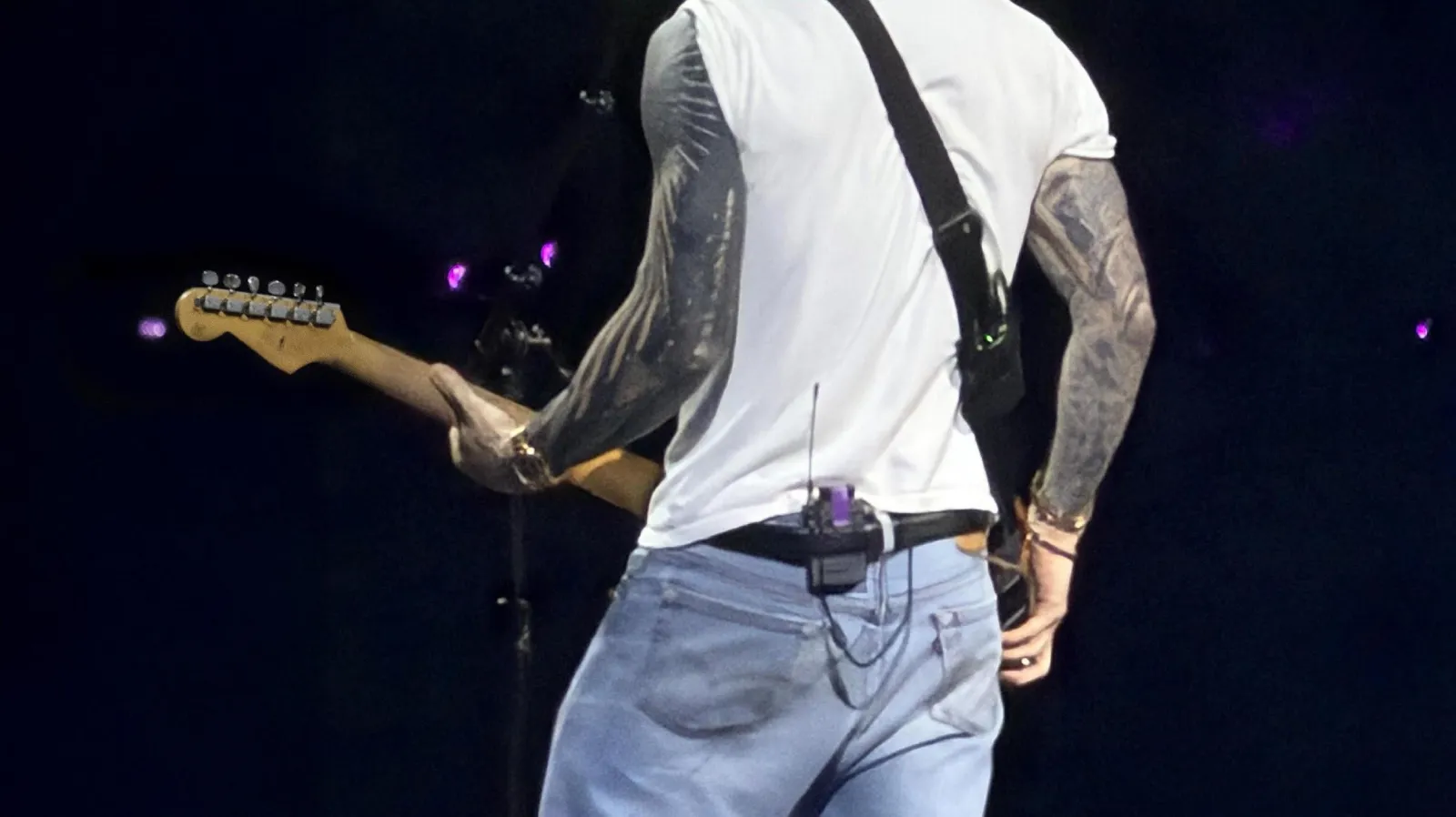
For decades, the gold standard of live concert audio has relied on a delicate balance of precision and reliability. While digital revolutions have long since transformed front-of-house consoles and line array systems, one critical component remained stubbornly tethered to older technology: the In-Ear Monitor (IEM) transmission. For the artists on stage, these systems are the only lifeline to their timing and pitch, yet they have remained vulnerable to the invisible chaos of the radio spectrum.
This technical ceiling was recently shattered during Maroon 5’s 2025 tour. Facing the mounting challenges of an increasingly crowded UHF spectrum, the band’s audio team transitioned to the Sennheiser Spectera wideband digital wireless system. This move marks a significant pivot away from traditional analog RF (radio frequency) dependencies, aiming to eliminate the interference that has plagued high-stakes arena performances for years.
The shift was spearheaded by monitor engineer Dave Rupsch, a 25-year industry veteran who has managed audio for global icons including Katy Perry, My Chemical Romance, Megadeth, the Red Hot Chili Peppers, and Nick Jonas. For Rupsch, finding a truly seamless digital IEM transmission had been a “white whale”—the final piece of the puzzle required to perfect modern concert audio technology.
The UHF Crisis and the Phoenix Turning Point
The necessity for this upgrade became undeniable due to the saturation of the UHF spectrum. In modern urban environments, the airwaves are crowded with signals, leaving very little “room to maneuver” for wireless audio equipment. This congestion often manifests as a raised noise floor or sudden signal dropouts, which can be catastrophic for a performing musician.

The pressure reached a breaking point during the opening concert of the tour in Phoenix. The city is known for having a radio spectrum that is almost entirely occupied, creating an environment where environmental interference became an unavoidable stressor. Rupsch noted that these factors created additional psychological pressure on the technical crew, as the limitations of traditional RF systems threatened the stability of the band’s monitoring.
To solve this, Rupsch collaborated with Clair Global to implement the Sennheiser Spectera. This technology represents the world’s first two-way wideband digital wireless system, designed specifically to bypass the narrow-band limitations of previous wireless generations. The transition from the testing phase to full-band adoption happened more rapidly than the team had initially anticipated, as the stability of the digital wideband signal provided immediate relief from the interference issues experienced in Phoenix.
Engineering Connectivity for Adam Levine
The implementation of the Spectera system required a strategic physical layout to ensure that lead vocalist and guitarist Adam Levine remained connected regardless of his position. Because arena tours involve significant movement—from the main stage to the thrust and eventually backstage—a standard antenna setup was insufficient.
Rupsch deployed a sophisticated four-antenna configuration to maintain a constant, high-fidelity link. The antennas were positioned in the following key areas:
- The right side of the stage
- The left side of the stage
- The thrust section (the walkway extending into the audience)
- The backstage area
This specific arrangement ensures that the wireless signal follows Levine seamlessly as he moves through the crowd, retreats to the backstage area, or enters the dressing rooms, removing the risk of audio dropouts during critical transitions in the performance.
The Modern Lineup and the Digital Shift
The adoption of this technology supports a complex stage dynamic for the current iteration of Maroon 5. The band’s current lineup includes Adam Levine, rhythm guitarist and keyboardist Jesse Carmichael, lead guitarist James Valentine, drummer Matt Flynn, keyboardist PJ Morton, and bassist and keyboardist Sam Farrar. Each member relies on the precision of their IEMs to maintain the tight synchronization required for their pop-rock and funk-influenced sound.
By moving to a wideband digital system, the band has essentially future-proofed their live sound. Unlike traditional systems that fight for a sliver of available frequency, the wideband approach allows for a more robust data stream, reducing the likelihood of the “noise floor” issues that previously hampered performances in radio-dense cities.
Key Technical Takeaways
| Feature | Traditional Analog RF | Sennheiser Spectera (Wideband Digital) |
|---|---|---|
| Spectrum Use | Narrow UHF bands | Wideband digital transmission |
| Interference Risk | High in dense urban areas (e.g., Phoenix) | Significantly reduced via digital stability |
| Signal Reliability | Prone to noise floor fluctuations | Consistent, two-way digital connection |
| Deployment | Standard antenna arrays | Multi-point strategic placement (Stage, Thrust, Backstage) |
The transition of Maroon 5 to the Spectera system signals a broader trend in the music industry: the conclude of the analog era for critical monitoring. As urban radio environments become more congested, the industry is forced to move toward wideband digital solutions to ensure that the artist’s experience on stage remains uninterrupted.
With the 2025 tour serving as a successful proof-of-concept, the industry now has a blueprint for overcoming the limitations of the UHF spectrum in arena-scale productions.
World Today Journal will continue to monitor developments in live audio technology and the rollout of wideband wireless systems across major global tours. Share your thoughts on the evolution of concert tech in the comments below.