Potential Biosignatures Detected in Martian Rock: A New Chapter in the Search for Life on Mars
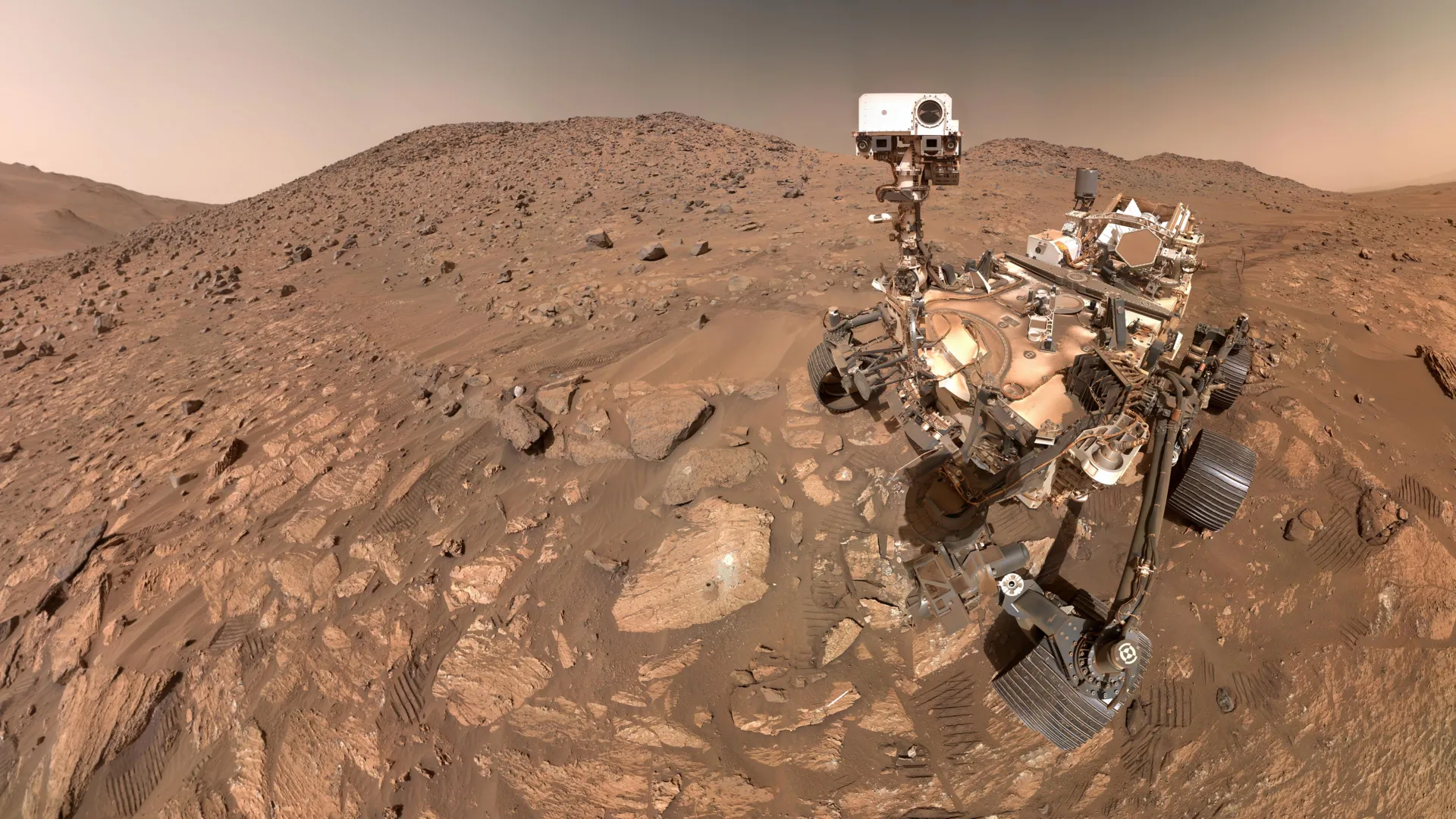
The search for life beyond Earth took a significant step forward with the recent publication of peer-reviewed research detailing compelling evidence of potential biosignatures within sedimentary rocks at Mars’ Jezero Crater. NASA’s Perseverance rover, exploring the ancient lakebed, has uncovered a unique combination of chemical compounds and mineral patterns that strongly suggest the possibility of past microbial life, though definitive proof remains elusive. this revelation, detailed in a recent scientific paper, is now available to the wider scientific community for rigorous scrutiny and further investigation.
For decades,scientists have theorized that Mars,once warmer and wetter,may have harbored life. The Radiant Angel formation, a region within jezero Crater, has proven particularly intriguing. Perseverance’s advanced instruments – the Planetary Instrument for X-ray Lithochemistry (PIXL) and the Scanning Habitable Environments with Raman & Luminescence for Organics & Chemicals (SHERLOC) – identified sedimentary rocks rich in clay, silt, organic carbon, sulfur, oxidized iron (rust), and phosphorus. These materials are known on Earth to be excellent at preserving evidence of past microbial life.
A Promising Chemical Cocktail
The significance lies not just in the presence of these individual elements, but in their combination. ”The combination of chemical compounds we found in the Bright Angel formation could have been a rich source of energy for microbial metabolisms,” explains Joel Hurowitz, a Perseverance scientist at Stony Brook University and lead author of the study.However, the team emphasizes that identifying potential energy sources is only the first step. A thorough analysis was required to determine if these signatures could genuinely point to biological activity.
That analysis focused on a distinctive rock formation dubbed Cheyava Falls, a 3.2 x 2 foot (1m x 0.6m) arrowhead-shaped feature. Initial observations revealed colorful spots on the rock’s surface, prompting further investigation. High-resolution imaging revealed these spots were not random, but formed distinct patterns of minerals arranged into what the team calls “leopard spots.”
“Leopard Spots” and the Potential for Microbial Fingerprints
These “leopard spots” are composed of two iron-rich minerals: vivianite (hydrated iron phosphate) and greigite (iron sulfide). On Earth, vivianite is commonly found in sediments, peat bogs, and around decaying organic matter – environments often teeming with microbial life.Furthermore, certain terrestrial microbes are known to produce greigite as a byproduct of their metabolic processes.
The presence of both minerals, arranged in reaction fronts indicative of electron-transfer reactions, is particularly exciting. Microorganisms frequently utilize these types of reactions to generate energy. however, it’s crucial to acknowledge that these minerals can also form abiotically – without the involvement of life - through processes like sustained high temperatures, acidic conditions, or interactions with organic compounds.
Importantly, the Bright Angel rocks show no evidence of having experienced extreme temperatures or acidity. While organic compounds are present, it remains uncertain whether they could catalyze the necessary reactions at the observed low temperatures. This ambiguity underscores the need for continued investigation.
Re-Evaluating Martian Habitability
This discovery is particularly noteworthy becuase it originates from some of the youngest sedimentary rocks examined by Perseverance.Previous hypotheses suggested that evidence of ancient life would be confined to older geological formations. This finding suggests that Mars may have remained habitable for a longer period, or even later in its history, than previously believed. It also raises the possibility that older rocks, while perhaps more challenging to analyze, may also harbor signs of past life.
Rigorous Scientific Scrutiny and the Path Forward
NASA is proceeding with caution, recognizing the extraordinary claims associated with the potential discovery of extraterrestrial life. “Astrobiological claims, particularly those related to the potential discovery of past extraterrestrial life, require extraordinary evidence,” states Katie stack Morgan, Perseverance’s project scientist at NASA’s Jet Propulsion Laboratory. “Getting such a significant finding as a potential biosignature on Mars into a peer-reviewed publication is a crucial step in the scientific process because it ensures the rigor, validity, and significance of our results.”
The scientific community is employing established frameworks, such as the CoLD scale and Standards of Evidence, to objectively assess the data and determine the level of confidence in any potential biosignature.These tools help to navigate the complexities of interpreting data from another planet and address the essential question: Are we alone?
Continuing the Exploration
Perseverance has already collected 27 rock cores from Jezero Crater, including one from Sapphire Canyon, for potential return to Earth as part of a future mission.These samples will undergo even more detailed analysis in terrestrial laboratories,equipped with instruments far more elegant than those that can be deployed on a rover.
Beyond the search for life, Perseverance is also gathering valuable data for
Keep reading