A Smartphone Chip from 2014 Helps NASA’s Perseverance Rover Navigate Mars
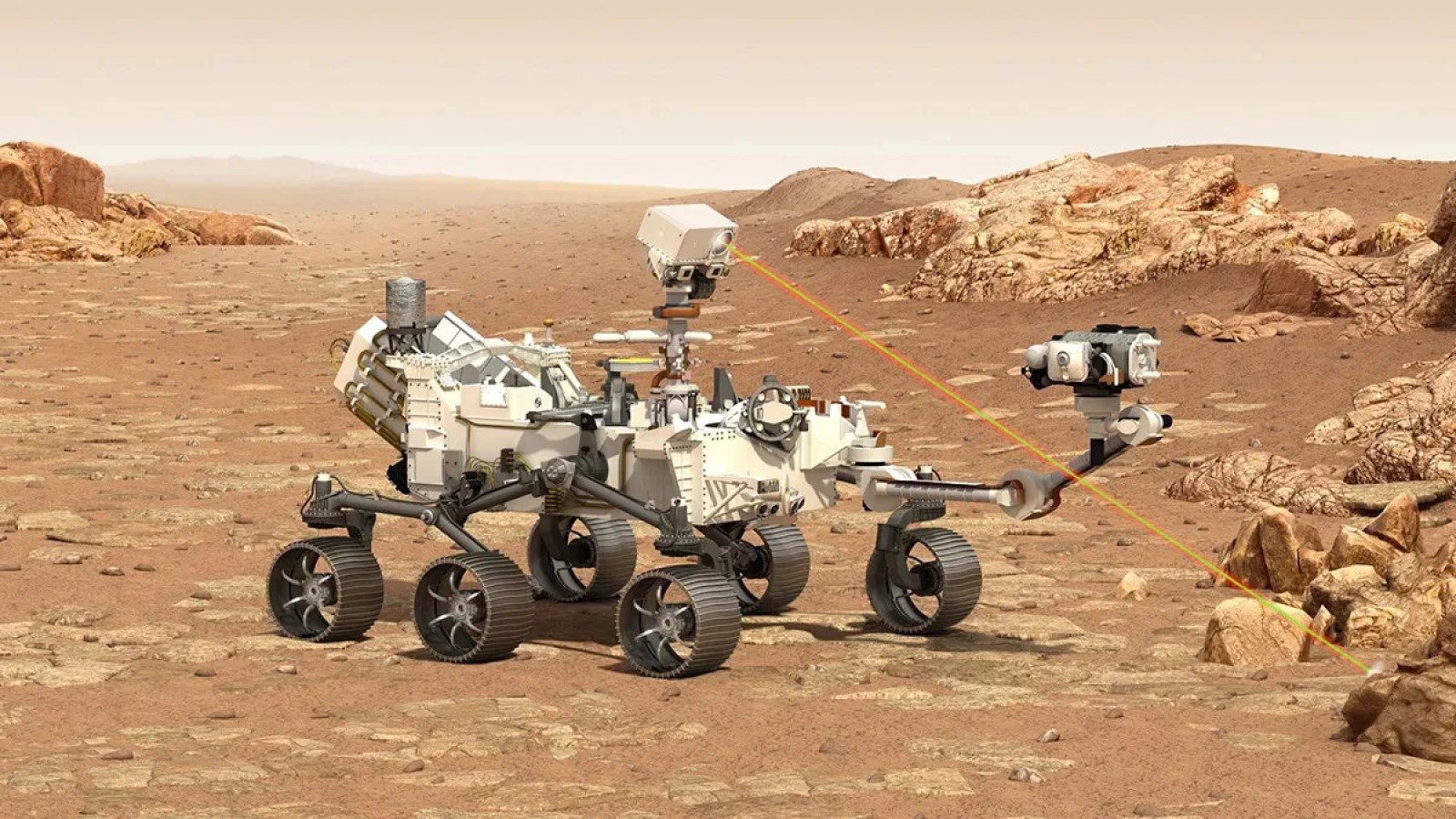
In a remarkable feat of engineering ingenuity, NASA has repurposed a 12-year-old smartphone processor – the Qualcomm Snapdragon 801 – to significantly enhance the autonomous navigation capabilities of the Perseverance rover on Mars. This unexpected solution, born from utilizing hardware from the now-retired Ingenuity helicopter, has dramatically improved Perseverance’s ability to pinpoint its location, reducing navigation errors from potentially losing a day’s worth of exploration to just minutes. The breakthrough highlights the resourcefulness of NASA engineers and the surprising durability of older technology in the harsh Martian environment.
For months, Perseverance had been relying on a method known as “dead reckoning” to navigate the challenging terrain of Jezero Crater. This involved counting wheel rotations to estimate its position. However, the loose Martian soil caused wheel slippage, introducing errors into these calculations. These errors could accumulate to the point where the rover would halt, awaiting verification from mission control on Earth – a process that, due to the significant communication delay between planets, could consume an entire day of valuable exploration time. According to NASA’s Jet Propulsion Laboratory (JPL), this limitation significantly hampered the rover’s efficiency.
The solution came in the form of the Mars Global Localization (MGL) system, which allows Perseverance to determine its location with unprecedented accuracy – within 25 centimeters. This represents achieved by comparing images captured by the rover’s cameras to high-resolution maps created by the Mars Reconnaissance Orbiter (MRO), a spacecraft orbiting the Red Planet. But the processing power required for this complex image analysis was a hurdle. The rover’s primary computer, a RAD750, is designed for radiation hardening – crucial for surviving the intense radiation environment of space – but is not optimized for speed.
The Snapdragon 801: A Second Life on Another Planet
The key to unlocking MGL’s potential lay within the base station of the Ingenuity helicopter, which concluded its mission in January 2024 after an impressive 72 flights. Inside this communication hub resided a Qualcomm Snapdragon 801 processor – the same chip that powered smartphones like the Samsung Galaxy S5 and the Sony Xperia Z3 in 2014. The decision to utilize this “vintage” processor wasn’t about cost savings, but about performance. The Snapdragon 801 is approximately 100 times faster than the RAD750 when it comes to the complex calculations required for image analysis and localization. This speed boost allows Perseverance to determine its position in just two minutes, a dramatic improvement over the previous method.
However, the repurposing wasn’t without its challenges. Engineers discovered that approximately 25 bits of the station’s random-access memory (RAM) had been damaged by radiation exposure during its time on Mars. Rather than abandoning the project, the team cleverly modified the software to isolate and perform around these damaged memory areas. Remarkably, the system functions flawlessly under the Linux operating system, allowing the algorithm to run without crashing despite the hardware’s accumulated wear and tear.
The Ingenuity helicopter, a technology demonstration accompanying Perseverance, proved that powered, controlled flight was possible on Mars, a feat previously thought impossible due to the planet’s thin atmosphere. Ingenuity completed its mission in January 2024 after suffering rotor blade damage, but its legacy continues through this innovative application of its onboard technology. The helicopter’s final flight took place on January 18, 2024, from Airfield Chi (χ) in Valinor Hills, according to NASA’s Mars Helicopter Flight Log.
This innovative use of existing hardware demonstrates a resourceful approach to space exploration, maximizing the value of every component sent to Mars. The success of the MGL system, powered by a smartphone chip from over a decade ago, underscores the importance of adaptability and creative problem-solving in the face of the unique challenges presented by interplanetary missions. The Ingenuity Mars Helicopter, though retired, continues to contribute to the advancement of Martian exploration in unexpected ways.
The Perseverance rover, launched on July 30, 2020, and landing on Mars on February 18, 2021, is tasked with searching for signs of ancient microbial life and collecting rock and soil samples for potential return to Earth. The rover’s mission is centered around Jezero Crater, believed to have once been a lake billions of years ago. The improved navigation capabilities provided by the Snapdragon 801-powered MGL system will be crucial as Perseverance continues its exploration of this scientifically significant region. NASA reports that Perseverance now uses the base station to communicate, further extending the legacy of Ingenuity.
The ability for Perseverance to autonomously pinpoint its location has significant implications for future Mars missions. Reducing reliance on Earth-based control not only saves valuable time but also allows for more efficient exploration and faster scientific discoveries. This advancement paves the way for more ambitious robotic missions and, supports the long-term goal of human exploration of the Red Planet.
As Perseverance continues its journey across the Martian landscape, the repurposed Snapdragon 801 serves as a testament to the enduring power of innovation and the unexpected ways in which technology can find new life, even on another world. NASA is currently planning the Mars Sample Return campaign, which aims to bring the samples collected by Perseverance back to Earth for detailed analysis. Updates on the mission’s progress and the sample return plans can be found on the NASA Mars Exploration Program website.
Key Takeaways:
- NASA has successfully repurposed a 12-year-old smartphone processor (Qualcomm Snapdragon 801) to enhance the navigation of the Perseverance rover.
- The system, called Mars Global Localization (MGL), allows Perseverance to pinpoint its location with an accuracy of 25 centimeters.
- The Snapdragon 801 is 100 times faster than the rover’s primary computer for image analysis, significantly reducing navigation time.
- The hardware was salvaged from the Ingenuity helicopter, which completed its mission in January 2024.
- This innovation demonstrates a resourceful approach to space exploration and maximizes the value of existing technology.
The next major milestone for the Perseverance mission is the continued collection of scientifically valuable samples from Jezero Crater. Stay tuned for further updates on the rover’s discoveries and the progress of the Mars Sample Return campaign. Share your thoughts on this remarkable engineering feat in the comments below!
Keep reading
- Certighost Exploit (CVE-2026-54121): Critical Windows AD Vulnerability Allows Domain Takeover
- Messenger & AI: Shaping Our Daily Lives – 20 Years of Social Media Insights
- Why Nighttime Heat Is Rising Faster Than Daytime Highs in US Cities (daybreakwire.com)
- Spy Shots: Ferrari 12Cilindr, BMW i4 Convertible and Range Rover Sport – Specialty Equipment Market (archyde.com)