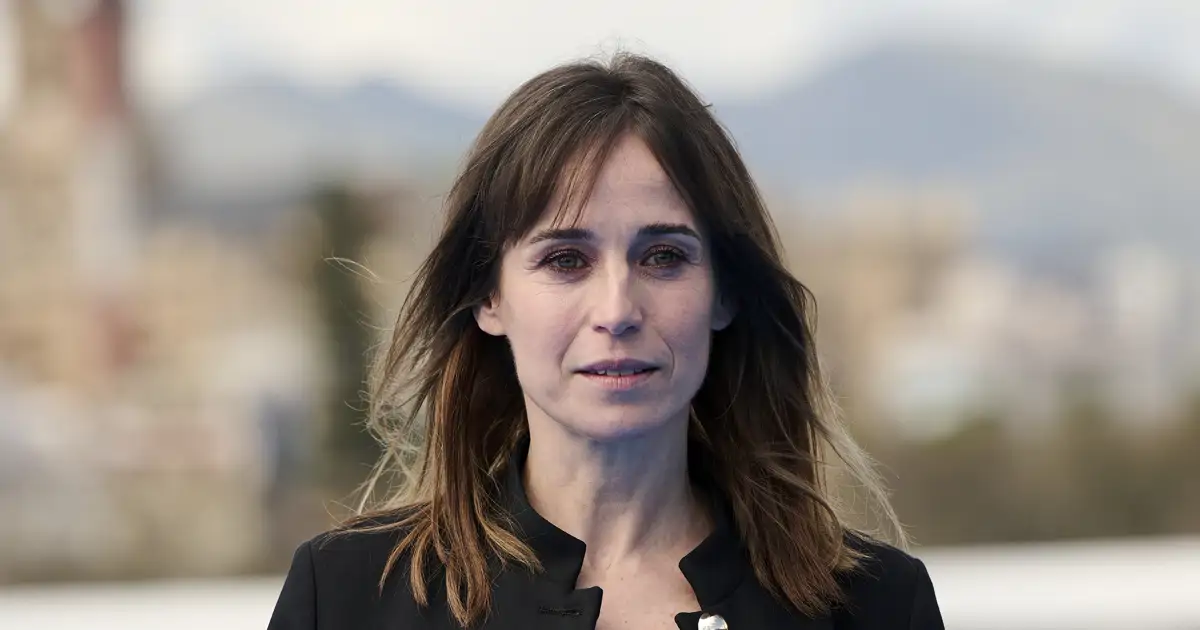
Spanish actress Marta Etura has reflected on one of the most challenging and visceral experiences of her professional career: filming in the Atacama Desert. Describing the process as the most “wild” production she has ever participated in, Etura detailed the grueling nature of the shoot, which involved traversing vast distances and filming in one of the most arid environments on Earth.
The experience was tied to the production of Desierto Sur, a film that took Etura to the northern regions of Chile. The actress recalled the repetitive, demanding cycle of the shoot—driving for kilometers, stopping and filming—which underscored the raw and untamed nature of the landscape. For Etura, a native of San Sebastián, the journey was as much about endurance as it was about performance.
The production of Desierto Sur serves as a bridge between Spanish and Chilean cinema, featuring Etura in a leading role alongside a cast of Chilean actors. The project highlights the physical and emotional toll of filming in remote locations, where the environment becomes a character in its own right, pushing the cast and crew to their limits.
The Cinematic Journey of ‘Desierto Sur’
Directed by Shawn Garry, Desierto Sur is a 100-minute production that premiered in Chile on September 25, 2008 according to Cinencuentro. The film follows the story of Sofía, a Spanish character played by Marta Etura, who is depicted as the top swimmer on her school team. Following the death of her mother, Sofía falls into a deep depression and isolates herself from others.

The plot centers on a discovery Sofía makes in the mail: a letter revealing that her mother had been in love with another man years prior. This man resides in a mythical location known as “Desierto Sur” in northern Chile. Driven by the belief that her mother’s ashes would be better placed in the land of this long-lost love than in the home of her widowed father, Sofía embarks on a journey through the Chilean north to find the man and the place.
The cast features a mix of international and local talent, including Carolina Varleta as Nadia, Alejandro Botto as Gustavo, Ernesto Malbran as Pepe Valencia, Hector Morales as Brittany, and Héctor Noguera as Iñaki Martiarena as detailed by Cinencuentro. The film is noted for its focus on the Atacama region, utilizing the stark beauty and harshness of the desert to mirror the protagonist’s internal emotional struggle.
Challenges of Filming in the Atacama
The Atacama Desert is renowned for being one of the driest places on the planet, and for Etura, this environment created a “wild” filming atmosphere. She noted that the production required constant movement across the landscape, emphasizing the scale of the desert and the logistical difficulty of capturing scenes in such a remote area. “We did kilometers, we stopped, we filmed,” she recalled, highlighting the nomadic nature of the production.
Despite the harshness of the desert, Etura’s personal habits as a “donostiarra” (someone from San Sebastián) influenced her packing list. She mentioned that she always brings a swimsuit, regardless of the destination, stating that she will bathe in any water, whether cold or hot as reported by National Geographic. This detail provides a glimpse into the actress’s personality and her ability to adapt to the contrasting extremes of the Basque coast and the Chilean desert.
Critical Reception and Production Context
Whereas the film provided a significant professional experience for Etura, it was met with mixed critical reception regarding its writing. Some critics argued that the film suffered from script issues, a common critique within the Chilean cinema of that era. Specifically, some reviewers felt that the narrative structure and the motivations of the characters were not fully realized, despite the strong performances and the evocative setting of the Atacama according to a 2008 review by René Martín.
Despite these critiques, Desierto Sur remains a notable entry in the collaboration between Spanish and Chilean artists. The film’s use of the Atacama Desert not only served as a backdrop but as a catalyst for the character’s journey of grief and discovery. The contrast between the “wild” experience of the shoot and the intimate, emotional core of the story defines the project’s identity.
Key Production Details
| Detail | Information |
|---|---|
| Director | Shawn Garry |
| Lead Actress | Marta Etura (as Sofía) |
| Filming Location | Atacama Desert, Chile |
| Runtime | 100 minutes |
| Chilean Premiere | September 25, 2008 |
For readers interested in the intersection of travel and cinema, Etura’s reflections on the Atacama highlight the physical demands placed on actors when filming on location. The transition from the urban environments of Spain to the desolate stretches of northern Chile underscores the versatility required for international co-productions.
As Marta Etura continues her career, her experiences in the “wild” landscapes of Chile remain a benchmark for the most physically demanding roles of her life. The journey to find “Desierto Sur” was not just a plot point for her character, Sofía, but a real-world challenge for the actress herself.
We invite our readers to share their thoughts on the impact of location filming on a movie’s atmosphere in the comments below.