
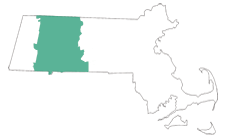
A contentious debate over a proposed 50% property tax hike is creating deep divisions within a Massachusetts community, reflecting a broader struggle across Western Massachusetts to balance essential municipal services with taxpayer affordability. The proposal has sparked intense friction among residents, as the town grapples with significant budgetary pressures and the potential for drastic service cuts if funding is not secured.
The situation is part of a wider trend in the region, where several towns are facing critical decisions regarding tax overrides. In South Hadley, for instance, voters have been tasked with deciding between a tax levy increase of either $9 million or $11 million. These overrides are designed to allow towns to exceed the state-mandated spending limit, typically to fund education, public safety, or infrastructure projects.
The tension arises from a fundamental clash between those advocating for the maintenance of town quality and those who argue that such steep increases are unsustainable for homeowners. This financial pressure is not isolated; other municipalities in the area have seen similar proposals meet with resistance. In Athol, voters recently rejected override questions, leading the Town Manager to predict inevitable cuts in municipal services.
The Mechanics of Tax Overrides and Local Impact
To understand why a property tax hike proposal is tearing the community apart, We see necessary to examine the mechanism of the “override.” In Massachusetts, towns operate under a strict spending limit. When a municipality needs more funding than the limit allows—often due to rising costs in school districts or emergency infrastructure needs—they must ask voters to approve an override. This effectively raises the local tax limit for a set period.
When a proposal suggests a 50% increase, the impact is felt most acutely by residents on fixed incomes and those in middle-income brackets who may find their annual housing costs skyrocketing. This creates a volatile political atmosphere, often manifesting in heated Select Board meetings where candidates are forced to define their vision for the town’s financial future. In South Hadley, candidates for the Select Board have had to address these specific tensions, outlining how they would manage the town’s growth and fiscal responsibilities.
The stakes are high because the alternative to a tax increase is often the reduction of services. When overrides are rejected, as seen in the case of Athol, the town is forced to find savings within existing budgets. This can lead to reduced hours for public libraries, deferred maintenance on roads, or cuts to extracurricular activities in local schools.
Western Massachusetts: A Regional Pattern of Fiscal Strain
The struggle in this specific town is a microcosm of a larger regional crisis in Western Massachusetts. Multiple towns have been forced to put tax overrides to a vote in recent days to address funding gaps. The common denominator across these municipalities is the rising cost of living and the increasing expense of maintaining aging infrastructure.
For many residents, the proposal for a 50% property tax hike feels like a breaking point. Critics of the hikes argue that the town’s administration must find efficiencies and cut waste before asking homeowners to shoulder the burden. Conversely, supporters argue that neglecting the town’s needs now will only lead to more expensive repairs and a decline in property values in the long run.
The social fabric of these minor towns is often strained during these periods. Neighbors who have lived side-by-side for decades find themselves on opposite sides of a fiscal divide, with some viewing the tax hike as a necessary investment in the community’s future and others viewing it as an undue financial hardship.
Key Stakeholders and the Human Cost
The primary stakeholders in this conflict include:
- Homeowners: Particularly seniors on fixed incomes who face the risk of being priced out of their own homes.
- Local Educators and Staff: Who fear that a lack of funding will lead to larger class sizes and fewer resources for students.
- Municipal Employees: Whose jobs and benefits may be at risk if service cuts are implemented following a rejected override.
- Town Officials: Who must navigate the impossible task of maintaining a functioning town within a constrained budget.
The human cost extends beyond the balance sheet. The “tearing apart” of the town refers to the erosion of civic trust and the emergence of polarized factions. When a community is divided over a 50% property tax hike, the debate often shifts from fiscal policy to a clash of values regarding what a town “should” provide for its citizens.
What Happens Next?
The immediate future for these communities depends on the outcome of upcoming votes and the subsequent actions of the Select Boards. If the proposed tax hikes are approved, the towns will have the necessary funds to sustain their current levels of service and potentially invest in new projects. If they are rejected, the focus will shift toward “managed decline” or aggressive austerity measures.
For residents seeking more information, official town meeting notices and ballot descriptions are typically available through the respective town clerk’s offices or official municipal websites. These documents provide the specific breakdown of how the additional funds would be allocated and the projected impact on individual tax bills.
The next confirmed checkpoint for these communities will be the official certification of the override votes and the subsequent budget hearings where the final spending plans for the upcoming fiscal year will be debated and approved.
World Today Journal encourages readers to share their perspectives on local taxation and municipal funding in the comments below.