
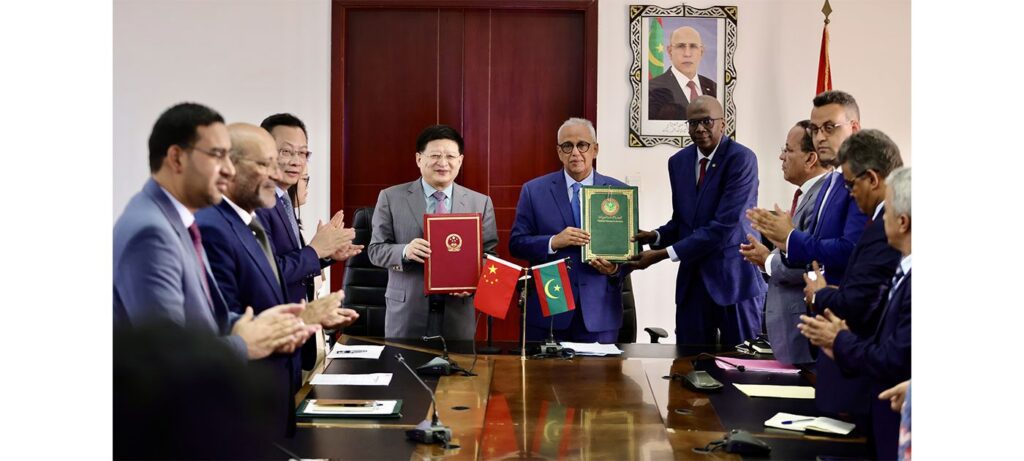
The Mauritanian government and the People’s Republic of China have formalized an agreement to cancel a portion of Mauritania’s outstanding public debt. This diplomatic and financial development was confirmed following a signing ceremony in Nouakchott, signaling a continued effort to strengthen bilateral economic ties between the two nations. The move represents a strategic step in managing Mauritania’s external debt obligations while maintaining its long-standing infrastructure and trade partnership with Beijing.
While the exact total of the debt relief remains subject to final accounting reconciliation by the Mauritanian Ministry of Economy and Finance, the agreement follows a series of high-level discussions aimed at easing the fiscal burden on the West African nation. According to official reports from the Ministry of Foreign Affairs of the People’s Republic of China, such measures are typically structured to support sustainable development in partner countries participating in the Forum on China-Africa Cooperation (FOCAC) framework.
Context of Debt Relief in Mauritania-China Relations
Financial cooperation between Nouakchott and Beijing has historically centered on large-scale infrastructure projects, including port facilities, mining operations, and energy sector investments. For Mauritania, managing its debt-to-GDP ratio is a primary objective of current economic policy, as the nation seeks to balance capital investment with fiscal stability. The International Monetary Fund (IMF) has frequently monitored Mauritania’s debt sustainability, noting that concessional financing and debt restructuring are critical to the country’s macroeconomic health.

This latest protocol follows a pattern of periodic debt forgiveness initiatives provided by China to various African nations. These agreements are often negotiated to provide immediate liquidity relief, allowing governments to redirect resources toward domestic social programs and essential public services. Analysts note that such actions serve to solidify China’s influence in the region while providing practical assistance to partners facing global inflationary pressures and commodity price volatility.
Economic Implications for Mauritania
The partial cancellation of debt is expected to improve Mauritania’s fiscal space, potentially lowering interest payment obligations in the upcoming national budget cycles. By reducing the pressure of debt servicing, the government may find more flexibility to invest in local industries, particularly in the iron ore and fishing sectors, which remain the pillars of the national economy.
According to data from the World Bank, Mauritania has faced challenges related to external debt sustainability, particularly as the global economic environment remains sensitive to interest rate fluctuations. The relief provided by China acts as a targeted intervention to mitigate these risks. The Mauritanian authorities have emphasized that this partnership is part of a broader strategy to diversify the economy and attract further foreign direct investment under transparent and sustainable terms.
Future Outlook and Bilateral Cooperation
Looking ahead, the next checkpoint for this agreement involves the formal integration of the debt relief figures into the national treasury’s financial statements. Both the Chinese embassy in Nouakchott and the Mauritanian Ministry of Economy are expected to issue further technical updates as the financial reconciliation process concludes. This administrative step is essential to ensure that the reduction is properly reflected in the nation’s credit profile and future debt sustainability analyses.

Beyond debt management, diplomatic channels indicate that the two nations are currently reviewing ongoing cooperation projects in the health, education, and infrastructure sectors. As both countries move toward the implementation phase of this agreement, stakeholders will be watching for further announcements regarding upcoming development grants or new investment protocols. We will continue to monitor official government filings for updates on the final figures and the subsequent impact on the Mauritanian budget. We invite our readers to share their perspectives on the role of bilateral debt relief in emerging economies in the comments section below.