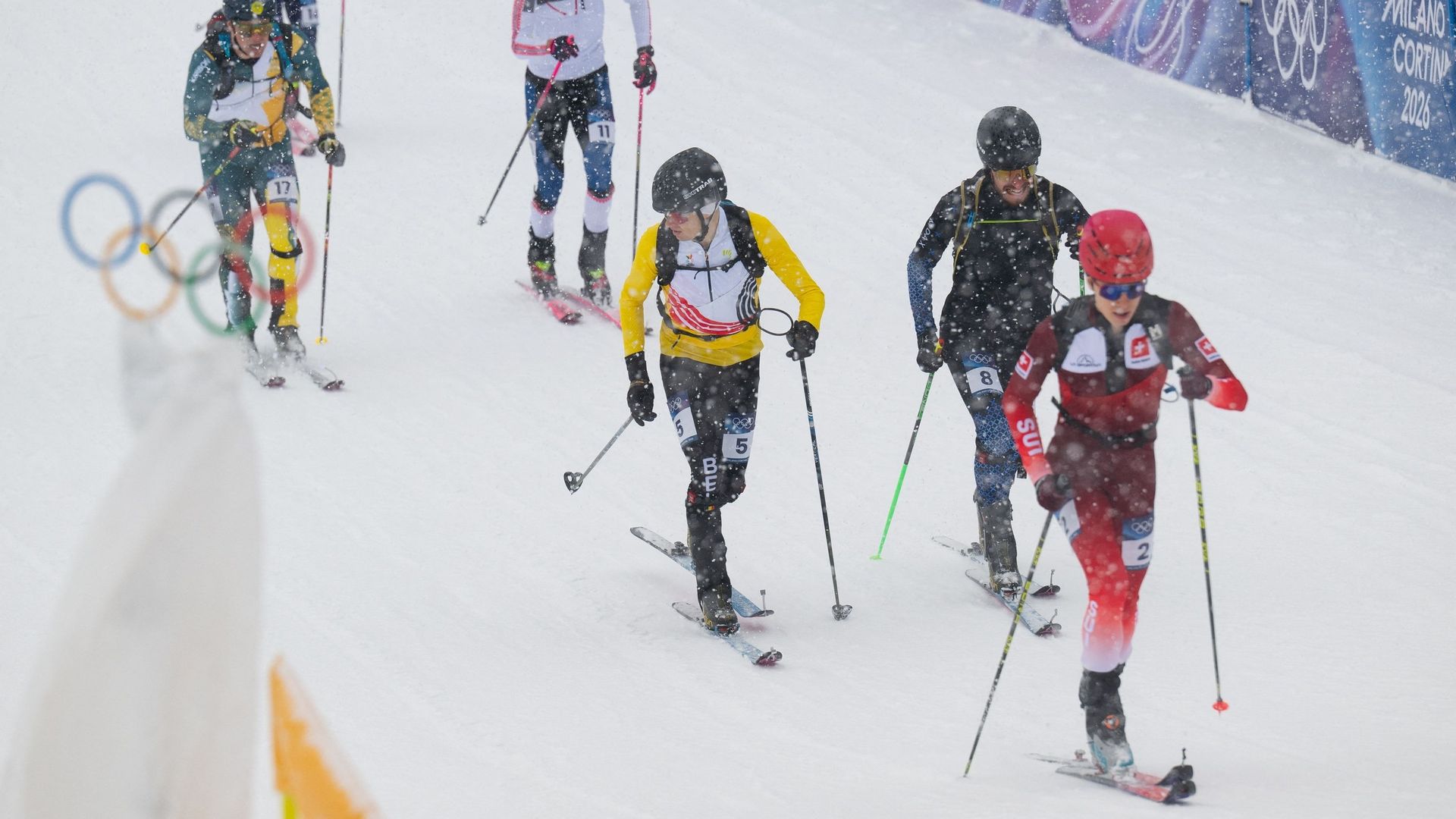
Milan, Italy – The promise of a medal at the 2026 Winter Olympics slipped through the grasp of Belgian ski mountaineer Maximilien Drion in the sprint event held Thursday in Bormio, Italy. Despite being placed in what was considered a favorable semi-final heat, a series of unfortunate transitions ultimately dashed his hopes for a place in the final, highlighting the razor-thin margins for success at the highest level of the sport. Drion finished fifth in his semi-final with a time of 2:47.23, over 13 seconds behind the fastest qualifier, according to reports from 24Brussels.
The disappointment is particularly acute for Drion, who has rapidly ascended the ranks of ski mountaineering in recent years. Born in 1997 in Uccle, Belgium, Drion’s journey to the Olympics is a testament to his dedication and the growing popularity of the sport in a country not traditionally known for its mountainous terrain. He began mountaineering at the age of five, inspired by his parents, and later honed his skills in Switzerland after his family relocated to Vercorin in 2008. His introduction to ski mountaineering came at the age of ten, under the guidance of Claude-Gérard Lamon.
A Rising Star Facing Olympic Challenges
Drion’s career has been marked by consistent improvement and notable achievements. He secured his first World Cup victory in the vertical race on March 26, 2021, and followed that up with a bronze medal in the vertical race at the 2022 European Championships in Boi Taull, Spain, completing the course in 23:24. He continued his success at the 2023 World Championship of Ski Mountaineering, earning a silver medal in the vertical race with a time of 22:54.9. His performance in the 2024–25 ISMF Ski Mountaineering World Cup was also strong, finishing second overall with 896 points.
The 2025 World Championship of Ski Mountaineering saw Drion claim another silver medal in the vertical race, this time with a time of 19:37.0. More recently, during the opening race of the 2025–26 ISMF Ski Mountaineering World Cup on December 7, 2025, he secured a third-place finish in the sprint event. These results positioned him well in the Olympic qualification rankings, ultimately securing his place to represent Belgium at the 2026 Winter Olympics in Milan and Cortina d’Ampezzo.
The Costly Transitions in Bormio
Despite his strong qualification and previous successes, the Olympic sprint event proved to be a frustrating experience for Drion. Reports indicate that a gradual start and difficulties during the ski transitions significantly hampered his performance. The source material details a 16-second delay during one ski transition, effectively eliminating his chances of advancing to the medal round. Adding to the difficulties, Drion also experienced a fall during a subsequent transition, compounding the setbacks.
“Yes, there is disappointment. I made no secret of saying that I was aiming for a medal. However, I am very proud of my journey to be here. It remains a top 10,” Drion stated, as reported by David Bertrand. Despite the setback, Drion remains optimistic about his future in the sport and is already looking ahead to the next Olympic cycle.
Representing a Nation Without Mountains
Drion’s story is particularly compelling given Belgium’s geographical limitations. He emphasized his desire to demonstrate that athletes from countries without significant mountainous regions can compete with the world’s best. “I want to show that when you come from a country where Notice no mountains, you can compete with the biggest nations. I will continue to believe in myself,” he said. This sentiment resonates with a broader narrative of overcoming obstacles and challenging conventional expectations in sports.
The challenges faced by Drion also highlight the financial and logistical hurdles faced by athletes from smaller nations in participating in sports like ski mountaineering. The cost of travel, equipment, and training can be substantial, requiring significant investment and support to remain competitive. Olympics.com recently profiled Drion, discussing his dedication and the unique challenges of representing Belgium in a mountain-based sport.
Looking Ahead: Trail Running and the 2030 Olympics
Following his Olympic experience, Drion plans to transition his focus to trail running, a sport he also actively pursues during the summer months. This dual-sport approach allows him to maintain his fitness and competitive edge year-round. He has demonstrated proficiency in trail running, complementing his ski mountaineering training and providing a valuable cross-training benefit.
Drion’s commitment to the sport is unwavering, and he has already set his sights on the 2030 Winter Olympics. “I will come back in four years,” he affirmed, signaling his determination to learn from this experience and return as a stronger competitor. His resilience and dedication serve as an inspiration to aspiring athletes in Belgium and beyond.
Key Takeaways
- Maximilien Drion, a Belgian ski mountaineer, did not advance to the final of the sprint event at the 2026 Winter Olympics due to difficulties with transitions.
- Drion has a strong track record in ski mountaineering, including multiple World Cup and World Championship medals.
- He represents a nation with limited mountainous terrain, highlighting the challenges faced by athletes from smaller countries.
- Drion plans to focus on trail running before returning to ski mountaineering with the goal of competing at the 2030 Winter Olympics.
The next step for Drion will be his transition to the trail running season, where he will undoubtedly apply the same dedication and determination that have defined his ski mountaineering career. His journey serves as a compelling example of perseverance and the pursuit of excellence in the face of adversity. The world will be watching to see what he accomplishes next.
What are your thoughts on Drion’s Olympic experience? Share your comments below and let us know what you think of Belgium’s growing presence in ski mountaineering. Don’t forget to share this article with your friends and colleagues!
Keep reading