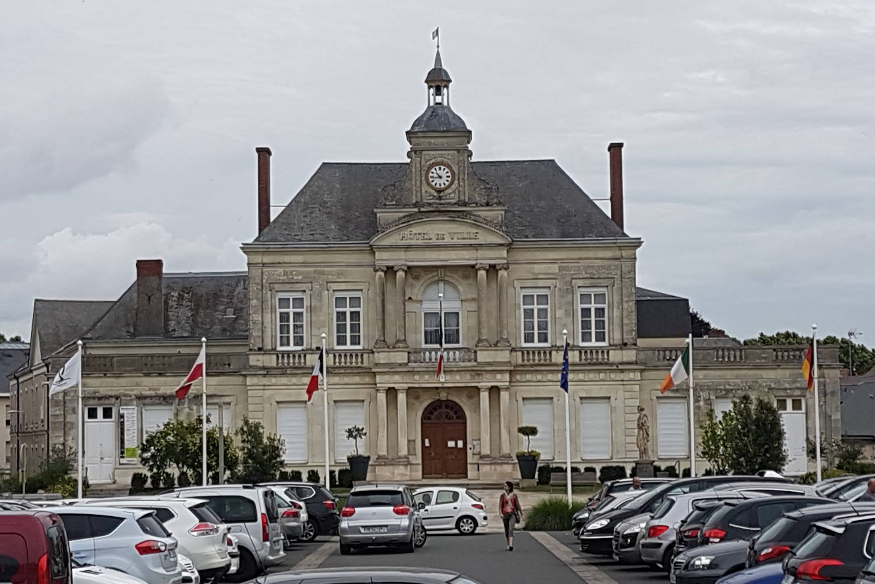
The court in Angers sentenced the mayor of Chalonnes-sur-Loire in Maine-et-Loire to three years in prison, including six months of firm jail time, on Thursday, July 16, for his involvement in a series of fraud and embezzlement schemes. The ruling follows a legal process detailing how the official misappropriated public funds by pretending to be a businessman to secure illicit gains.
According to court records and reports from Ouest-France and La Presse a l’Anjou, the mayor utilized a deceptive persona to divert money from the municipality and other entities. The court found that the official engaged in a complex web of lies, stating during the proceedings that he “put himself in the skin of the character” to execute the fraud.
The conviction includes a significant suspended sentence, but the six-month firm term marks a severe judicial response to the breach of public trust. The court also imposed fines and a period of ineligibility to hold public office, effectively ending his tenure as the head of the local administration in Chalonnes-sur-Loire.
The Mechanism of the Fraud in Chalonnes-sur-Loire
The prosecution detailed a scheme where the mayor created a fictional professional identity to justify the movement of funds. By posing as a consultant or business operator, he was able to bill the commune for services that were never rendered or to divert subsidies intended for local development. This “character” allowed him to bypass standard administrative checks that would typically flag a sitting mayor as a beneficiary of such payments.
Court documents indicate that the funds were used to support a lifestyle and personal expenses that exceeded his official salary. The judicial investigation, led by the Angers prosecutor’s office, uncovered a trail of falsified invoices and forged documents used to maintain the facade of a legitimate business operation. The scale of the embezzlement affected not only the municipal budget but also impacted local associations and partners who believed they were dealing with a private professional.
Judicial Rulings and Penalties
The tribunal’s decision to impose a firm prison sentence reflects the gravity of the “abus de confiance” (breach of trust) and “détournement de fonds publics” (misappropriation of public funds). Under French law, the misappropriation of public funds by a person in a position of authority is treated with heightened severity due to the impact on democratic institutions.

The final sentence consists of:
- Three years of imprisonment, with six months to be served firmly.
- A ban on holding public office, ensuring he cannot run for election or serve in a municipal capacity for a specified duration.
- Financial restitution, requiring the defendant to pay back the embezzled sums to the municipality of Chalonnes-sur-Loire.
The mayor’s defense argued that the actions were not driven by malice but by a distorted sense of necessity or a psychological detachment from the reality of the crimes. However, the court rejected these justifications, noting that the premeditated nature of the “character” he adopted proved a conscious intent to defraud.
Impact on the Municipality of Chalonnes-sur-Loire
The conviction creates an immediate administrative vacuum in the town of Chalonnes-sur-Loire. Following the ruling of ineligibility, the municipal council must now organize the governance of the town, which may involve the appointment of an interim mayor or the scheduling of new local elections depending on the specific legal triggers of the sentence.

For the residents of Maine-et-Loire, the case serves as a stark example of the failure of internal municipal oversight. The investigation revealed that several red flags were ignored or suppressed by the mayor’s influence over the local administration. This has led to calls for stricter auditing of small-town municipal budgets across the region to prevent similar occurrences of “white-collar” crime at the local level.

The financial recovery process is expected to be slow, as the court must determine which assets can be seized to reimburse the public treasury. The municipality will likely need to adjust its current budget to account for the missing funds while pursuing the court-ordered restitution.
The next legal step involves the potential for an appeal by either the defense or the prosecution. If the verdict is appealed, the firm portion of the sentence may be delayed, though the ban on holding public office often remains a primary focus of the judicial system to protect the integrity of the vote.
Readers can follow official updates on this case through the public notices of the Maine-et-Loire prefecture or the official judicial announcements from the Angers court. We invite you to share your thoughts on municipal accountability in the comments below.