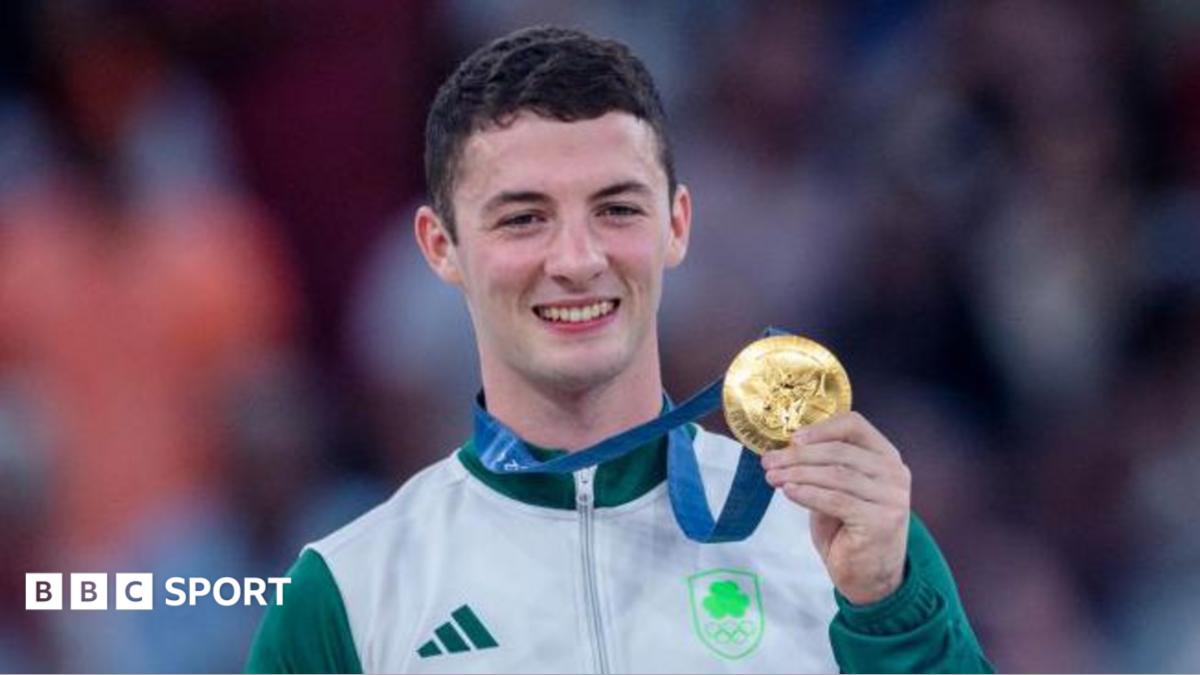
Olympic gold medallist Rhys McClenaghan has been selected to lead a six-strong men’s artistic gymnastics team representing Ireland at the upcoming European Artistic Gymnastics Championships in Rimini, Italy. The event, scheduled for April 2024, serves as a significant marker in the international gymnastics calendar following the expansion of the competition schedule, with Gymnastics Ireland confirming the full roster tasked with competing on the continental stage.
McClenaghan, who secured historic gold for Ireland in the pommel horse event at the 2024 Paris Olympic Games, headlines a squad that includes teammates Eamon Montgomery, Niall Hooton, Tomi Nally, James Hickey, and Adam Steele. The selection reflects a period of sustained growth for the Irish men’s gymnastics program, which has increasingly looked to leverage the momentum generated by individual successes on the world circuit. According to official announcements from Gymnastics Ireland, the team will compete across various apparatuses, aiming to build on the technical standards established during the previous Olympic cycle.
Team Composition and Competition Objectives
The Irish delegation for the European Championships includes a mix of established international competitors and emerging talent. While McClenaghan remains the primary focus for podium contention in the pommel horse, the involvement of the wider six-man team allows Ireland to participate in team-based scoring and qualification processes that are vital for long-term international ranking. The European Championships, overseen by European Gymnastics, act as a primary venue for athletes to refine their routines against the continent’s strongest federations, including perennial powerhouses like Great Britain, Italy, and Hungary.
For athletes like Eamon Montgomery and Adam Steele, the competition provides a platform to improve personal performance metrics in floor exercise and vault respectively. The inclusion of a full six-man team indicates a shift in strategy for the national governing body, aiming to foster depth within the sport rather than relying solely on individual specialists. Gymnastics Ireland maintains that the exposure gained at this level is essential for the development of the high-performance pipeline, ensuring that the country remains competitive in future World Cup series and subsequent World Championship events.
The Impact of McClenaghan’s Leadership
Since his breakthrough performance at the 2024 Paris Olympics, where he became the first Irish gymnast to win an Olympic medal, Rhys McClenaghan’s influence on the sport in Ireland has been noted by analysts and sporting bodies alike. His ability to maintain consistent scores in the high-pressure environment of the pommel horse final has set a benchmark for his teammates. According to data provided by the International Gymnastics Federation (FIG), McClenaghan’s execution scores have remained among the highest globally, a standard he continues to pursue as he enters the post-Olympic competitive phase.

His presence in the team for the European Championships provides a technical anchor for the younger members of the squad. By training alongside an Olympic champion, the remaining five members of the team benefit from a shared environment that prioritizes routine consistency and tactical execution. This mentorship dynamic is a core component of Gymnastics Ireland’s current high-performance strategy, which seeks to professionalize the training environment for all international-level athletes.
Technical Standards and International Context
The European Championships in Rimini are expected to draw a high caliber of competition, with the event often serving as a precursor to the intensity of the World Championships. The scoring system, governed by the FIG Code of Points, requires athletes to balance difficulty (D-score) with execution (E-score). For the Irish team, the primary objective is to maximize execution precision, an area where McClenaghan has historically excelled. The team’s participation in the European stage is documented through the official competition portal managed by European Gymnastics, which tracks individual and team registrations across all participating federations.
The transition from the Olympic arena to the continental championship requires a rapid recalibration for athletes. Experts in sports science note that the physical toll of an Olympic cycle often necessitates a period of recovery, making the team’s ability to field a full squad in April a testament to the depth of the current training program. The Irish team’s performance in Rimini will be monitored by the Olympic Federation of Ireland as part of the ongoing assessment of high-performance funding and resource allocation for the next four-year cycle.
Looking Ahead to the Next Checkpoint
Following the conclusion of the European Championships, the Irish men’s artistic gymnastics team will pivot their focus toward the upcoming World Cup series events, which provide the next opportunity for qualification points and international ranking improvements. Gymnastics Ireland is expected to release the official results and post-competition analysis through their digital media channels shortly after the conclusion of the event. Fans and stakeholders can access the most recent updates on athlete performance and official rankings through the official website of Gymnastics Ireland or the results portal provided by the International Gymnastics Federation. We encourage readers to share their thoughts on the team’s progress or join the discussion in the comments section below regarding the future of Irish gymnastics on the international stage.
