## Measles Outbreak in South Carolina: understanding the Risks, Transmission, and Prevention
The resurgence of measles is a growing public health concern, and a recent outbreak in South Carolina underscores the critical importance of vaccination. As of December 2024, the state is grappling with a meaningful cluster of cases, primarily concentrated in Spartanburg and Greenville counties. This article provides a complete overview of the outbreak, detailing the transmission dynamics of measles, the factors contributing to its spread, and crucial preventative measures. Understanding the risks associated with this highly contagious disease is paramount for protecting individuals and communities.
Measles Transmission and Incubation: How Easily does it Spread?
Measles is notoriously infectious. The virus spreads through respiratory droplets produced when an infected person coughs or sneezes. It’s so contagious that up to 90% of individuals who are unvaccinated or lack immunity will contract the virus if exposed. This makes it one of the most easily transmissible airborne diseases. The incubation period – the time between exposure and the onset of symptoms – is typically 10-14 days, but can extend up to 21 days. This extended incubation period is a key factor in the disease’s spread, as individuals can unknowingly transmit the virus before exhibiting any symptoms.
Crucially, individuals with measles are contagious *four days before* the characteristic rash appears and remain infectious for up to *four days after* the rash emerges. This pre-rash infectivity makes containment particularly challenging.
Did You Know? Measles was declared eliminated in the United States in 2000, but imported cases and declining vaccination rates have led to a concerning increase in outbreaks in recent years.
Recognizing the Symptoms of Measles
The initial symptoms of measles frequently enough mimic a common cold, including:
- High fever (often exceeding 104°F)
- Cough
- Runny nose
- Red, watery eyes (conjunctivitis)
- Small white spots inside the mouth (Koplik’s spots) – these are a hallmark sign and appear 2-3 days before the rash.
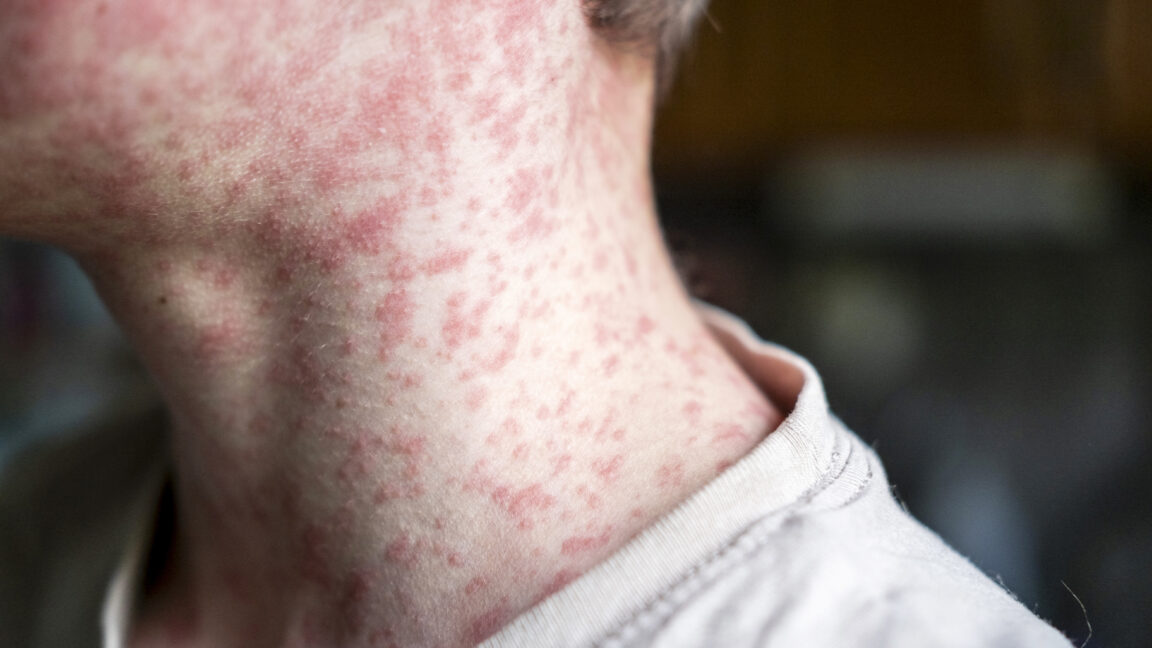
The distinctive measles rash typically appears 14-17 days after exposure.It begins as flat, red spots on the face and spreads downward to the rest of the body. The rash can last for 5-6 days.
South Carolina Outbreak: A Closer Look
The current measles outbreak is centered in the northern region of South carolina, with the majority of cases identified in Spartanburg and Greenville counties.These counties share a common thread: lower-than-recommended vaccination rates. For the 2024-2025 school year, vaccination coverage among students reached onyl 90% in Spartanburg County and 92.4% in Greenville County. Public health officials emphasize that a vaccination rate of 95% is necessary to achieve herd immunity and prevent widespread transmission.
Adding to the challenge, both counties have relatively high rates of religious exemptions to school vaccination requirements. Spartanburg County has the highest rate in the state, with 8.2% of students exempt based on religious beliefs, while greenville County reports a 5.3% exemption rate. These exemptions contribute to pockets of vulnerability within the community.
Outbreak Statistics (as of December 2024)
As of December 9,2024,the outbreak comprises 111 confirmed cases:
- 105 cases: Unvaccinated individuals
- 3 cases: Partially vaccinated individuals
- 2 cases: Vaccination status unknown
- 1 case: Fully vaccinated individual (indicating potential vaccine failure,though rare)
Worth a look