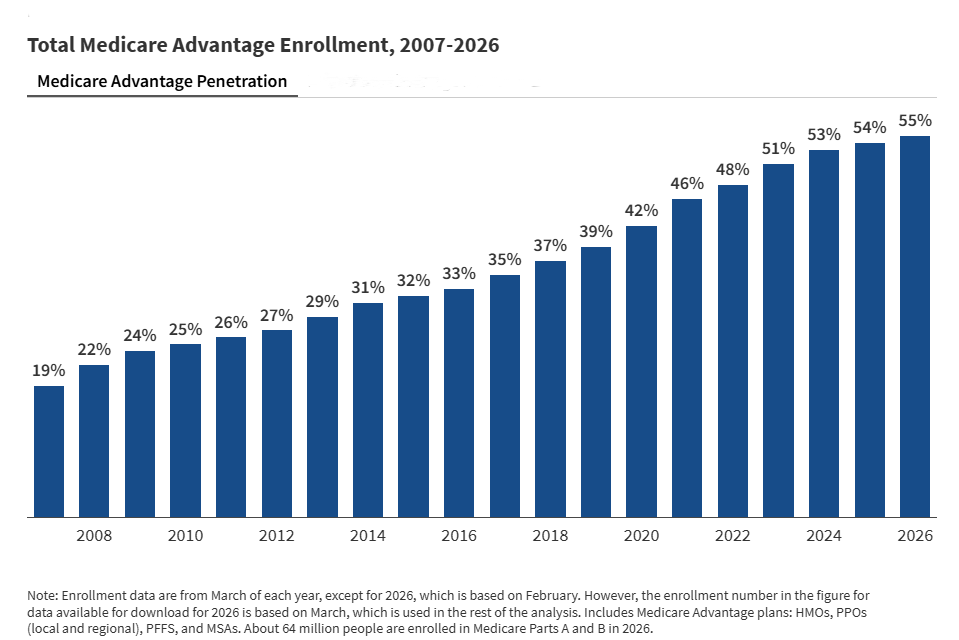
As of June 2026, the Medicare Advantage program remains a cornerstone of the U.S. federal health insurance system, providing private plan alternatives for millions of Americans age 65 and older or those with qualifying disabilities. Understanding how this market functions is essential for beneficiaries, as enrollment trends and plan availability continue to evolve in response to changing economic realities and regulatory adjustments within the healthcare sector.
Medicare, the federal program overseen by the Centers for Medicare & Medicaid Services (CMS), is structured into four primary components: Part A for hospital and hospice care, Part B for medical services, Part C—commonly known as Medicare Advantage—which provides private insurance options, and Part D for prescription drug coverage. According to official federal guidance, individuals generally become eligible for these benefits at age 65, though those with specific conditions such as End-Stage Renal Disease (ESRD) or ALS may qualify at an earlier age. Detailed information regarding enrollment windows, including the seven-month Initial Enrollment Period surrounding a beneficiary’s 65th birthday, is maintained by the U.S. government’s official portal.
Market Dynamics and Enrollment Trends
The landscape for Medicare Advantage in 2026 reflects a period of strategic adjustment for many insurance providers. Industry analysts have observed that while the market continues to grow, the pace of that expansion has become more measured compared to previous years. This cooling effect is largely attributed to health plans prioritizing financial sustainability and margin management over rapid membership growth. As noted in recent industry reporting, some organizations have responded to these economic pressures by narrowing their geographic service areas, exiting specific markets, or adjusting the scope of benefits offered to enrollees.

This strategic pivot has led to a more concentrated market environment. While many for-profit health plans have moderated their growth, other entities—particularly those focused on Special Needs Plans (SNPs)—have captured a larger share of net enrollment gains. This redistribution of members underscores a broader industry effort to balance competitive positioning with the fiscal discipline required to maintain long-term stability in the Medicare Advantage line of business.
Managing Your Coverage and Data
For beneficiaries, navigating the Medicare system involves managing personal health data and protecting against potential security risks. The official Medicare website provides resources for comparing health and drug plans available in specific geographic areas, as well as tools to find certified care providers, including hospitals and nursing homes. To enhance security, the program now allows users to access their accounts through identity verification services such as Login.gov or ID.me.

Federal officials consistently emphasize the importance of safeguarding personal information to prevent Medicare fraud. Beneficiaries are advised never to share their Medicare Number in response to unsolicited texts, emails, or social media messages. Protecting one’s Medicare card is a vital step in preventing medical identity theft, and any suspected fraudulent activity should be reported immediately to the appropriate authorities through the official Medicare reporting channels.
Enrollment Eligibility and Next Steps
Determining when and how to apply for Medicare depends largely on an individual’s employment status and their receipt of Social Security benefits. For those who begin receiving Social Security retirement benefits between age 62 and four months prior to turning 65, enrollment in Medicare Part A and Part B is typically automatic. Individuals who are still working at age 65 and choose not to receive Social Security benefits may apply for Medicare coverage online. It is important to note that failing to enroll during the designated Initial Enrollment Period—which spans the three months before, the month of, and the three months after one’s 65th birthday—can result in late enrollment penalties.

As the senior demographic continues to expand, the demand for Medicare Advantage remains robust, with the program viewed as an attractive choice for many. Future developments in the market will likely be influenced by ongoing rate adjustments and the continued evolution of health plan offerings. Beneficiaries are encouraged to stay informed by reviewing annual updates during open enrollment periods and utilizing official tools to ensure their chosen plan continues to meet their health and financial needs.
For those seeking to make changes to their current coverage, such as canceling Part A or Part B, formal procedures are in place, including the submission of CMS Form 1763 to a local Social Security office. Readers are encouraged to share their experiences with navigating the current enrollment landscape or to post questions regarding these processes in the comments section below.
Keep reading