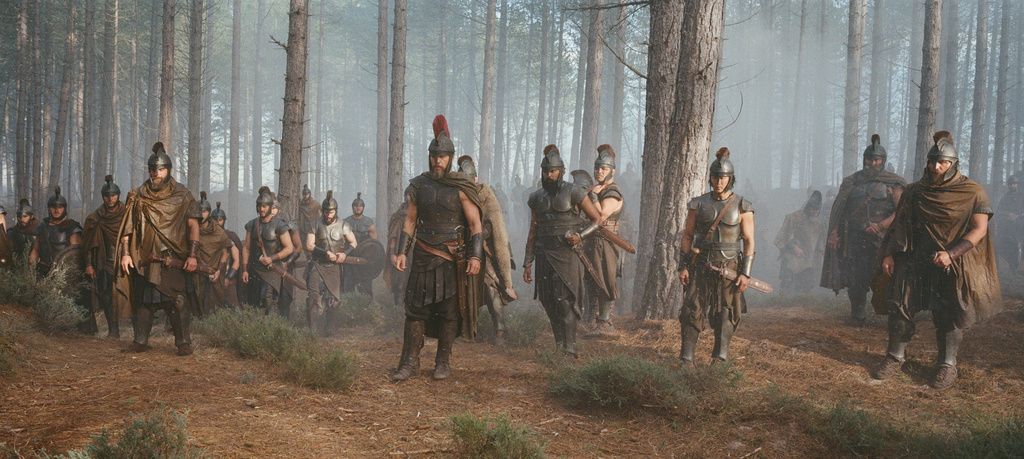
As director Christopher Nolan launches his six-country epic adaptation of The Odyssey
worldwide on July 17, the real Mediterranean Sea faces its own environmental crisis. According to United Nations reporting, the vital marine corridor is warming 20 percent faster than the global average while battling severe pollution and habitat loss.
For Odysseus, the Mediterranean was a legendary expanse defined by mythical hazards and long journeys home. More than 2,500 years after Homer first shared the epic, director Christopher Nolan has brought that world to the big screen in his new feature film. Yet beyond the cinematic storytelling lies an actual body of water undergoing profound environmental strain.
An Ecological Treasure Chest Under Pressure
The Mediterranean supports more than 500 million people across 25 coastal metropolitan areas, serving as a vital commercial highway and home to some of the planet’s busiest shipping lanes. Although it covers just 1 per cent of the world’s ocean surface, it contains up to 18 per cent of all known marine species. More than a quarter of those species exist nowhere else on Earth.
Underwater meadows of Posidonia oceanica—commonly known as Neptune grass—span more than 1.2 million hectares, sheltering marine life and sequestering carbon. Bordering wetlands, marshes, and dunes protect approximately 46,000 kilometres of coastline from erosion and storms. However, these vital ecosystems are facing unprecedented stress from industrial activity, coastal construction, and mass tourism.
Modern Monsters: Plastic Waste and Rapid Warming
While the mythological hero battled individual adversaries, the modern Mediterranean confronts interconnected environmental threats. An estimated 730 tons of plastic waste enters the sea daily, fed by rivers that release up to 925 million items of floating litter around 82 per cent of which are plastic. Single-use plastics account for more than 60 per cent of the debris littering Mediterranean beaches.
Chemical runoff, wastewater, pharmaceutical pollutants, and underwater noise compound these challenges. Compounding the physical pollution, the region is warming 20 per cent faster than the global average temperature rise, driven by recurring summer heatwaves that heighten risks of drought, wildfire, and rising sea levels.
Bringing the Bronze Age Epic to Life Across Six Countries
While environmental agencies work to protect the sea, filmmakers undertook a monumental physical effort to capture its scale on film. The production of The Odyssey spanned a 91-day shoot across six countries over six months, relying on real ships and open waters rather than digital effects.
“We all know the title, we all know what it means, we know what it promises and hopefully for the audience coming to see the film, they’ll feel we made good on that promise because that’s the fun of ‘The Odyssey.’ It’s the ultimate adventure story.”
Christopher Nolan, Director, via Associated Press
Matt Damon, who stars as Odysseus, recalled that the director offered clear warnings about the demanding physical nature of the shoot. He told me it was going to be hard, which I kind of, I blew off at first,
Damon noted. I’m like, ‘Yeah, yeah, it’s going to be hard.’ And he said ‘no, no, this is going to be really hard.’ He did not disappoint.
Coordinating Regional Defense for the Mediterranean
To combat the environmental deterioration of the actual sea, governments established a formalized defense mechanism decades ago. Created in 1975, the Mediterranean Action Plan of the United Nations Environment Programme—known as UNEP/MAP—served as the first regional action plan under the broader UNEP Regional Seas Programme. A year later, Mediterranean nations adopted the Barcelona Convention as a legally binding framework to safeguard marine and coastal environments.

Today, 21 Mediterranean countries alongside the European Union collaborate through UNEP/MAP to monitor ecological health, curb chemical and plastic pollution, and improve wastewater management across the shared basin.
Keep reading
- 4,000 Christians Gather at Arise Asia 2026 to Reach 3 Billion People with the Gospel
- Chicago Fire Season 7 Episode 13: Release Info & Schedule
- Samantha Morton Reveals Why She Has Not Worked for a Year Since The Odyssey (time.news)
- Mississippi Foster Youth Face FAITH Scholarship Deadline Crisis (news-usa.today)