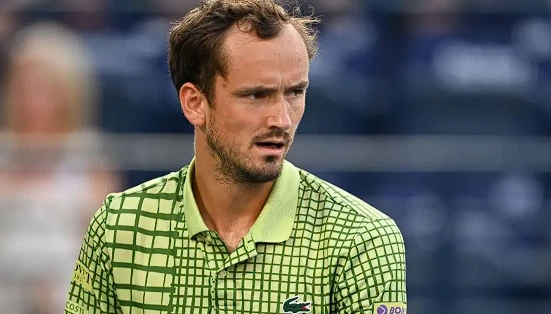
Medvedev Poised to Disrupt ATP Tour’s Trend of Varied Champions in Dubai Final
Dubai, UAE – Daniil Medvedev stands on the cusp of not only claiming another hard-court title but also potentially ending a remarkable run of different champions on the ATP Tour. As he prepares for the final against Tallon Griekspoor, the Russian’s consistent form presents a stark contrast to the unpredictable nature of men’s tennis in the early stages of the 2026 season. This year has been defined by a surprising depth of success across the field, with a novel winner emerging at several tournaments, making Medvedev’s bid for a second title of the season a significant moment. Should he prevail, he will become the first player to secure multiple trophies in this period, injecting a degree of stability into a landscape characterized by constant change.
Medvedev’s journey to the final has been marked by controlled aggression and tactical precision, a style that has consistently proven effective on hard courts. His ability to absorb pace and redirect it with depth, forcing errors from opponents, has been a key feature of his success in Dubai. This approach, while sometimes labeled as defensive, remains a potent counterpunching system in the modern game. The final represents a chance for Medvedev to solidify his position among the season’s leading contenders and build momentum as the tour transitions to major hard-court events and, eventually, clay.
A Week of Controlled Dominance
Throughout the Dubai Tennis Championships, Medvedev has demonstrated a remarkable level of control, dispatching opponents with efficiency and minimizing the need for dramatic comebacks. His victories have been characterized by straight-sets performances, highlighting his tactical discipline and physical freshness. In the semi-final, he overcame Felix Auger-Aliassime with measured precision, absorbing the Canadian’s power and redirecting it with depth, forcing a high number of unforced errors. This strategic approach, coupled with his positioning deep behind the baseline, allowed him to retrieve and reset rallies effectively, ultimately securing his place in the final.
The Broader Context: A Season of Unexpected Results
The 2026 season has witnessed an unusual distribution of titles, with a diverse range of players claiming trophies in the early tournaments. This has underscored the depth of talent within the men’s game and the increasing difficulty of sustaining dominance. Medvedev opened his season strongly with a title in Brisbane, but subsequent early exits in Rotterdam and Doha raised questions about his consistency. However, his performance in Dubai has served as a reminder of his pedigree on hard courts, showcasing his ability to adapt and thrive in different conditions. ESPN reported on the challenges athletes are facing with travel amid ongoing conflict in the Middle East, a factor that could influence tournament participation and player availability throughout the season.
Tactical Nuances on Hard Courts
Hard courts remain Medvedev’s most favorable surface, allowing him to maximize the effectiveness of his flat groundstrokes and neutralize even the most powerful servers with his return positioning. Unlike players who rely on aggressive first-strike tactics, Medvedev excels in extended exchanges, patiently constructing points and wearing down opponents through depth and consistency. His serve has also been particularly reliable in Dubai, with high first-serve percentages and strategic placement setting up manageable second shots. When his serve is firing, his game becomes exceptionally tricky to break down, forcing opponents to take risks and make errors.
The Final Challenge: Griekspoor’s Aggressive Style
Awaiting Medvedev in the championship match is Tallon Griekspoor, a player whose aggressive tendencies present a contrasting style to Medvedev’s rhythm-based approach. Griekspoor’s success hinges on first-serve efficiency and early ball striking, aiming to dictate points from the outset and disrupt Medvedev’s defensive patterns. However, if rallies extend beyond the initial exchanges, the advantage typically shifts towards the Russian, who excels in longer, more tactical battles. Finals often hinge on the opening exchanges, with an early break potentially defining the momentum of the match. Tight service holds, can increase psychological pressure as sets progress.
Mental Fortitude and Championship Experience
Throughout his career, Daniil Medvedev has demonstrated remarkable mental resilience, navigating both triumphant victories and painful defeats with consistent recalibration. His composure in Dubai has been evident, maintaining tactical clarity even when facing break points. This steadiness is particularly valuable in high-pressure finals, where tension can magnify even minor errors. Having competed in numerous championship matches, Medvedev understands the importance of managing energy and focus across every point, a crucial attribute for success in the decisive moments.
Ranking Implications and Momentum Building
A title in Dubai would not only strengthen Medvedev’s standing in the ATP rankings but also reinforce his position as a leading contender for the season’s major titles. Early-season points accumulation reduces pressure later in the calendar, particularly as the tour heads into the demanding spring swing. Momentum in tennis is a fragile commodity, and a single title can significantly alter perception, both internally and externally. For Medvedev, a victory in Dubai would confirm that his Brisbane success was not an isolated achievement but rather a sign of a broader upward trajectory. The ATP Tour confirmed Medvedev’s advancement to the final following Griekspoor’s withdrawal.
Analytical Perspective: Data and Performance Metrics
Modern tennis coverage increasingly incorporates structured performance evaluation, moving beyond narrative storytelling to examine serve efficiency, break-point conversion rates, rally tolerance, and surface-adjusted performance metrics. These factors form the backbone of contemporary tennis predictions, where historical match data and contextual variables are assessed to estimate likely outcomes. While probability models cannot account for every psychological variable, they often illuminate trends that mirror what unfolds on court. In Medvedev’s case, the indicators this week align with visual impressions: strong return numbers, controlled unforced error counts, and consistent hold percentages.
Physical Management and Workload Considerations
Another understated element in this final is workload management. Medvedev’s matches have been relatively concise, preserving his physical energy. In a sport where cumulative fatigue can erode decision-making late in matches, this efficiency is crucial. Shorter matches not only conserve stamina but also reduce mental strain, allowing Medvedev to enter the final with a full energy reserve and the clarity needed to perform under pressure.
Breaking the Pattern and Establishing Dominance
Ending the sequence of unique champions would symbolize more than personal success for Medvedev. It would suggest that he is beginning to impose structure on a season defined by volatility and unpredictability. Men’s tennis currently enjoys a rare equilibrium, with depth across the top 30 compressing margins. However, sustained excellence remains the hallmark of true contenders. Should Medvedev prevail, he would signal his intent to convert opportunity into consistency and establish himself as a dominant force on the tour.
Looking Ahead: The Road to the Major Tournaments
Beyond Dubai, the tennis calendar offers little respite, with a swift transition towards major hard-court events and, eventually, the clay-court season. This will test Medvedev’s adaptability and his ability to maintain performance levels across different surfaces. While hard courts maximize his strengths, broader ambitions require versatility. However, for now, the focus remains firmly on the final in Dubai and the opportunity to claim a significant victory.
The Stakes of a Single Match
In elite sport, turning points often appear subtle at the time. A single title can restore confidence, silence doubts, and reframe a season’s trajectory. For Daniil Medvedev, this final represents more than a chance to add another trophy to his collection. This proves an opportunity to interrupt a narrative of dispersed champions and reassert the value of sustained excellence. One victory separates him from altering the rhythm of the 2026 campaign. The form is present, the conditions suit him, and while Griekspoor presents a dangerous opponent, victory is far from inevitable.
The outcome will unfold on court – point by point, rally by rally – where data, discipline, and nerve converge. The final is scheduled for [Date to be confirmed by ATP Tour], and fans eagerly await to see if Medvedev can seize this opportunity and establish himself as a leading force in men’s tennis.
Stay tuned to World Today Journal for continued coverage of the Dubai Tennis Championships and the evolving landscape of professional tennis. Share your thoughts on Medvedev’s chances in the comments below!
Related reading