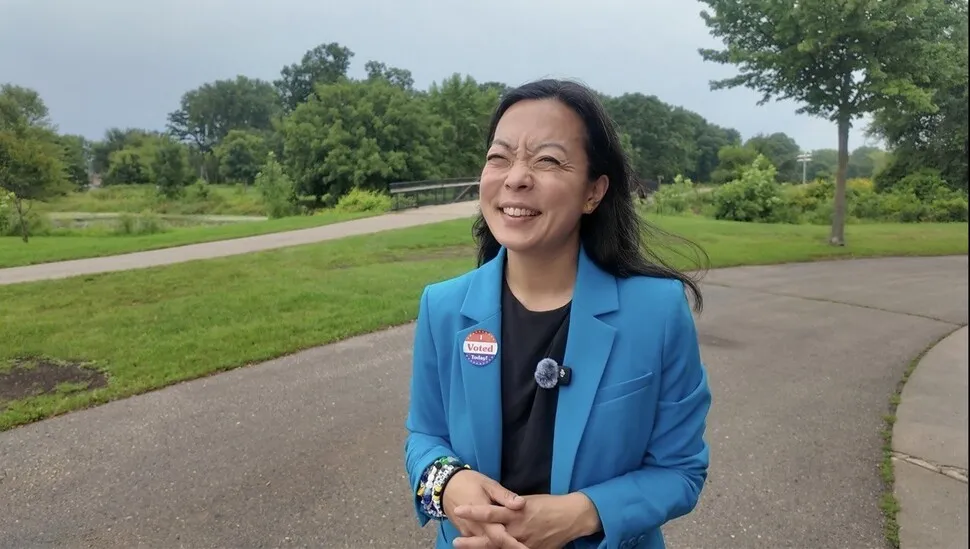
Francesca Hong, a candidate in the Democratic primary for the Wisconsin gubernatorial race, centers her campaign on working-class concerns, public school funding, and universal childcare. Running in an election cycle that highlights economic anxieties, Hong campaigns as a renter and single mother who understands the daily financial pressures facing local residents across the state.
If successful in both the primary and the upcoming November general election, Hong would make history as both the first female governor of Wisconsin and the first Korean American governor in United States history. Her platform addresses the rising costs of healthcare and childcare, contrasting her community-focused approach with candidates backed by wealthy donors and major corporations.
Throughout the campaign trail, Hong has connected with voters in communities large and small by discussing tangible economic realities. According to Hong, residents frequently express a sense of fatigue and anxiety regarding their financial stability, desiring a government that matches their daily hard work with proactive solutions for public infrastructure, education, and essential local services.
Addressing Economic Pressures and Public Infrastructure
Voters across Wisconsin have voiced deep concerns over escalating living expenses, particularly in healthcare and childcare. Hong emphasizes that ordinary citizens deserve economic security rather than a daily struggle just to get by. Her policy proposals focus heavily on properly funding public schools, which often serve as major local employers and community anchors, especially in smaller towns.
In addition to strengthening educational budgets, Hong advocates for securing necessary financial resources for local governments to maintain essential programs such as emergency medical services, road repairs, and public libraries. She argues that achieving these goals requires challenging political systems that prioritize billionaires and corporate special interests over everyday working families, including dishwashers, nurses, and farmers.
Building Broad Coalitions Across Political Divides
Campaigning in a crucial electoral battleground, Hong points to Wisconsin’s deep progressive roots and the shared economic interests of working-class voters regardless of political labels. She notes that community engagement and active listening form the backbone of her campaign’s field organization, allowing her team to connect with voters who previously supported Donald Trump in past elections.
By focusing on issues that transcend partisan lines—such as protecting community schools, pausing large-scale data center developments that strain local resources, and ensuring fair taxation for ultra-wealthy corporations—Hong maintains that practical economic solutions resonate widely. Her strategy relies on presenting clear alternatives to opponents who answer primarily to corporate interests.
Embodying Korean American Heritage and Representation
A central symbol of Hong’s personal and political identity is a tattoo on her left forearm depicting three Rose of Sharon flowers—South Korea’s national flower—with the outline of the state of Wisconsin embedded within one of the flower buds. Reflecting on her upbringing as the daughter of Korean immigrants, Hong acknowledges that while she did not always openly celebrate her heritage during her youth, she now embraces her identity with immense pride.
Hong views her historic candidacy not as a personal milestone alone, but as a responsibility to open doors for greater representation in government. By drawing on values learned from her immigrant family—such as sacrifice, community priority, and mutual care—she aims to demonstrate how diverse backgrounds strengthen public leadership.
Related reading