The pursuit of vocational training in Germany continues to draw significant attention as young people navigate the transition from education to professional life. With structured pathways into skilled trades and technical professions, the application process for an apprenticeship—known locally as Ausbildung—remains a pivotal step. Recent announcements from regional employment agencies highlight ongoing efforts to guide applicants through this competitive landscape, emphasizing clarity, preparation and alignment with employer expectations.
One such initiative, hosted by the Berufsinformationszentrum (BiZ) of the Federal Employment Agency in Paderborn, focuses specifically on crafting effective applications for vocational training positions. According to verified event details, the workshop titled “Meine perfekte Bewerbung für die Ausbildung” is designed to support young people in understanding how to present their qualifications convincingly. The session covers practical aspects such as interpreting job advertisements, organizing application materials, and tailoring submissions to specific roles—all critical components in a system where precision and relevance are highly valued.
The event is scheduled for May 11, 2026, at 8:30 a.m. In the BiZ offices located at Bahnhofstraße 26 in Paderborn. Attendance is free of charge, and no prior registration is required, reflecting the agency’s commitment to accessible career guidance. Organizers recommend allocating approximately 90 minutes to fully engage with the content, which includes both informational segments and opportunities for individualized feedback.
These efforts align with broader national trends in vocational education, where demand for skilled workers remains strong across sectors such as engineering, healthcare, information technology, and traditional crafts. Data from the Federal Institute for Vocational Education and Training (BIBB) indicates that over 1.3 million individuals were enrolled in dual vocational training programs in Germany during 2024, underscoring the system’s scale and importance to the national economy.
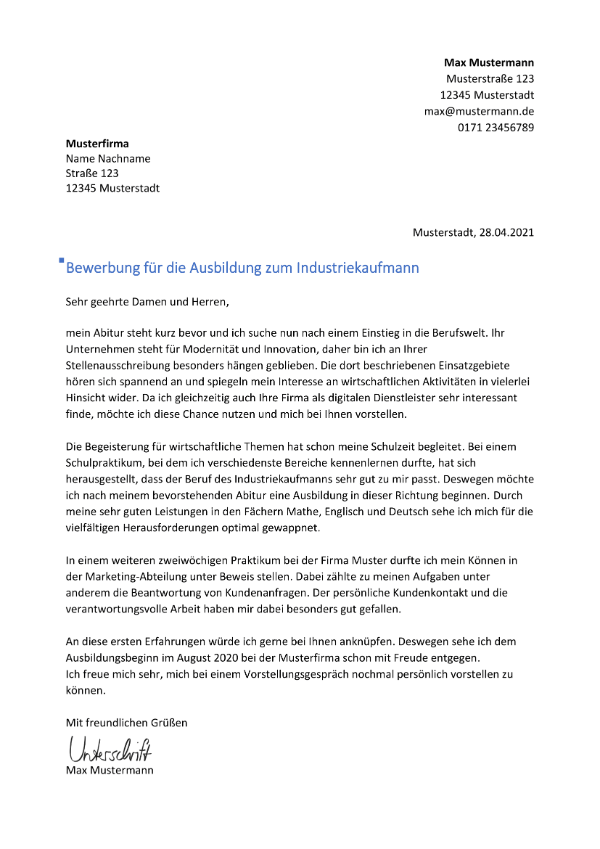
Central to a successful application is the cover letter, or Anschreiben, which serves as the applicant’s first point of contact with a potential employer. Guidance from authoritative sources stresses that this document should not merely repeat the resume but instead connect the applicant’s motivations, strengths, and experiences directly to the requirements outlined in the job posting. For instance, if a position emphasizes teamwork and technical aptitude, the cover letter should provide concrete examples demonstrating these qualities in academic, extracurricular, or work-related contexts.
Equally key is the curriculum vitae (CV), which must be presented in a clear, chronological format that highlights relevant education, internships, and skills. In Germany, it is customary to include personal details such as date of birth and place of origin, although applicants are advised to disclose only what they feel comfortable sharing. Supporting documents—such as school transcripts, certificates of participation, and language proficiency results—should be organized logically and submitted as a single PDF file when applying online, a format increasingly preferred by employers.
Applicants are also encouraged to research the training company thoroughly before submitting their materials. Understanding the organization’s values, training structure, and career progression opportunities enables candidates to demonstrate genuine interest and informed motivation during interviews. This preparation can significantly distinguish an application in fields where many candidates may possess similar academic backgrounds.
Digital applications have become the norm, with most companies specifying whether they prefer submissions via email, online career portals, or traditional mail. When no preference is stated, applicants may choose their preferred method, but consistency in document order and formatting remains essential. Experts recommend naming files clearly (e.g., “Lastname_Firstname_Application.pdf”) and ensuring that all scanned documents are legible and professionally presented.
For those uncertain about any aspect of the process, direct contact with the listed hiring representative is advised. A brief, polite inquiry—whether by phone or email—can clarify uncertainties about deadlines, required documents, or the selection timeline, while also demonstrating initiative and professionalism.
Beyond the mechanics of application assembly, timing plays a strategic role. While some industries begin recruiting as early as a year before the training start date, others accept applications on a rolling basis. Monitoring company websites, attending career fairs, and utilizing resources offered by employment agencies or schools can help applicants stay informed about openings and deadlines.
The Paderborn workshop forms part of a wider network of career counseling services provided by the Federal Employment Agency across Germany. These services include aptitude assessments, occupation-specific information sessions, and individual coaching, all aimed at supporting young people in making informed decisions about their professional futures. Similar events are regularly conducted in cities such as Detmold, Bielefeld, and Minden, reflecting a decentralized but coordinated approach to youth employment support.
a strong application for an apprenticeship is not about perfection in the abstract sense, but about authenticity, relevance, and attentiveness to detail. By combining self-reflection with careful research and clear communication, applicants can present themselves not only as qualified candidates but as individuals genuinely invested in beginning a professional journey through Germany’s respected dual education system.
Those interested in attending the Paderborn session or accessing related materials are encouraged to visit the official website of the Federal Employment Agency’s Paderborn branch for the most current information. As vocational training continues to evolve in response to economic and technological shifts, informed preparation remains one of the most valuable assets a prospective apprentice can bring to the process.