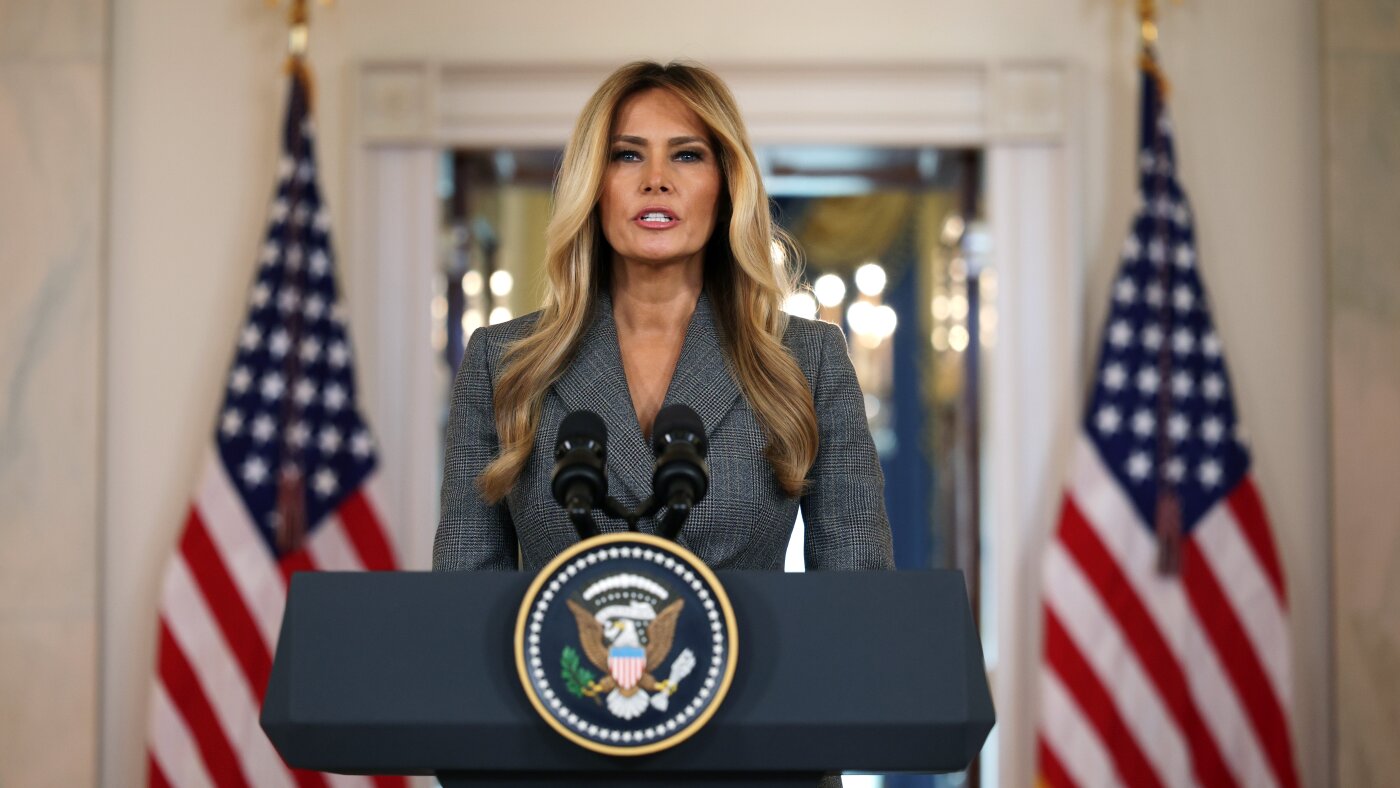
The intersection of political theater and the pursuit of justice often creates a volatile environment for those seeking closure from systemic abuse. This tension has resurfaced following a public statement by Melania Trump, who called for further action in Congress regarding the legacy of Jeffrey Epstein. While the call for transparency may appear supportive on the surface, it has sparked a complex wave of mixed feelings among Epstein survivors, who remain wary of the motivations behind high-profile political interventions.
In a statement delivered from the White House, the former first lady explicitly distanced herself from the late sex offender, asserting she was not friends with Epstein. By urging Congress to take further action, she has stepped into a long-standing debate over whether legislative hearings can provide genuine accountability or if they serve as distractions from deeper, more systemic failures within the justice system. For many survivors, the request for a congressional hearing is not a simple matter of “more information,” but a question of who benefits from the spotlight.
This development comes at a time when the public remains captivated by the unsealing of documents and the ongoing effort to identify “John Does” and other associates of the late financier. The reaction from the survivor community highlights a fundamental divide: some see any push for visibility as a victory, while others view it as a performative gesture that risks re-traumatizing victims without offering legal protections or tangible reparations.
The Complexity of Congressional Intervention
Congressional hearings are often designed to gather information and propose legislative remedies, but in cases of high-profile sex trafficking and abuse, the utility of such hearings is frequently debated. Survivors of Jeffrey Epstein’s network have spent years navigating a legal system that often prioritized the protection of powerful men over the safety of vulnerable girls. The prospect of a hearing requested by a political figure can perceive contradictory.
For some survivors, the call for a hearing is a welcome acknowledgment that the full scope of Epstein’s network has not been adequately exposed. They argue that legislative pressure could force the release of redacted documents and compel the Department of Justice to pursue associates who have avoided prosecution. The hope is that a formal congressional record would prevent the details of the abuse from being buried by political transitions or judicial discretion.
However, a significant number of survivors express skepticism. The primary concern is that a congressional hearing often prioritizes “political wins” over victim-centric justice. There is a fear that survivors would be used as props to validate a political narrative, only to be discarded once the news cycle shifts. The public nature of these hearings can lead to intense scrutiny and harassment of survivors, who have already endured years of psychological trauma.
Why the “Friendship” Disclaimer Matters
Melania Trump’s insistence that she was not friends with Epstein is a strategic clarification aimed at neutralizing potential criticisms of her proximity to the social circles Epstein frequented. In the world of global finance and high-society networking, the “proximity” argument is a central point of contention. Many of the individuals named in the U.S. Department of Justice filings related to the Epstein case claimed they were merely acquaintances or were unaware of his crimes.
From a business and sociological perspective, Epstein operated as a “power broker,” using his wealth and connections to gain access to the world’s most influential people. When a political figure clarifies their lack of a personal bond, it is often an attempt to separate their public image from the moral stain of the association. For survivors, however, these distinctions can feel irrelevant. The systemic failure was not just the actions of one man, but the willingness of a global elite to ignore the warning signs of predation in exchange for social or financial capital.
The Legal Gap: Hearings vs. Prosecutions
It is critical to distinguish between a congressional hearing and a criminal trial. A hearing is an investigative tool; it cannot result in a prison sentence or a legal conviction. Many survivors argue that the focus should remain on the Federal Bureau of Investigation (FBI) and the DOJ’s ability to bring indictments against remaining co-conspirators.
The frustration within the survivor community often stems from the “revolving door” of information. Documents are unsealed, names are mentioned, and the public is energized, yet few high-level associates have faced significant legal consequences since Epstein’s death in 2019. A congressional hearing may provide the appearance of progress, but without a direct pipeline to criminal prosecution, it risks being an exercise in futility.
the legal protections for survivors are often precarious. While the U.S. Congress can pass laws to extend statutes of limitations for sex crimes—as seen in various state-level “Child Victims Acts”—a specific hearing on the Epstein case does not automatically translate into new legal protections for those seeking civil damages.
Stakeholders and the Impact of Publicity
The stakeholders in this ongoing saga are numerous and often conflicting. On one side are the survivors, whose primary goal is truth and restitution. On the other are the political figures and high-net-worth individuals who wish to clear their names or minimize their involvement. Then there are the legislative bodies, which must balance the public’s right to know with the privacy and safety of the victims.
- Survivors: Seeking comprehensive disclosure of all accomplices and systemic reform to prevent future trafficking.
- Legislators: Facing pressure to show “action” on a case that has become a symbol of institutional failure.
- Legal Teams: Navigating the complexities of sealed records and non-disclosure agreements (NDAs).
- The Global Public: Demanding accountability for the perceived “double standard” in how the law treats the wealthy versus the marginalized.
What This Means for the Future of Accountability
The mixed reaction to Melania Trump’s proposal underscores a broader truth about justice: it is rarely a linear process. When the call for “further action” comes from the top of the political hierarchy, it is viewed through a lens of suspicion. The survivors’ hesitation is a rational response to a history of being let down by the very institutions that are now claiming to support them.
For a congressional hearing to be genuinely useful, it would demand to move beyond the “who knew whom” phase and address the “how it was allowed to happen” phase. This would require an investigation into the failure of intelligence agencies, the complicity of financial institutions that may have facilitated money laundering, and the gaps in international law that allowed Epstein to operate across borders with relative impunity.
the measure of success for any such hearing will not be the number of headlines it generates, but whether it leads to the identification and prosecution of those who enabled the abuse. Until that happens, the call for “further action” will continue to be met with a mixture of cautious hope and deep-seated cynicism.
Key Takeaways on the Current Situation
- Melania Trump’s Position: Publicly distanced herself from Epstein and urged Congress to hold further hearings.
- Survivor Response: Divided; some see it as a path to truth, others as a performative political gesture.
- Core Conflict: The tension between political visibility and actual legal accountability.
- Legal Reality: Congressional hearings provide information but cannot issue criminal convictions.
- Systemic Issue: The ongoing struggle to hold high-level associates accountable despite the unsealing of documents.
The next confirmed checkpoint in this ongoing saga will be the continued release of documents from the Southern District of New York and any potential response from the House or Senate Judiciary Committees regarding the call for new hearings. As these legal and political maneuvers unfold, the focus remains on whether the system can finally deliver the justice that survivors have sought for decades.
We invite our readers to share their perspectives on the role of political intervention in criminal justice cases in the comments section below. Please share this article to keep the conversation on accountability active.
Keep reading