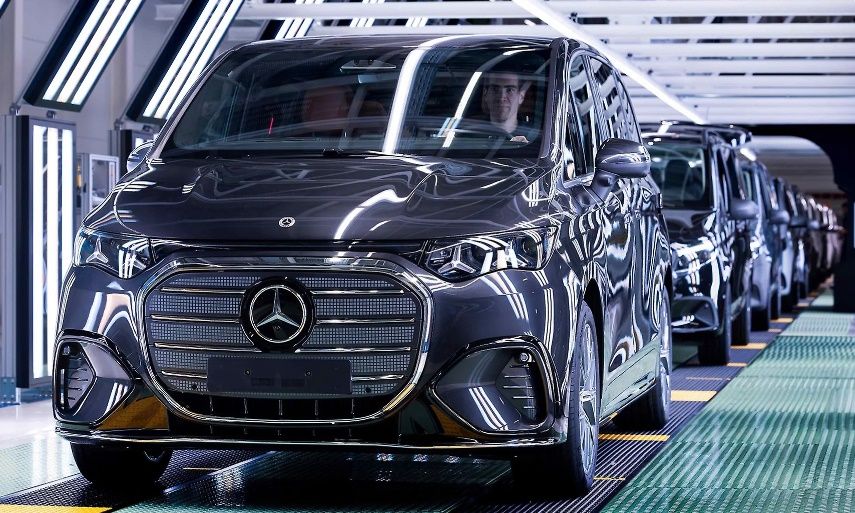
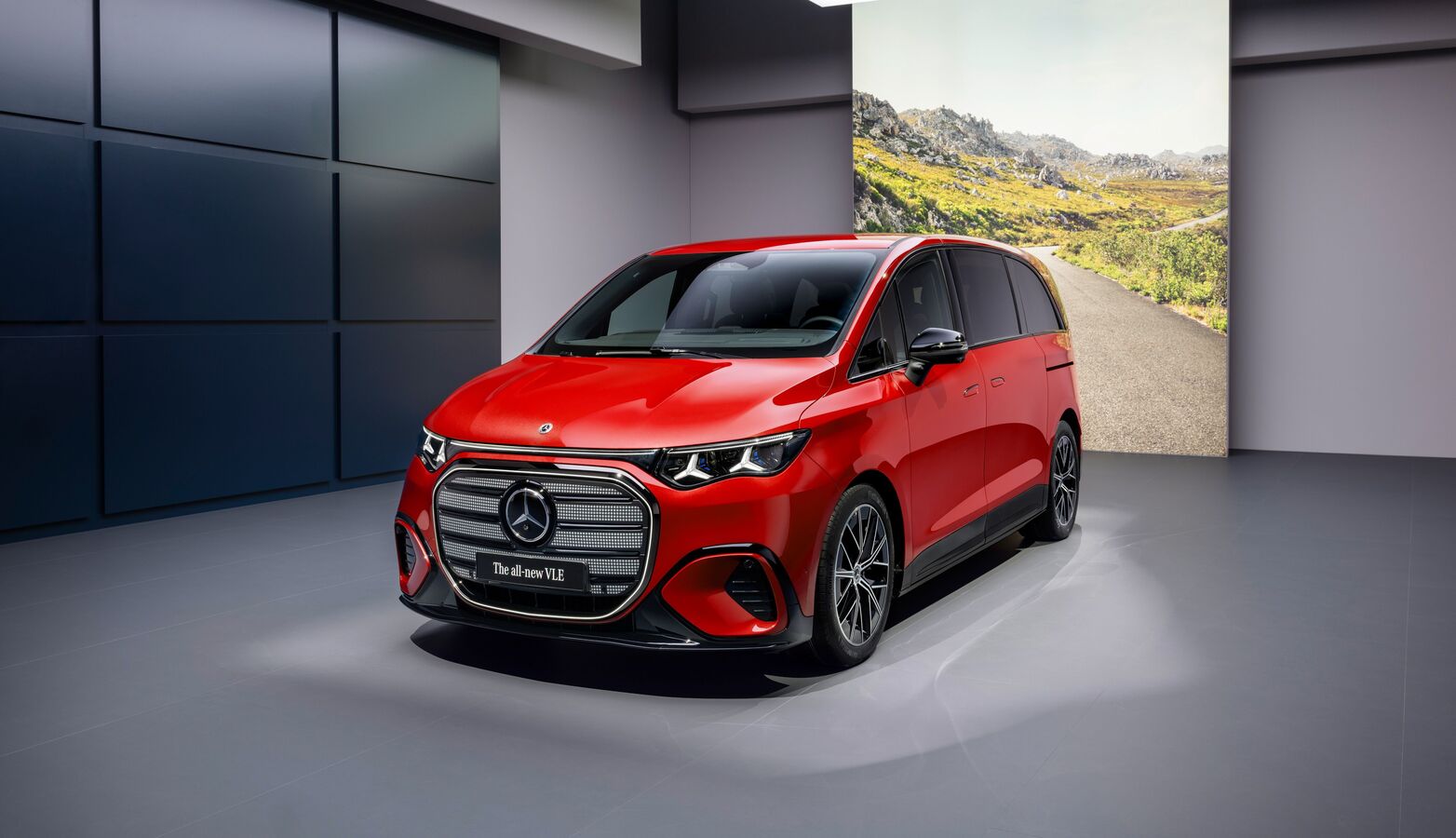
Mercedes-Benz has begun production of its fully electric V-Class van, marking a significant milestone in the company’s transition to electric commercial vehicles. The new model, which offers an official range of up to 700 km (435 miles) under the WLTP testing cycle, is being manufactured at the company’s plant in Breslau, Poland, with deliveries set to begin later this year. This development underscores Mercedes-Benz’s commitment to electrification in the commercial vehicle sector, where demand for zero-emission alternatives is growing rapidly.
The electric V-Class joins Mercedes-Benz’s expanding lineup of electric vehicles, which already includes the EQE, EQS, and EQB models. According to company statements, the new van will be available with two battery configurations: a 70 kWh option and a larger 90 kWh battery, the latter enabling the extended 700 km range. The vehicle is targeted primarily at businesses seeking to reduce their carbon footprint while maintaining the utility and versatility of the traditional V-Class.
Industry analysts note that the electric V-Class is positioned to compete directly with models like the Volkswagen ID.Buzz and the Ford E-Transit, both of which have already established themselves in the electric commercial vehicle market. “Mercedes-Benz is entering a crowded but rapidly evolving segment,” said BloombergNEF in a recent report, adding that the 700 km range is particularly compelling for long-distance logistics operations.
Key Takeaways: What the Electric V-Class Means for Businesses and the EV Market
- Range Leadership: The 700 km (435 miles) range under WLTP testing positions the electric V-Class as one of the longest-range electric vans available, addressing a key concern for fleet operators.
- Dual Battery Options: Customers can choose between a 70 kWh and 90 kWh battery, with the latter enabling the extended range and higher payload capacity.
- Manufacturing Location: Production is centered at Mercedes-Benz’s plant in Breslau, Poland, where the company is also assembling other electric models like the EQA.
- Market Competition: The electric V-Class will compete with established players such as Volkswagen’s ID.Buzz and Ford’s E-Transit, both of which have already gained traction in Europe.
- Industry Shift: The launch signals a broader trend in the commercial vehicle sector, where automakers are increasingly prioritizing electrification to meet regulatory demands and consumer preferences.
Technical Specifications: Power, Range, and Performance
The electric V-Class is powered by a permanent magnet synchronous motor, delivering up to 150 kW (204 hp) and 365 Nm of torque. According to Mercedes-Benz, the vehicle accelerates from 0 to 100 km/h (62 mph) in approximately 11.5 seconds, a performance metric that aligns with expectations for a commercial-grade vehicle.
The 90 kWh battery option provides the full 700 km range, while the 70 kWh variant offers a more modest 400 km (249 miles) under the same testing conditions. Both configurations support fast charging, with the ability to recharge from 10% to 80% in under 40 minutes using a 150 kW charger. This aligns with industry standards for commercial electric vehicles, ensuring minimal downtime for fleet operators.
Mercedes-Benz has also emphasized the vehicle’s payload capacity, which remains competitive with its gasoline and diesel predecessors. The electric V-Class is designed to carry up to 1,500 kg (3,300 lbs) of cargo, making it suitable for a wide range of commercial applications, from delivery services to mobile workshops.
How the Electric V-Class Stacks Up Against Competitors

| Model | Range (WLTP) | Motor Power | Charging Speed (10%-80%) | Payload Capacity | Starting Price (Est.) |
|---|---|---|---|---|---|
| Mercedes-Benz Electric V-Class | 700 km (90 kWh) / 400 km (70 kWh) | 150 kW (204 hp) | Under 40 minutes (150 kW) | 1,500 kg | $75,000–$85,000 |
| Volkswagen ID.Buzz | 520 km (82 kWh) | 150 kW (204 hp) | Under 30 minutes (150 kW) | 1,350 kg | $65,000–$75,000 |
| Ford E-Transit | 480 km (106 kWh) | 210 kW (282 hp) | Under 45 minutes (150 kW) | 1,600 kg | $60,000–$70,000 |
| Renault Master E-Tech | 300 km (52 kWh) | 136 kW (185 hp) | Under 50 minutes (100 kW) | 1,400 kg | $55,000–$65,000 |
As the table above illustrates, the electric V-Class stands out for its range and payload capacity, though it comes at a premium compared to some competitors. “The higher price point is justified by the extended range and Mercedes-Benz’s reputation for build quality,” noted Automotive World. However, the vehicle’s charging speed and motor performance are in line with industry standards, ensuring it meets the demands of professional drivers.
Production and Supply Chain: How the Electric V-Class is Made
The electric V-Class is being manufactured at Mercedes-Benz’s plant in Breslau, Poland, a facility that has been expanded to accommodate the production of electric vehicles. The plant, which already assembles the EQA and EQB models, is equipped with state-of-the-art battery assembly lines and high-voltage testing facilities.
Mercedes-Benz has partnered with CATL, one of the world’s largest battery manufacturers, to supply the lithium-ion batteries for the electric V-Class. The company has also invested in recycling programs to ensure the sustainability of its battery supply chain, a move that aligns with the European Union’s Battery Regulation, which mandates higher recycling rates for electric vehicle batteries.
Market Impact: How the Electric V-Class is Reshaping Commercial Vehicle Demand
The launch of the electric V-Class comes at a pivotal moment for the commercial vehicle market. According to the International Energy Agency (IEA), sales of electric commercial vehicles in Europe grew by 40% in 2023, driven by stricter emissions regulations and incentives for zero-emission fleets. The electric V-Class is poised to capitalize on this trend, particularly in sectors such as logistics, public transportation, and mobile services.
Analysts also point to the vehicle’s potential to influence the broader electric vehicle market. “Mercedes-Benz is setting a new benchmark for range and utility in electric vans,” said BloombergNEF. “This could encourage other automakers to invest in longer-range electric commercial vehicles, ultimately accelerating the transition away from diesel.”
Challenges: High Costs, Charging Infrastructure, and Regulatory Hurdles
Despite its advantages, the electric V-Class faces several challenges. The most significant is its price, which is higher than many competitors. While Mercedes-Benz has not yet disclosed exact pricing, industry estimates suggest the vehicle will start at around $75,000, making it less accessible for smaller businesses or startups. “The high upfront cost remains a barrier for many fleet operators,” noted Automotive World, adding that government subsidies and tax incentives could help offset this cost.
Another consideration is charging infrastructure. While the electric V-Class supports fast charging, the availability of high-power charging stations remains uneven, particularly in rural areas. Mercedes-Benz has partnered with Ionity to expand its charging network, but fleet operators will still need to plan routes carefully to ensure minimal downtime.
Regulatory challenges also loom large. The European Union’s CO2 emissions standards for commercial vehicles are tightening, but enforcement varies across member states. Meanwhile, the U.S. Inflation Reduction Act offers tax credits for electric vehicles, but these are subject to strict manufacturing and pricing requirements. Mercedes-Benz will need to navigate these complexities to ensure the electric V-Class meets demand on both sides of the Atlantic.
What Happens Next: Deliveries, Expansions, and Future Developments
Mercedes-Benz has confirmed that the first electric V-Class vehicles will begin deliveries in the fourth quarter of 2024, with full production capacity expected by early 2025. The company has also hinted at future expansions, including the possibility of a smaller, more affordable electric van aimed at the urban delivery market.
In addition, Mercedes-Benz is exploring hydrogen fuel cell technology for its commercial vehicles, a move that could further diversify its zero-emission offerings. While the electric V-Class remains the company’s primary focus for now, the development of hydrogen-powered alternatives signals its long-term commitment to sustainable mobility.
Frequently Asked Questions About the Electric V-Class
1. What is the range of the electric V-Class?
The electric V-Class offers two range options: up to 700 km (435 miles) with the 90 kWh battery and 400 km (249 miles) with the 70 kWh battery, both measured under the WLTP testing cycle.
2. How long does it take to charge the electric V-Class?
The vehicle can recharge from 10% to 80% in under 40 minutes using a 150 kW charger, which is standard for most fast-charging networks.
3. What is the payload capacity of the electric V-Class?
The electric V-Class can carry up to 1,500 kg (3,300 lbs) of cargo, making it suitable for a wide range of commercial applications.
4. Where is the electric V-Class being manufactured?
Production is taking place at Mercedes-Benz’s plant in Breslau, Poland, where the company is also assembling other electric models like the EQA and EQB.
5. When will deliveries begin?
The first electric V-Class vehicles are expected to begin deliveries in the fourth quarter of 2024, with full production capacity by early 2025.
The electric V-Class represents a major step forward for Mercedes-Benz and the commercial vehicle industry as a whole. With its impressive range, robust performance, and commitment to sustainability, the model is poised to become a key player in the transition to electric mobility. For businesses considering the switch to electric fleets, the electric V-Class offers a compelling combination of utility, efficiency, and innovation.
For the latest updates on the electric V-Class and other Mercedes-Benz electric models, visit the official Mercedes-Benz website. If you’re a fleet operator or business owner exploring electric vehicle options, we encourage you to share your thoughts and questions in the comments below.
Worth a look
- Azerbaijan-Iran Tensions Escalate Amid Drone Strikes, IRGC Plots, and Media Bans
- Auto elettriche e ibride plug-in, la crescita in Europa continua – Virgilio
- LG Smartphone Production Ends and Smart TV Features Explained (newsdirectory3.com)
- St. Paul Begins Cleanup of Long-Standing Pig’s Eye Park Encampment (news-usa.today)