
Mercedes-Benz Faces Continued Headwinds as Profits Decline
Stuttgart – Mercedes-Benz Group AG is navigating a challenging period marked by declining revenues and profits, as the luxury automotive market grapples with shifting global dynamics and economic uncertainties. Recent financial reports indicate a continued downward trend for the German automaker, prompting analysts to reassess their outlook. The company’s performance in 2025 revealed a significant decrease in both revenue and earnings, raising concerns about its ability to maintain its position as a leading premium vehicle manufacturer. This downturn is occurring against a backdrop of broader industry challenges, including slowing demand in key markets like China and increased competition from emerging electric vehicle manufacturers.

The Mercedes-Benz Group, encompassing the Mercedes-Benz, Mercedes-AMG, and Mercedes-Maybach brands, reported revenue of €132.21 billion in 2025, a 9.19% decrease compared to the €145.59 billion recorded in the previous year. Earnings also experienced a substantial decline, falling 49.63% to €5.14 billion. These figures highlight the growing pressures on the company’s profitability, fueled by a complex interplay of factors including geopolitical instability and evolving consumer preferences. The company’s stock price, as of April 29, 2026, was $56.97, down 1.25% for the day, reflecting investor concerns about the company’s near-term prospects. Mercedes-Benz Group AG (MBGAF) currently has a market capitalization of $54.18 billion.
Impact of China Sales and Geopolitical Factors
A significant contributor to Mercedes-Benz’s recent struggles is the weakening demand in China, a crucial market for luxury automakers. Collapsing sales in the region have directly impacted the company’s overall performance, forcing a more cautious outlook. The situation is further complicated by broader geopolitical tensions, particularly the ongoing conflict involving Iran, which has created market volatility and disrupted supply chains. These external factors are adding layers of complexity to the company’s strategic planning and operational execution.
The challenges facing Mercedes-Benz are not unique within the automotive industry. Several major European banks, including Deutsche Bank, Santander, and UBS, have recently reported strong profits, but the automotive sector is experiencing a different trajectory. The combination of economic headwinds and shifting consumer behavior is creating a difficult environment for traditional automakers, requiring them to adapt quickly to maintain their competitiveness.
Legal Challenges to UK Car Finance Redress Scheme
Adding to the company’s challenges, Mercedes-Benz has joined other automakers in challenging a £9.1 billion (approximately $12 billion USD) car finance redress scheme in the United Kingdom. The scheme, designed to compensate customers who were potentially overcharged on car loans, has faced opposition from several manufacturers who argue that the methodology used to calculate compensation is flawed. This legal battle represents another significant financial and reputational risk for Mercedes-Benz, potentially adding to its existing financial burdens. The outcome of this challenge could have far-reaching implications for the entire UK automotive finance industry.
Analyst Perspective: Jefferies & Company Inc. Maintains ‘Hold’ Rating
Despite the recent downturn, Jefferies & Company Inc. Has maintained a ‘Hold’ rating for Mercedes-Benz Group AG stock. This suggests that analysts believe the stock is currently fairly valued and that there is limited potential for significant gains or losses in the near term. The firm’s assessment likely takes into account the company’s strong brand reputation, its commitment to innovation, and its long-term growth potential, even amidst the current challenges. Jefferies & Company Inc.’s analysis highlights the complex interplay of factors influencing the company’s valuation.
Financial Performance Breakdown
A closer look at Mercedes-Benz’s financial performance reveals further details about the sources of its recent struggles. While the company continues to generate substantial revenue – €132.21 billion in 2025 – the decline in earnings is particularly concerning. The company’s net income fell to €6.04 billion, a significant decrease from previous levels. Earnings per share (EPS) also experienced a substantial drop, decreasing 47.6% to €6.27. These figures underscore the need for the company to address its cost structure and improve its operational efficiency.
Mercedes-Benz operates through three primary segments: Mercedes-Benz Cars, Mercedes-Benz Vans, and Mercedes-Benz Financial Services. The company develops, manufactures, and sells vehicles under several prestigious brands, including Mercedes-Benz, Mercedes-AMG, Mercedes-Maybach, and G-Class, along with related spare parts and accessories. It also provides a range of financial services, including financing, leasing, fleet management, and insurance. The performance of each of these segments is contributing to the overall financial picture, and the company is likely focusing on optimizing its portfolio to maximize profitability.
The Shift Towards Electric Vehicles and Future Outlook
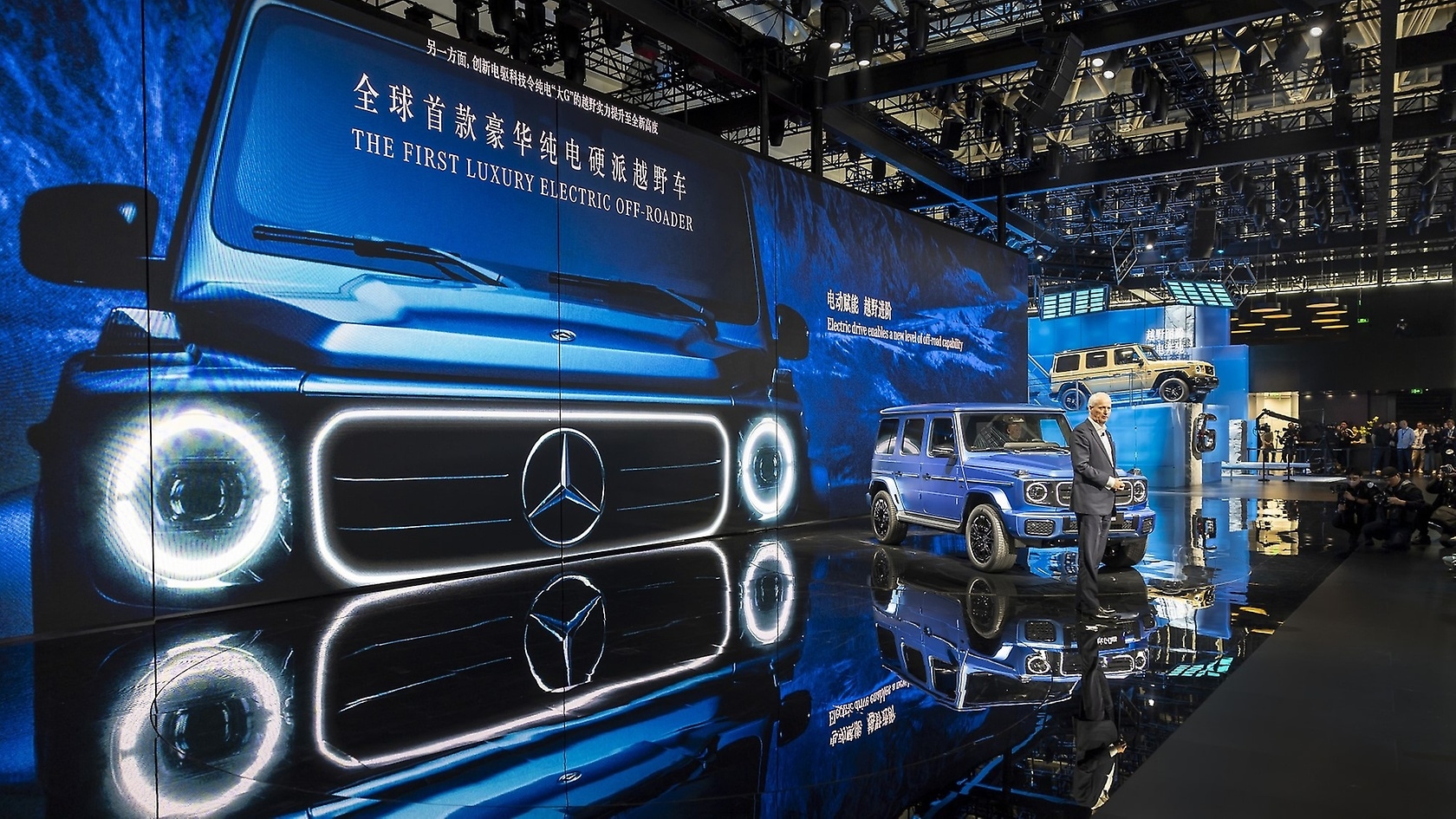
The automotive industry is undergoing a fundamental transformation, driven by the increasing demand for electric vehicles (EVs). Mercedes-Benz is investing heavily in the development of electric vehicles and aims to become a leader in the EV market. However, the transition to electric mobility requires significant capital investment and presents new challenges, including battery supply chain constraints and the need to develop new manufacturing processes. The company’s success in navigating this transition will be crucial to its long-term viability.
The company’s ability to adapt to these changing market conditions will be critical. This includes not only investing in new technologies but also streamlining operations, reducing costs, and strengthening its brand image. The automotive market is becoming increasingly competitive, and Mercedes-Benz must differentiate itself to maintain its position as a leading luxury vehicle manufacturer. The company’s focus on innovation, sustainability, and customer experience will be key to its future success.
Key Takeaways
- Mercedes-Benz Group AG experienced a significant decline in revenue and earnings in 2025, with revenue falling 9.19% and earnings decreasing 49.63%.
- Weakening demand in China and geopolitical instability are major contributing factors to the company’s recent struggles.
- Mercedes-Benz is challenging a £9.1 billion car finance redress scheme in the UK, adding to its financial and legal burdens.
- Jefferies & Company Inc. Maintains a ‘Hold’ rating on the stock, suggesting a cautious outlook.
- The company is investing heavily in electric vehicles but faces challenges related to battery supply and manufacturing processes.
Investors will be closely watching Mercedes-Benz’s performance in the coming quarters, particularly its ability to address the challenges in China and successfully navigate the transition to electric mobility. The next earnings report, scheduled for release in July 2026, will provide further insights into the company’s progress and outlook. Stay informed about the latest developments by visiting the Mercedes-Benz Group website. What are your thoughts on the future of luxury automotive brands? Share your comments below.
Related reading
- Who Pays for Climate Disasters? Funding the Cost of Global Catastrophes
- DeepSeek AI: China’s New Model 100x Cheaper Than Claude Fable 5
- MLB's Luxury Tax, Explained: The $244 Million Threshold (daybreakwire.com)
- The Evolution of Luxury Dining in Las Vegas: From Early Feasts to Casino Buffets (archyde.com)