
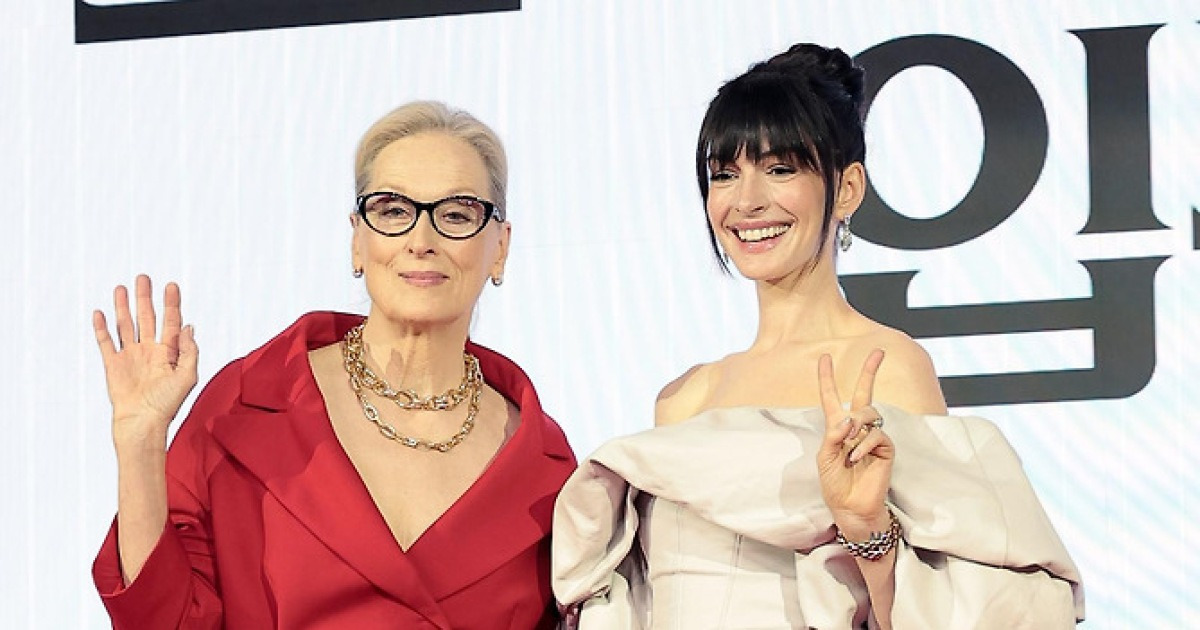
Two decades after redefining the professional anxieties of a generation, the legendary duo of Meryl Streep and Anne Hathaway have reunited to bring the high-stakes world of high fashion back to the big screen. The stars arrived in Seoul this week to promote The Devil Wears Prada 2, a sequel that promises to explore how the intersection of luxury and media has been fundamentally dismantled and rebuilt in the digital age.
The anticipation reached a fever pitch on April 8, 2026, as the two actresses held a press conference at the Four Seasons Hotel Seoul Grand Ballroom to discuss the film’s themes and their return to these iconic roles. For many, the reunion is more than just a cinematic callback. it is a reflection of the real-world evolution of the fashion industry, which has shifted from the curated pages of monthly glossies to the instantaneous, algorithm-driven world of smartphones.
The film is scheduled for a world premiere in South Korea on April 29, 2026 , marking a strategic global launch for the sequel. While the original 2006 film focused on the grueling apprenticeship of Andy Sachs under the formidable Miranda Priestly, the sequel pivots to a landscape where the “fashion bible” must compete with the immediacy of social media and the volatility of modern digital consumption.
The Evolution of Fashion and Media
Central to the narrative of The Devil Wears Prada 2 is the concept of timing. During the press event, Meryl Streep emphasized that the sequel could not have happened sooner, noting that the story is specifically designed for the current era. Streep remarked that the narrative is only possible now, reflecting a world where the emergence of smartphones has completely altered how the public interacts with fashion and power.

The plot sees the return of Miranda Priestly, the legendary editor-in-chief of Runway, and Andy, who returns to the fold as a planning editor. The dynamics are further complicated by the reappearance of Emily, who has transitioned from a struggling assistant to a powerful executive at a luxury brand . Together, these characters must navigate a media environment that has shifted entirely since the mid-2000s, fighting to maintain their grip on the fashion world’s narrative.
Anne Hathaway added a layer of personal growth to her character’s return, stating that Andy now possesses a “firmness” and a sense of self-sufficiency that was absent in the first film. This emotional maturity mirrors the actual time elapsed between the two productions, as the actors have aged alongside their characters.
A Historic First Visit to Seoul
The promotional tour began with the actresses arriving at the Gimpo Business Aviation Center on April 7, 2026 . For Meryl Streep, the trip marked her first-ever visit to South Korea. The Academy Award winner expressed her excitement upon landing, noting her fascination with the mountain landscapes she saw during her flight into the city.
Streep’s interest in the region extended beyond the film’s promotion. She expressed a deep admiration for “K-Culture” and voiced a specific desire to interview renowned South Korean directors Park Chan-wook and Bong Joon-ho, signaling a respect for the global influence of Korean cinema. This cultural exchange highlighted the film’s global ambitions, positioning the South Korean market as a primary hub for the sequel’s introduction to the world.
From 2006 to 2026: Character Arcs and Age
One of the most striking elements of the sequel is the visible passage of time. The film leans into the aging of its protagonists to add depth to the power dynamics. Meryl Streep, who was in her 50s during the original film, now portrays a boss in her 70s, a transition she noted was a joy to perform. Similarly, Anne Hathaway, who was 22 during the first movie, returns to the role at 42 .
This 20-year gap allows the film to examine the longevity of ambition. While the first film was a coming-of-age story about professional survival, the sequel explores the maintenance of legacy in an era of disruption. The conflict is no longer just about surviving a demanding boss, but about how legendary figures in their field adapt when the very tools of their trade—the printed page and the exclusive gatekeeper role—are rendered obsolete by the digital revolution.
Key Narrative Shifts in the Sequel
| Element | The Devil Wears Prada (2006) | The Devil Wears Prada 2 (2026) |
|---|---|---|
| Core Conflict | Entry into the fashion world | Survival in a digital media landscape |
| Andy’s Role | Junior Assistant | Planning Editor |
| Emily’s Status | Struggling Assistant | Luxury Brand Executive |
| Media Medium | Print Magazines | Smartphones and Digital Platforms |
The return of these characters provides a unique lens through which to view the last two decades of societal change. By bringing Miranda and Andy back into the same room, the film contrasts the rigid hierarchies of the past with the fluid, often chaotic nature of modern influence.
The next major milestone for the production is the official world premiere in South Korea on April 29, 2026. Following the premiere, the film is expected to roll out globally, bringing the fashion world’s most feared editor back to audiences worldwide.
Do you think the fashion industry can still be controlled by a “bible” in the age of TikTok and Instagram? Let us know your thoughts in the comments below and share this story with your fellow fashion enthusiasts.