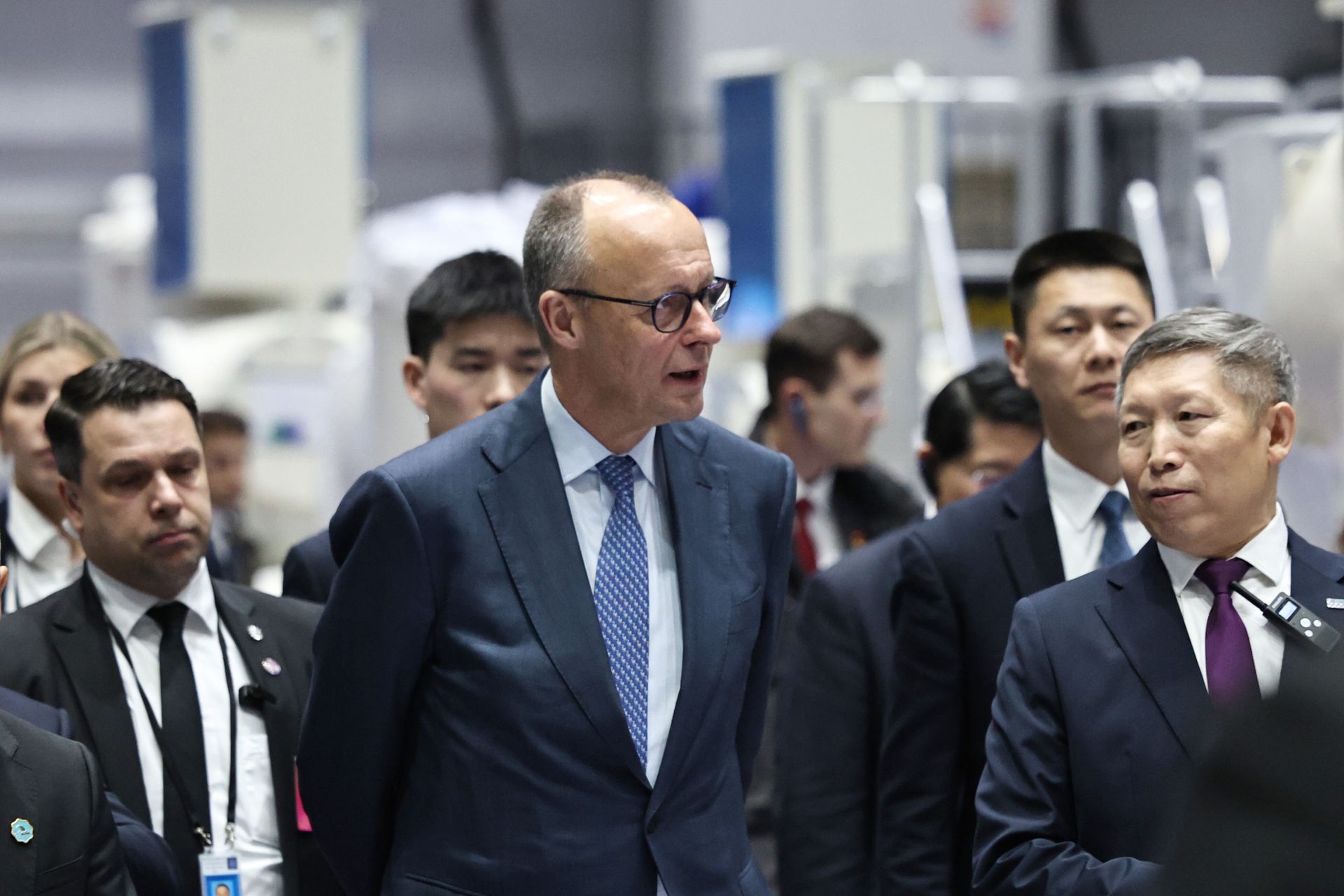
Hangzhou, China – Chancellor Friedrich Merz’s recent trip to China, his first as head of the Christian Democratic Union (CDU), concluded with a cautious assessment of the economic relationship between Europe and the world’s second-largest economy. While aiming to maintain diplomatic channels, Merz openly acknowledged the growing challenges posed by China’s industrial capacity and its impact on the European market. The visit, however, drew criticism from German media outlets who characterized the Chancellor’s approach as overly pragmatic and focused on securing advantages for German companies, particularly in the automotive sector, at the expense of broader European concerns.
The core of Merz’s message in Hangzhou centered on the increasing imbalance in the marketplace. He conceded that China’s industrial potential is becoming a significant hurdle for the European continent, a sentiment echoed by many European businesses grappling with competition from Chinese manufacturers. However, detailed discussions regarding these “challenges” were deferred to a lower administrative level, slated to be addressed during a planned visit by Germany’s Minister for Economic Affairs, Katharina Reiche. This strategy suggests a deliberate attempt to balance maintaining diplomatic ties with signaling concerns about trade imbalances, a delicate dance that reflects the complex nature of the Sino-European relationship.
A Pragmatic Approach and Limited Outcomes
German media coverage of Merz’s diplomatic initiative was largely lukewarm. Commentators noted a clear prioritization of pragmatism, with ideological considerations and systemic rivalry between the European Union and China taking a backseat. The primary objective, according to reports, appeared to be safeguarding the position of German automotive giants in the Chinese market. This focus drew criticism, with some publications labeling Merz as a “trade representative” rather than a statesman advocating for broader European interests. The shift in approach is notable, representing a departure from previous administrations’ more vocal stance on issues like human rights and fair trade practices.
Der Spiegel reported that Merz deliberately avoided public criticism of his Chinese hosts, seeking to cultivate a personal rapport with President Xi Jinping and distinguish himself from the policies of the previous German government. This strategy, while potentially laying the groundwork for future dialogue, raised questions about the extent to which Germany is willing to compromise on its values in pursuit of economic gains. The desire to build a personal connection with Xi Jinping underscores the importance Germany places on direct engagement with Chinese leadership, even amidst growing geopolitical tensions.
The Chancellor’s communication strategy also came under scrutiny. Journalists criticized Merz for not engaging in traditional press conferences, limiting his interactions with the media to prepared statements. This departure from democratic norms raised concerns about transparency and accountability, fueling perceptions that the visit was more about securing deals than fostering open dialogue. The lack of direct engagement with the press further contributed to the narrative that the trip was primarily focused on serving the interests of German businesses.
Despite the conciliatory tone and attempts to warm relations, the tangible outcomes of the visit were limited. The German delegation signed only five Memoranda of Understanding (MoUs), which Reuters described as having a “narrow scope and concerned sectors peripheral to both economies.” This contrasts sharply with recent visits by delegations from other Western nations, highlighting the challenges Germany faces in securing substantial agreements with China. For comparison, the United Kingdom recently signed 12 similar documents, while Canada signed eight, demonstrating a wider range of cooperation in those instances. Reuters provides further details on the limited scope of the agreements.
Areas of Cooperation and Future Prospects
The agreements that were reached focused on areas such as continued efforts in climate change and ecological transformation, veterinary protocols, and the extension of media cooperation between the German Bundesliga and China Media Group (CMG). These areas represent relatively low-risk areas of collaboration, suggesting a cautious approach to deeper engagement. The focus on climate change reflects a shared interest in addressing global environmental challenges, while the media cooperation agreement highlights the ongoing cultural exchange between the two countries. However, the limited scope of these agreements underscores the broader challenges in forging closer economic ties.
The emphasis on ecological transformation is particularly noteworthy, given China’s commitment to achieving carbon neutrality by 2060. Germany, a leader in green technologies, sees potential for collaboration with China in areas such as renewable energy and sustainable manufacturing. However, concerns remain about China’s continued reliance on coal and its overall environmental record. The veterinary protocols aim to facilitate trade in agricultural products, but are likely to be subject to ongoing scrutiny to ensure compliance with international standards.
The Automotive Sector: A Key Focus
The automotive sector was undoubtedly a central focus of Merz’s visit. German automakers, including Volkswagen, BMW, and Mercedes-Benz, have significant investments in China and rely heavily on the Chinese market for sales. However, they are facing increasing competition from domestic Chinese manufacturers, particularly in the electric vehicle (EV) segment. The Chancellor’s efforts to secure favorable treatment for German automakers reflect the importance of this market to the German economy. The rise of Chinese EV manufacturers, such as BYD and Nio, poses a significant challenge to established players, and Germany is keen to ensure a level playing field.
The competition in the EV market is particularly intense, with Chinese companies benefiting from government subsidies and a rapidly growing domestic market. German automakers are investing heavily in EV technology, but they face challenges in scaling up production and competing on price. The outcome of this competition will have significant implications for the future of the automotive industry, both in Germany and globally. The German government is likely to continue to advocate for fair competition and access to the Chinese market for its automakers.
Broader Implications for Sino-European Relations
Merz’s visit to China takes place against a backdrop of increasing geopolitical tensions and growing concerns about China’s economic practices. The European Union has been grappling with how to balance its economic interests with its values, particularly in areas such as human rights and fair trade. The EU has adopted a more assertive stance towards China in recent years, imposing sanctions over human rights abuses in Xinjiang and launching investigations into unfair trade practices. However, there is also a recognition that China is a crucial economic partner and that a complete decoupling is not feasible.
The EU’s strategy towards China is often described as a “systemic rivalry,” acknowledging the fundamental differences in political systems and values while recognizing the need for cooperation in areas of mutual interest. This approach requires a delicate balancing act, and Merz’s visit reflects the challenges of navigating this complex relationship. The EU is also seeking to diversify its supply chains and reduce its dependence on China, but this will take time and require significant investment. The ongoing war in Ukraine has further complicated the relationship, with China refusing to condemn Russia’s aggression.
The visit also comes at a time when other Western nations are reassessing their relationships with China. The United States has adopted a more confrontational approach, imposing tariffs and restrictions on Chinese companies. However, there is also a growing recognition that engagement with China is necessary to address global challenges such as climate change and pandemics. The future of Sino-European relations will depend on how the EU manages these competing pressures and finds a way to cooperate with China while upholding its values and interests.
Key Takeaways
- Chancellor Merz acknowledged the challenges posed by China’s industrial capacity to the European market.
- The visit yielded limited tangible outcomes, with only five Memoranda of Understanding signed.
- German media criticized Merz’s pragmatic approach, arguing it prioritized German economic interests over broader European concerns.
- The automotive sector was a key focus of the visit, reflecting the importance of the Chinese market to German automakers.
- The trip underscores the complex and evolving nature of Sino-European relations.
Looking ahead, the planned visit by Germany’s Minister for Economic Affairs, Katharina Reiche, will be crucial in addressing the specific trade concerns raised by Chancellor Merz. The discussions are expected to delve deeper into the issues of market access, intellectual property protection, and fair competition. The outcome of these talks will likely shape the future trajectory of economic relations between Germany and China. Continued monitoring of the evolving dynamics between these two major economic powers will be essential for understanding the broader implications for the global economy.
What are your thoughts on Chancellor Merz’s approach to China? Share your perspectives in the comments below, and don’t forget to share this article with your network.
- Ceuta Crisis: Geopolitics, Humanitarian Impact, and Spain-Morocco Relations
- Robert Lewandowski Scores First Brace for Chicago Fire
- Pan-Mass Challenge Aims for $79 Million to Support Cancer Research at Dana-Farber (news-usa.today)
- Seine-Nord Europe Canal: France’s Mega Infrastructure Project Faces Ongoing Delays (world-today-news.com)