Meta Platforms Inc. has secured a strategic partnership with Reliance Industries to establish its first artificial intelligence data center in India, according to industry reports. The agreement involves Meta leasing high-density computing capacity within a 168-megawatt facility located in Jamnagar, Gujarat, with provisions for future scalability as the company expands its regional infrastructure footprint. This move marks a significant shift in Meta’s global hardware strategy, aligning its AI compute requirements with the growing digital ecosystem managed by India’s largest conglomerate, Reliance Industries Limited.
The collaboration is designed to support the increasing demand for generative AI services and localized data processing. By leveraging Reliance’s robust energy and real estate infrastructure in Jamnagar—a hub for the company’s refining and green energy initiatives—Meta aims to reduce latency for Indian users while complying with evolving regional data sovereignty expectations. The deal represents one of the most substantial infrastructure commitments by a major U.S. technology firm in the Indian market to date, as confirmed by Reuters reporting on the expansion of foreign cloud and AI investments in the subcontinent.
Strategic Alignment in the Jamnagar Hub
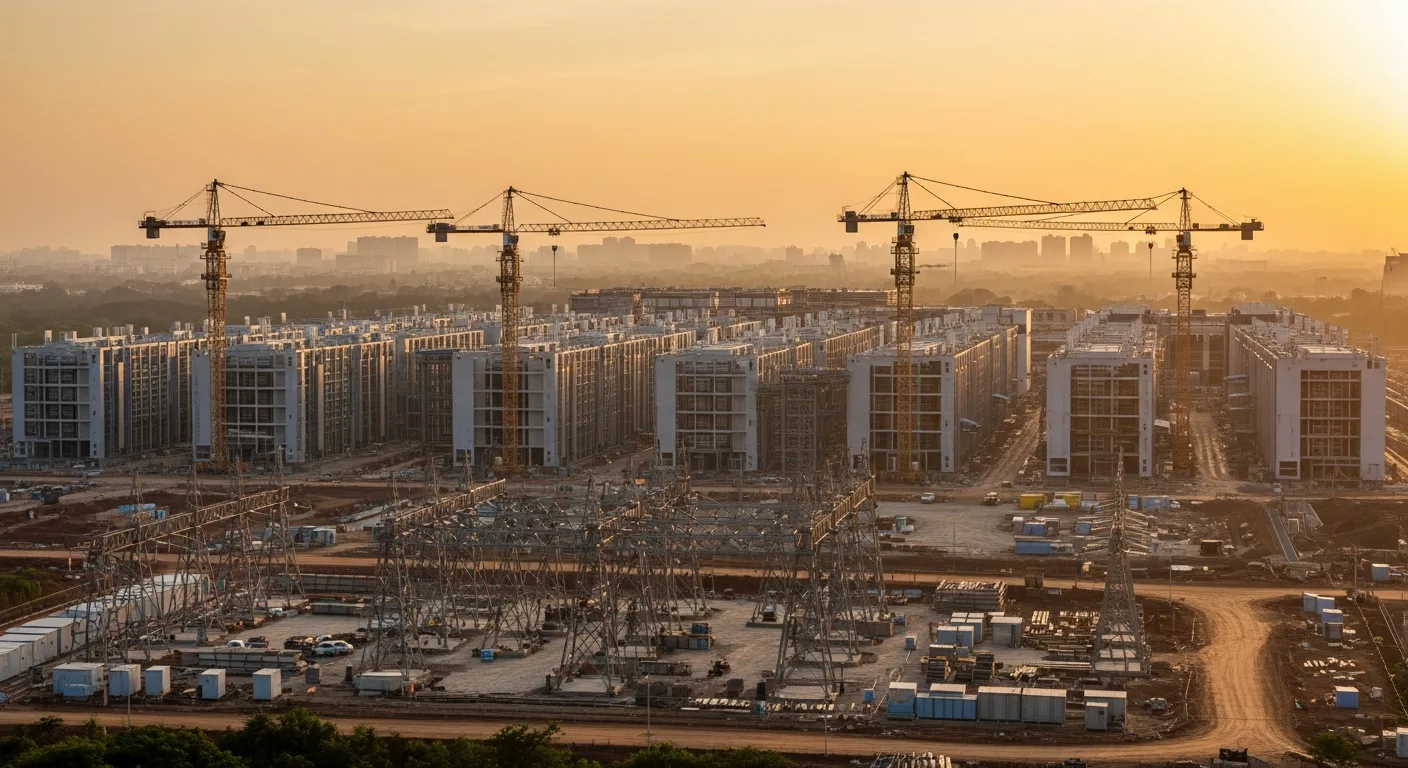
The choice of Jamnagar as the site for this data center is not incidental. Reliance Industries has been aggressively developing its “Green Energy” corridor, which provides the necessary power density required to run high-performance computing (HPC) clusters. According to The Economic Times, the facility is specifically engineered to handle the thermal and electrical loads associated with training large language models (LLMs), such as Meta’s Llama series. The integration of 168 MW of capacity provides a substantial baseline for Meta, which has been seeking to decentralize its data operations away from traditional hubs in North America and Europe.
For Reliance, the deal serves as a validation of its ongoing efforts to position itself as a primary provider of “digital infrastructure” rather than just a telecommunications provider. By hosting Meta’s AI workloads, Reliance effectively anchors its data center parks with a “blue-chip” tenant, creating a precedent for other global hyperscalers to follow. This partnership is viewed by analysts as a symbiotic arrangement: Meta gains immediate access to a massive, power-ready facility, while Reliance secures a long-term contract that justifies its massive capital expenditure in industrial-scale data storage and processing.
Infrastructure Requirements for Generative AI
The technical requirements for modern AI development have fundamentally changed the nature of data center leasing. Unlike standard cloud storage, AI-focused facilities require significantly higher power density per rack to accommodate power-hungry GPUs, such as those produced by Nvidia. The 168 MW capacity mentioned in initial reports reflects this shift toward “AI-ready” infrastructure, where cooling and power delivery are prioritized over traditional floor space metrics. Industry data from Gartner highlights that for global technology firms, the ability to scale power capacity quickly is now the primary bottleneck for deploying enterprise-grade AI models at a national level.
Furthermore, this partnership addresses the growing demand for “sovereign AI”—the concept that nations should have the ability to train and run AI models on infrastructure physically located within their borders. By establishing a physical presence in India, Meta is mitigating risks associated with cross-border data transfer regulations. As noted by the Ministry of Electronics and Information Technology (MeitY), India has been actively encouraging global firms to invest in local data storage and computing capabilities to ensure that the economic benefits of the AI revolution remain within the domestic economy.
Future Scalability and Regional Impact
The agreement includes specific clauses for scaling, which suggests that both parties anticipate the need for additional capacity as AI adoption accelerates across the Indian market. The Jamnagar site is reportedly designed for expansion, allowing Meta to increase its power draw as demand for its AI-powered features—such as Meta AI on WhatsApp and Instagram—continues to rise. This modular approach to data center expansion is a common industry practice, allowing firms to manage capital expenditure while maintaining the flexibility to meet sudden spikes in compute demand.

Looking ahead, the success of this project may influence the broader landscape of foreign direct investment in India’s tech sector. Other major players, including Amazon Web Services (AWS), Google, and Microsoft, have also been expanding their Indian data center footprints, leading to a competitive environment for both land acquisition and reliable power supply. The next critical update for stakeholders will likely come during the next quarterly earnings call from Reliance Industries, where management may provide further details on the project’s construction timeline and the operational commencement date.
As the digital infrastructure landscape continues to evolve, market participants are encouraged to monitor official filings from the Bombay Stock Exchange (BSE) for any regulatory disclosures regarding the facility’s progress. Industry observers and technology professionals are invited to share their insights on how localized AI infrastructure might reshape the competitive landscape for consumer software in the comments section below.
Keep reading