Meta‘s Uneven Enforcement of Community Standards Silences crucial Abortion data Online
The digital landscape is increasingly vital for accessing healthcare information, yet platforms like Instagram are demonstrably failing too protect access to accurate and legal reproductive health resources. A recent case involving the M+A Hotline, an institution providing guidance on medication abortion, reveals a disturbing pattern of inconsistent content moderation by Meta (Instagram’s parent company) that raises serious concerns about censorship and the suppression of vital health information. This article delves into the specifics of this case, analyzes Meta’s Community Standards, and outlines why a more transparent and equitable approach to enforcement is urgently needed.
The Case of the M+A Hotline: Education, Not Commerce
The M+A Hotline provides crucial information about medication abortion – its efficacy, safety, and legal access routes. Crucially,the organization does not sell medication abortion pills. This distinction is vital. As Meta itself clarified in a February 2024 letter to Amnesty International, providing educational content about medication abortion does not violate its Community Standards. The company explicitly stated its policies are informed by “feedback from people and the advice of experts in fields like technology, public safety and human rights.”
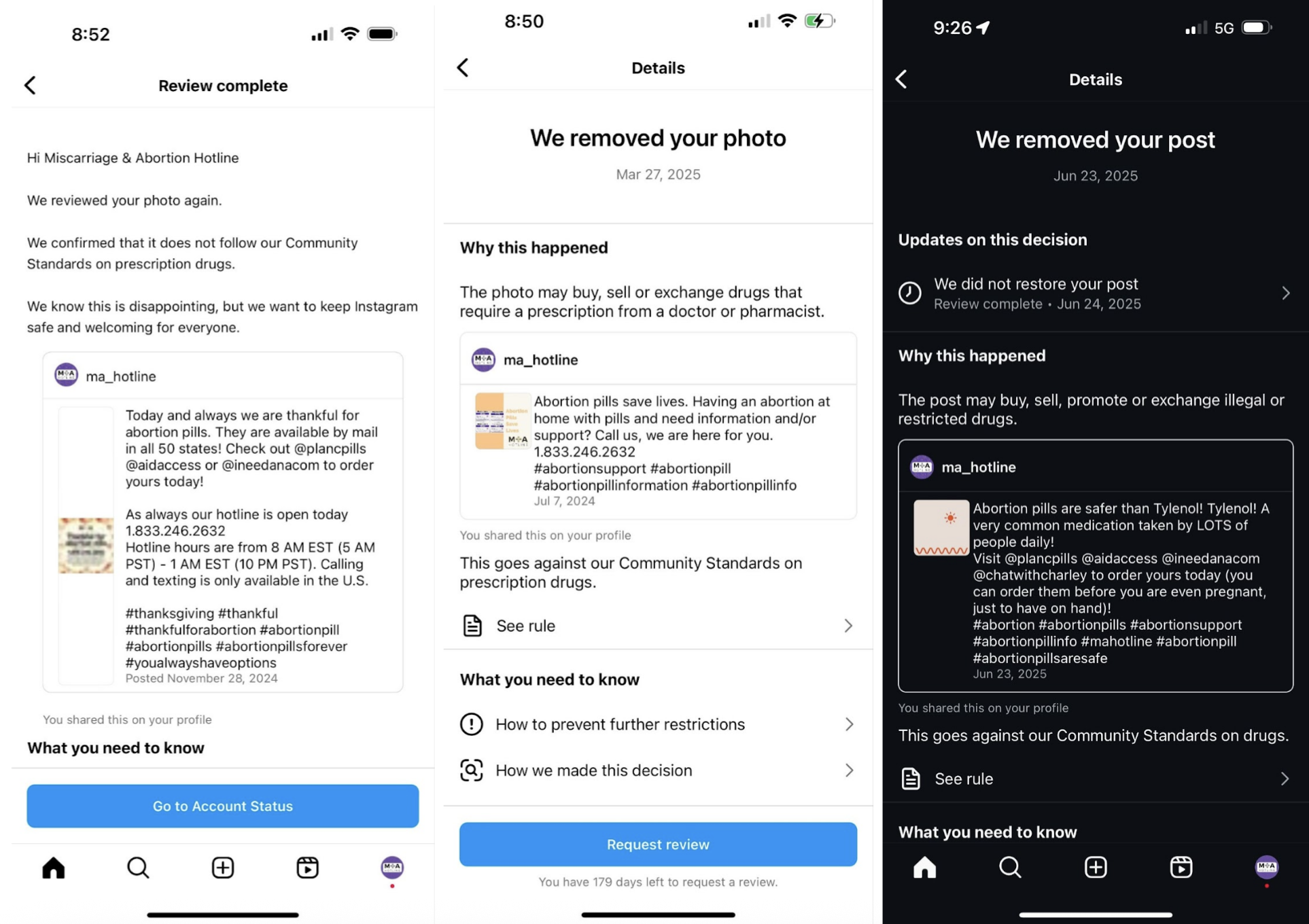
Despite this internal clarification, around ten posts from the M+A Hotline were removed by Instagram, none of which were advertisements. These removals occurred despite the organization’s content adhering to Meta’s stated policies. The posts were flagged as violating the Community Standards regarding drugs, a categorization demonstrably inaccurate given the Hotline’s purely educational function.
(Image: screenshots provided to EFF from M+A Hotline – as provided in the original source)
A Deep Dive into Meta’s Community Standards: Where’s the Clarity?
A thorough review of Meta’s extensive Community Standards reveals a surprising lack of specific guidance regarding abortion and reproductive health. While the Standards cover a broad range of topics – from bullying and harassment to restricted goods and services – mentions of “abortion” and “reproductive health” are remarkably sparse.This ambiguity, coupled with the M+A Hotline’s experience, suggests that content related to abortion is subject to disproportionately high scrutiny.
meta’s standards do allow guidance on legally accessing pharmaceutical drugs, differentiating this from the prohibited activity of buying, selling, or trading. The M+A Hotline’s content falls squarely within this permitted category.However, the automated moderation systems, and even subsequent human reviews, consistently failed to recognize this distinction.
The Problem with Automated Moderation and Lack of Recourse
While algorithmic moderation is a necessity for platforms of Meta’s scale, the M+A Hotline case highlights its inherent flaws. The repeated, inaccurate removal of content, even after review requests, demonstrates a systemic problem. It’s understandable that moderation systems will occasionally make errors, but the consistent nature of these errors, notably concerning reproductive health information, is unacceptable.
This issue is compounded by the lack of effective recourse for users. As the Electronic Frontier Foundation (EFF) has documented, navigating Meta’s review process can be frustrating and often unproductive. Even when users identify clear moderation errors and provide evidence supporting their claims, Meta frequently refuses to restore the removed content. This lack of openness and accountability creates a chilling effect on free speech and access to vital information.(You can learn more about the challenges of breaking out of Meta’s “content jail” here: https://www.eff.org/pages/when-knowing-someone-meta-only-way-break-out-content-jail).
Why this Matters: The Broader Context of Online Censorship
The suppression of reproductive health information online is not occurring in a vacuum. In the wake of Dobbs v. Jackson Women’s Health Organization,attacks on abortion access – both legal and informational – are intensifying. At this critical juncture, platforms like Meta have a obligation to protect access to accurate and legal healthcare information. Silencing healthcare providers and suppressing vital health resources exacerbates the existing crisis and disproportionately harms those seeking reproductive care.
What Meta Must Do: Transparency, Consistency, and Accountability
To address this critical issue, Meta must take the following steps:
* Clearly Define Permitted Content: meta needs to explicitly clarify its policies regarding reproductive health information, providing concrete examples of what is and isn’t permitted.
* **Improve Moderation





![Sell Used iPhone: Get 10% Bonus & Top Payouts | [Your Brand Name]](https://i0.wp.com/photos5.appleinsider.com/gallery/66190-138789-gazelle-iphone-trade-in-bonus-2025-xl.jpg?resize=330%2C220&ssl=1 "Sell Used iPhone: Get 10% Bonus & Top Payouts | [Your Brand Name]")