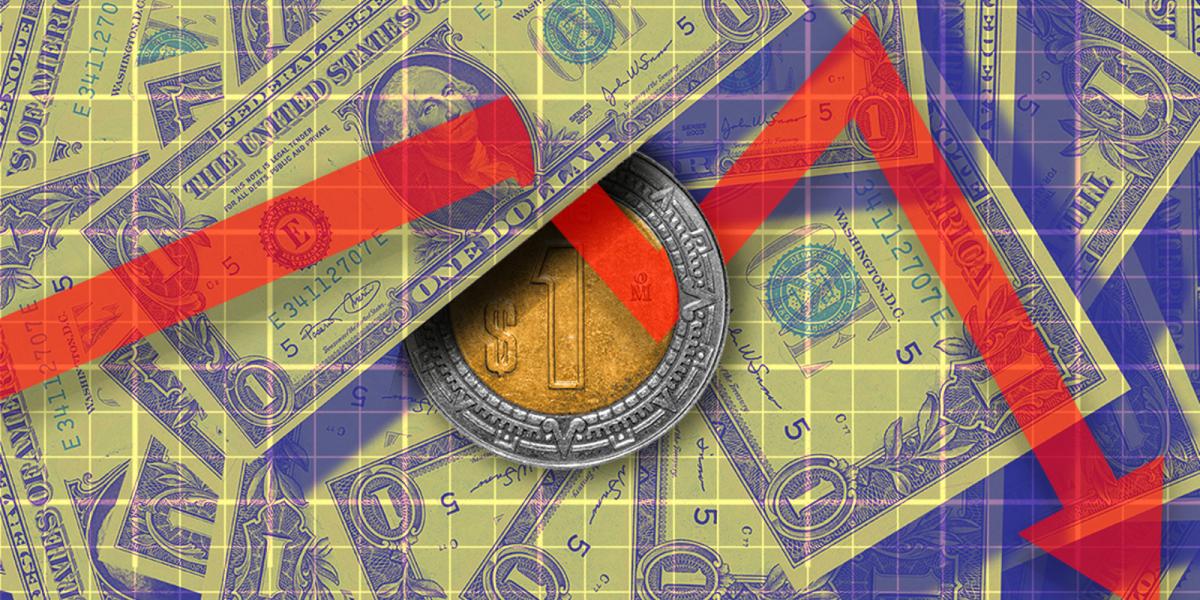
The Mexican peso depreciated against the US dollar in late June 2024 as investors reacted to a strengthening US dollar and shifting expectations regarding Federal Reserve interest rate cuts. This currency movement occurred alongside local inflation data that influenced market sentiment regarding the Bank of Mexico’s (Banxico) upcoming monetary policy decisions.
Market data indicated that the USD/MXN exchange rate reached levels not seen in over two months during this period. According to reports from FXStreet and Yahoo Finance, the peso’s decline was driven by a combination of rising US Treasury yields and domestic economic indicators that suggested a complex path for Mexican inflation control.
Why is the US Federal Reserve influencing the Mexican peso?
The strength of the US dollar remains a primary driver for the depreciation of emerging market currencies, including the peso. During the final weeks of June 2024, the US Federal Reserve maintained its benchmark interest rate at a range of 5.25% to 5.50%. Following recent Federal Open Market Committee (FOMC) communications, market participants adjusted their outlooks, pricing in fewer interest rate cuts for the remainder of the year.

When the Federal Reserve signals a “higher for longer” approach to interest rates, the US dollar typically strengthens. This occurs because higher US rates offer more attractive returns for investors holding dollar-denominated assets. As capital flows toward the US to capture these yields, demand for the dollar increases, which puts downward pressure on the Mexican peso. This interest rate differential between the US and Mexico is a critical metric for currency traders monitoring the USD/MXN pair.
How did the latest Mexican inflation report affect the currency?
Domestic economic data released by the National Institute of Statistics and Geography (INEGI) played a significant role in the peso’s volatility. The latest reports on the National Consumer Price Index (INPC) provided a clearer picture of the inflationary pressures currently facing the Mexican economy. While some sectors showed signs of cooling, the persistence of certain core inflation components has kept the central bank, Banxico, on high alert.
According to data from INEGI, inflation remains a central concern for policymakers. If inflation does not trend toward the 3% target established by the central bank, Banxico is likely to maintain higher interest rates to curb price growth. While high domestic rates can sometimes support a currency through a “carry trade,” the current market sentiment has prioritized the strength of the US dollar and the potential for a narrowing gap between US and Mexican interest rates.
The interplay between local inflation and central bank action creates a feedback loop. If inflation stays elevated, the peso may face volatility as investors weigh whether Banxico will act aggressively enough to stabilize the currency or if the US Fed’s policy will remain the dominant global force.
What role do IGAE and retail sales play in market sentiment?
Beyond inflation, other domestic indicators such as the Economic Activity Indicator (IGAE) and retail sales figures have influenced the peso’s trajectory. The IGAE, which serves as a high-frequency proxy for Mexico’s Gross Domestic Product (GDP), provides insight into the current health of the Mexican economy. Positive data in these areas can sometimes bolster the peso by signaling economic resilience.
However, recent market observations suggest that these positive domestic signals were neutralized by broader macroeconomic trends. Reports from XTB.com noted that even when IGAE and retail sales data appeared robust, the overarching pressure from US monetary policy outweighed the local economic momentum. This phenomenon highlights the vulnerability of the peso to external shocks and global shifts in liquidity.
For investors, the combination of strong domestic activity and persistent inflation creates a nuanced environment. While a growing economy is a positive sign for long-term stability, the immediate focus of the foreign exchange market remains the cost of capital and the relative strength of the US dollar.
Comparison of Key Economic Indicators
| Indicator | Current Trend/Status | Primary Impact on Peso |
|---|---|---|
| US Federal Funds Rate | Steady (5.25%–5.50%) | High USD strength leads to peso depreciation |
| Mexican Inflation (INEGI) | Persistent/Variable | Influences Banxico’s ability to cut rates |
| US Treasury Yields | Increasing | Increases demand for USD over MXN |
| Mexican IGAE | Variable/Growth | Supports long-term stability but currently secondary |
Who is most affected by the depreciation of the peso?
The fluctuations in the USD/MXN exchange rate have direct consequences for various stakeholders within the Mexican and global economies. The impact is largely divided between those who benefit from a weaker currency and those who face increased costs.

- Exporters: Mexican companies that sell goods abroad, such as automotive parts or agricultural products, often benefit from a weaker peso. A depreciated currency makes their products more price-competitive in US markets and increases the peso value of their US dollar earnings.
- Importers and Consumers: Businesses that rely on imported raw materials or finished goods face rising costs when the peso loses value. These increased costs are frequently passed down to consumers, potentially contributing to further domestic inflation.
- Foreign Investors: Investors holding Mexican assets in pesos see the value of their holdings diminish when converted back into US dollars. This can lead to capital outflows as investors seek more stable environments.
- Debt Holders: Entities with significant debt denominated in US dollars face higher repayment costs in peso terms, which can strain corporate and sovereign balance sheets.
As the currency continues to navigate these global and domestic pressures, the volatility remains a key risk factor for economic planning in Mexico.
Summary of Market Drivers
- Monetary Policy Divergence: The gap between the Federal Reserve’s interest rate path and Banxico’s decisions remains the primary driver of USD/MXN volatility.
- Inflationary Pressure: INEGI data continues to dictate the pace of domestic monetary tightening or easing.
- Global Risk Sentiment: The strength of the US dollar acts as a “safe haven” magnet, often drawing liquidity away from emerging market currencies like the peso.
The next major checkpoint for market participants will be the release of the next official inflation report from INEGI and the upcoming interest rate decision from the Bank of Mexico. These events will provide the necessary data to determine if the peso’s recent depreciation is a temporary correction or a sustained trend.
What are your thoughts on the current volatility of the Mexican peso? Share your analysis in the comments below and share this article with your network.
Keep reading