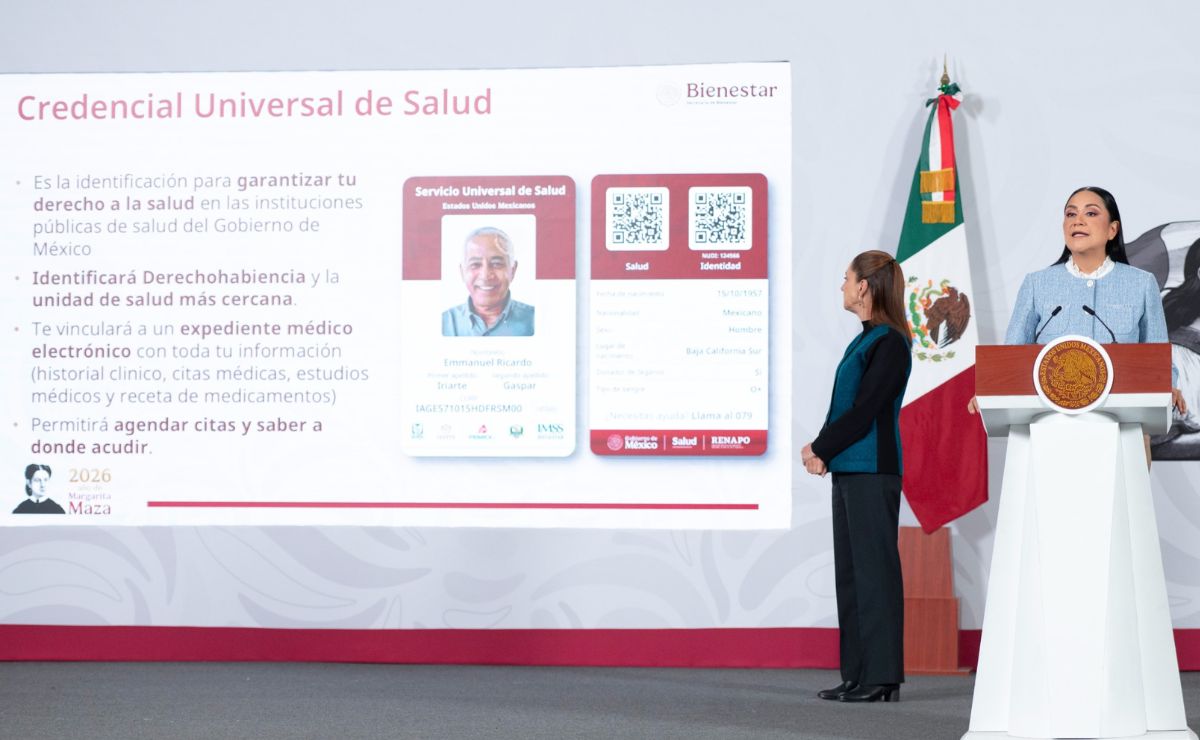
Mexico to Roll Out Universal Health Credential in April, Expanding Access to Care
Mexico is moving forward with a nationwide rollout of a universal health credential beginning in April, a significant step toward streamlining access to healthcare services for millions of citizens. The initiative, spearheaded by the current administration, aims to create a digital health record system accessible through a single card, encompassing a wide range of public healthcare providers. This includes institutions like the IMSS (Mexican Social Security Institute), ISSSTE (Social Security Institute for Workers of the State), IMSS-Bienestar, and health services for Pemex workers and the armed forces, as well as National Institutes of Health. The program seeks to eliminate fragmentation and improve the quality of care by providing a comprehensive medical history for each individual.
The implementation of the Servicio Universal de Salud (Universal Health Service) represents a major undertaking in modernizing Mexico’s healthcare infrastructure. Currently, navigating the system can be complex, requiring individuals to manage separate records and processes depending on their affiliation. This new credential is intended to simplify that process, ensuring that all citizens, regardless of their employment status or healthcare provider, have a unified and easily accessible health profile. The initiative builds upon existing efforts to expand healthcare coverage and improve health outcomes across the country.
What is the Universal Health Service?
The Servicio Universal de Salud is a program designed to digitize the Mexican healthcare system, consolidating personal data and medical histories onto a single, standardized credential. According to a statement released by the Mexican Presidency, the goal is to improve the overall efficiency and effectiveness of healthcare delivery. Presidenta Claudia Sheinbaum emphasized that this will allow for a better healthcare system with a digital medical record.
This centralized system will allow any Mexican citizen to access services from a variety of public healthcare providers, breaking down the silos that currently exist. The initiative is particularly important for individuals who may move between different sectors – for example, from private employment to government service – as it ensures continuity of care. The program also aims to improve data collection and analysis, enabling better public health planning and resource allocation.
Details of the Universal Health Credential
The new health credential will contain key identifying information and medical data, facilitating efficient and accurate healthcare delivery. The card will include the individual’s full name, CURP (Unique Population Registry Code), sex, date and place of birth, and blood type. Crucially, it will also feature two QR codes: one to validate eligibility for healthcare services and another to identify the nearest healthcare facility. The credential will also allow individuals to indicate their organ donation preferences.
The issuance of the credential is a joint effort between the Secretaría de Salud (Ministry of Health) and the Secretaría de Bienestar (Ministry of Welfare). Ariadna Montiel, the Secretary of Welfare, has announced that the registration process will be phased, following a schedule based on the last letter of an individual’s surname and their age. This staggered approach is intended to manage the logistical challenges of registering the entire population and ensure a smooth rollout. The government plans to establish 2,898 modules, staffed by approximately 9,791 operators, 1,706 supervisors, and 5,766 servidores de la Nación (national servers) to assist with the registration process.
Registration Process and Timeline
Originally slated to begin in March, the credentialization process was postponed to April, as confirmed by the Mexican government. Once registered, individuals can expect to receive their physical credential within six weeks, alongside access to a digital version of the card. The digital credential will likely offer added convenience and accessibility, allowing individuals to access their health information through smartphones or other devices.
To obtain the Credencial Universal de Salud, applicants will necessitate to present official identification with a photograph, a certified CURP, and proof of address dated within the last six months. For individuals under the age of 18, a birth certificate, CURP, and identification of a parent or legal guardian will be required. The government has not yet released the detailed schedule based on surname and age, but it is expected to be published shortly on official government websites.
Impact and Future Implications
The implementation of the Universal Health Credential has the potential to significantly improve healthcare access and quality for millions of Mexicans. By streamlining the process of accessing care and creating a unified medical record system, the initiative aims to reduce administrative burdens, improve coordination between healthcare providers, and enhance patient outcomes. The program also aligns with broader efforts to achieve universal health coverage and reduce health disparities across the country.
The success of the program will depend on effective implementation, including ensuring adequate staffing and resources at registration modules, maintaining data security and privacy, and providing clear communication to the public about the registration process and benefits of the credential. Ongoing monitoring and evaluation will be crucial to identify and address any challenges that may arise.
The ISSSTE, as a key provider of healthcare services to government workers, will play a vital role in the rollout of this new system. The institute, founded in 1959 by President Adolfo López Mateos, has a long history of providing social security and healthcare benefits to a significant portion of the Mexican population. The ISSSTE offers a range of online services to its members, and the integration of the Universal Health Credential is expected to further enhance the accessibility and efficiency of its services.
The next key step in the process is the release of the detailed registration schedule, which will allow citizens to plan their participation in the program. The government is expected to announce this schedule in the coming days, providing clear guidance on when and where individuals can register for their Universal Health Credential.
What are your thoughts on Mexico’s new Universal Health Credential? Share your comments below, and let us know how you think this initiative will impact healthcare access in the country.
Related reading