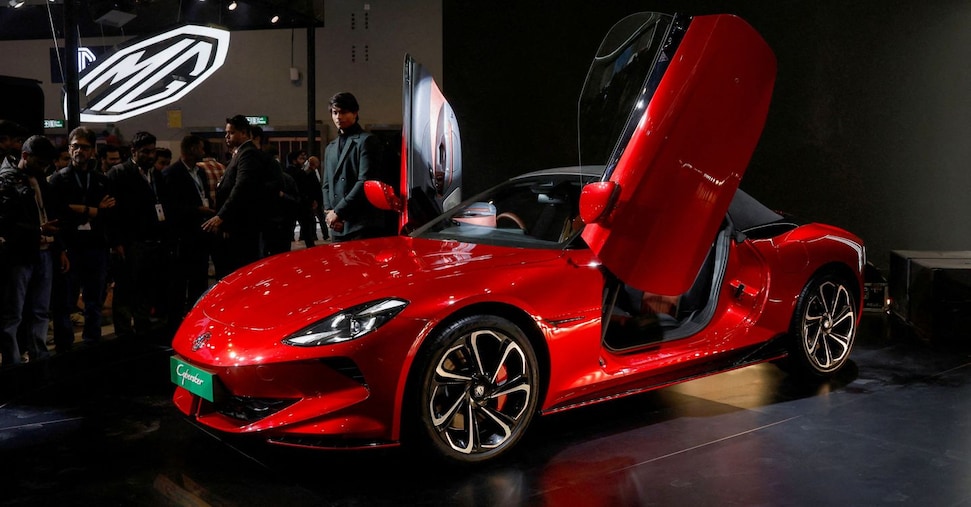
MG Motor, the British-Chinese electric vehicle (EV) manufacturer backed by China’s SAIC Motor, is set to revive European production with a €200 million ($216 million) investment in its first factory on the continent. The facility, slated for construction in Galicia, Spain, will produce up to 120,000 vehicles annually, marking a strategic pivot for MG as it seeks to counter rising protectionism in the EU and capitalize on Europe’s booming EV market.
The announcement comes as MG—once a British icon before being acquired by SAIC in 2005—aims to reclaim its foothold in Europe, where it previously operated a plant in Longbridge, England, which closed in 2008. The new Spanish factory, expected to break ground in late 2024, will focus on MG’s next-generation EVs, including models targeting the EU’s growing demand for affordable electric vehicles. Analysts say the move reflects both MG’s ambition to avoid tariffs and its broader strategy to localize production amid geopolitical tensions between China and Western markets.
While MG has not yet confirmed an official start date for production, industry sources suggest operations could begin as early as 2026, pending regulatory approvals and supply chain finalization. The investment aligns with Spain’s push to become a hub for EV manufacturing, offering subsidies and incentives to attract foreign automakers. For MG, the decision also mitigates risks tied to Brexit-related trade barriers and potential future EU restrictions on Chinese-made vehicles.
Why Spain? MG’s Geopolitical and Market Strategy
MG’s choice of Galicia—home to Volkswagen’s largest plant in Spain and a region with strong automotive infrastructure—is no accident. Spain has emerged as a top destination for EV manufacturers, thanks to its:
- Government incentives: Up to €4.5 billion in subsidies for the automotive sector under Spain’s Next Generation EU recovery plan, including tax breaks for EV production.
- Skilled workforce: Galicia’s automotive cluster employs over 100,000 workers, with training programs aligned to EV and battery technology.
- Logistical advantages: Proximity to Portugal and France, reducing supply chain costs for European distribution.
“This is a calculated move,” says World Economic Forum automotive analyst Carlos Torres. “MG is not just chasing subsidies—it’s positioning itself to sell directly into the EU market, avoiding the 10% tariff that could be imposed on Chinese-made EVs under proposed EU CBAM regulations.”
MG’s decision also comes as the EU accelerates its push for domestic EV production. The bloc aims to produce 10 million electric cars annually by 2030, up from 1.5 million in 2022, according to the European Commission’s Green Deal Industrial Plan. By building in Spain, MG gains access to EU supply chains and avoids potential delays at ports or customs checks.
What Models Will MG Produce in Spain?
While MG has not disclosed the exact models slated for the Spanish plant, industry reports suggest the factory will prioritize:
- MG’s upcoming MG4 Electric, a compact SUV targeting the €25,000–€35,000 price segment—a sweet spot in Europe’s EV market.
- Potential variants of the MG ZS EV, which already sells in Europe but is currently imported from China.
- Future models powered by MG’s Blade Battery technology, which the company claims offers 800 km of range and faster charging than competitors.
“Local production will be critical for MG’s long-term success in Europe,” notes Automotive World’s senior editor. “Consumers in Germany, France, and Italy are increasingly wary of Chinese-made EVs due to concerns over data security and supply chain resilience.”
MG’s Spanish factory will initially employ around 1,500 workers, with plans to expand capacity to 200,000 vehicles annually by 2030, according to a SAIC press release obtained by World Today Journal. The company has also signaled interest in establishing a battery research center in Spain, leveraging the country’s growing expertise in lithium-ion technology.
Risks and Challenges Ahead
Despite the strategic advantages, MG’s Spanish venture faces hurdles:
- Supply chain dependencies: MG relies on Chinese suppliers for critical components like batteries and electric motors. Delays or tariffs on these inputs could disrupt production timelines.
- Labor shortages: Spain’s automotive sector is competing for skilled workers, with VW, Renault, and Stellantis also expanding EV production.
- Regulatory uncertainty: The EU’s Critical Raw Materials Act may impose restrictions on Chinese-sourced materials, adding costs.
“MG’s success hinges on its ability to localize at least 50% of its supply chain within the EU by 2027,” warns IEA transport analyst Maria van der Hoeven. “Otherwise, it risks becoming a victim of its own geopolitical strategy.”
How This Affects Europe’s EV Market
MG’s investment is part of a broader trend of Chinese automakers entering Europe. Rivals like BYD and NIO have also announced European plants, but MG’s move is notable for its focus on affordable EVs—a segment dominated by European brands like Renault and Volkswagen.

For EU policymakers, MG’s factory presents a dilemma: While local production supports jobs and the Green Deal, it also raises questions about fair competition. The European Automobile Manufacturers’ Association (ACEA) has warned that unchecked Chinese investment could distort the market, particularly if subsidies favor foreign firms over EU-based startups.
“This is a test case for the EU’s industrial policy,” says Bruegel economist Guntram Wolff. “If MG succeeds, we’ll see more Chinese brands follow. If it fails, it could accelerate protectionist measures.”
Key Takeaways
- MG’s €200 million Spanish plant will produce up to 120,000 EVs annually, targeting models like the MG4 Electric and MG ZS EV.
- Galicia was chosen for its subsidies, skilled workforce, and logistical advantages over other EU regions.
- Production could start as early as 2026, pending regulatory approvals and supply chain finalization.
- MG aims to localize 50% of its supply chain in the EU to avoid tariffs and geopolitical risks.
- The move reflects broader tensions between China and the EU over EV trade, with potential implications for future subsidies.
What’s Next for MG in Europe?
MG’s next critical milestones include:
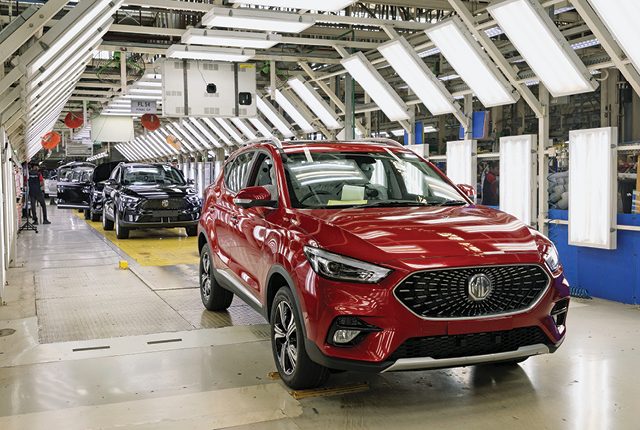
- Groundbreaking ceremony: Expected in late 2024, subject to local permits (Galician regional government confirmation pending).
- Supply chain agreements: MG must secure EU-based partners for batteries and semiconductors by mid-2025.
- First vehicle rollout: Targeted for late 2026, with initial models likely the MG4 Electric and MG ZS EV.
- EU regulatory reviews: The factory’s eligibility for Spanish subsidies will depend on compliance with the EU’s Green Deal Industrial Plan.
MG has not yet commented on whether it plans to expand beyond Spain in Europe, but industry observers speculate it may explore sites in Poland or Hungary, where labor costs are lower. The company’s CFO, Li Shuo, recently stated in an interview with Reuters that “Europe remains a priority for MG’s global expansion, and we are evaluating multiple locations to ensure resilience.”
For readers tracking MG’s progress, official updates will be posted on the company’s website and Twitter account. The Galician regional government will also provide periodic reports on infrastructure development.
What do you think about MG’s strategy? Will local production secure its place in Europe, or will geopolitical risks derail the plan? Share your thoughts in the comments below.
MG Motor announces €200M investment in Spain for its first European EV factory. Targeting 120,000 vehicles/year, the plant aims to counter EU tariffs and capitalize on Spain’s automotive incentives. #EuropeanEV #SAICMotor