
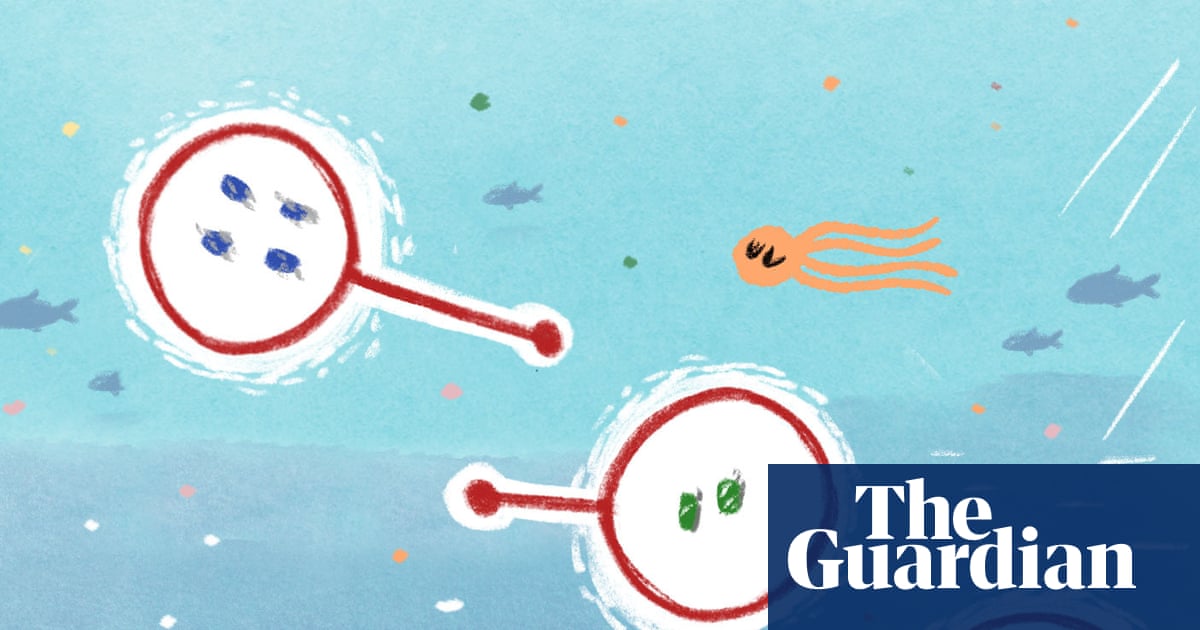
In a world where plastic pollution has become an invisible yet pervasive threat, a new satirical cartoon by British illustrator Stephen Collins has captured the imagination of environmentalists and scientists alike. The artwork, titled Where Microplastics Are Going on Holiday This Year, playfully yet powerfully visualizes the global journey of microplastics—those tiny, often unseen fragments of plastic that now contaminate every corner of the planet, from mountaintops to the deepest ocean trenches. While the cartoon itself is a work of fiction, the underlying science it highlights is very real, and alarmingly urgent.
The image, which has circulated widely on social media and environmental platforms, depicts microplastics “traveling” from landfills and industrial sites to remote destinations like the Arctic, the lungs of city dwellers, and even the food we eat. Collins’s work serves as a metaphor for the relentless spread of microplastics, which recent research confirms are now found in 94.5% of tap water samples tested globally, according to a 2025 study published in Environmental Science & Technology. The cartoon’s timing is particularly apt, as scientists warn that microplastics are not just an environmental issue but a climate change accelerator, absorbing sunlight and altering cloud formation—effects only beginning to be quantified.
Yet beyond the humor lies a stark reality: microplastics are not just a stationary problem. They are mobile pollutants, carried by wind, water, and even human activity across continents. A study published in Nature in May 2026 revealed that the Great Pacific Garbage Patch—a swirling mass of plastic debris larger than twice the size of Texas—is a major source of airborne microplastics and nanoplastics. These particles, once airborne, can travel thousands of kilometers, depositing in pristine environments and entering the food chain. The same research found that microplastics contribute to global heating by altering atmospheric chemistry, a link previously overlooked in climate models.
From Landfills to the Stratosphere: The Real Journey of Microplastics
While Collins’s cartoon exaggerates for effect, the science of microplastic mobility is well-documented. Research from the National Oceanic and Atmospheric Administration (NOAA) and the European Chemicals Agency (ECHA) confirms that microplastics originate from a variety of sources, including:

- Synthetic textiles: Washing clothes made from polyester, acrylic, and nylon releases an estimated 700,000 tons of microfibers into wastewater annually, per a 2024 report by the European Chemicals Agency.
- Cosmetics and personal care products: Exfoliants and microbeads in scrubs and toothpastes contribute to aquatic pollution, though many countries have banned these ingredients.
- Plastic degradation: Larger plastic items break down into microplastics over time, accelerated by UV exposure and mechanical stress (e.g., waves crashing against debris).
- Industrial emissions: Factories and tire wear release microplastics into the air, where they can be inhaled or deposited in soil.
The most concerning aspect of microplastics is their ubiquity. A 2025 study in Science Advances detected microplastics in 83% of human blood samples tested, suggesting systemic exposure. While the health impacts are still under investigation, preliminary research links microplastics to inflammation, oxidative stress, and potential endocrine disruption. The World Health Organization (WHO) has classified microplastics as a “priority emerging contaminant”, urging further study into their biological effects.
Why the Cartoon Resonates: Satire as a Wake-Up Call
Collins’s work taps into a growing frustration with how microplastics have been treated as a “someone else’s problem”. The cartoon’s playful yet urgent tone mirrors the global shift in public perception toward plastic pollution. In 2025, the United Nations Environment Programme (UNEP) reported a 40% increase in public concern over microplastics compared to 2020, driven by high-profile documentaries like The Plastic Problem and viral social media campaigns.
One reason the cartoon has gone viral is its ability to demystify a complex issue. Microplastics are often discussed in technical terms—particles per liter, polymer types, or atmospheric transport models—but Collins’s illustration makes their journey tangible. For example:
- Arctic snow: Studies confirm microplastics have been found in Arctic ice cores, carried by ocean currents and wind from lower latitudes.
- Human lungs: Research published in The Lancet Planetary Health in 2025 detected microplastics in lung tissue samples, suggesting inhalation is a significant exposure route.
- Deep-sea trenches: The Marine Plastics Initiative has documented microplastics in the Mariana Trench, the deepest part of the ocean.
The cartoon also highlights a geopolitical dimension to microplastic pollution. Developing nations often lack the infrastructure to manage plastic waste, leading to higher local concentrations. A 2026 report by the OECD found that 90% of plastic waste ends up in landfills or the environment in low- and middle-income countries, despite producing only 30% of global plastic waste. This disparity underscores the need for international cooperation on plastic pollution treaties, currently under negotiation at the UN Environment Assembly.
What Happens Next: Policy, Science, and Public Action
The next critical checkpoint for microplastic regulation is the UN Global Plastics Treaty, set for final negotiations in November 2026. The treaty aims to establish legally binding measures to reduce plastic pollution, including microplastics. Key proposals under discussion include:

- Microplastic emission standards for industries like textiles and tires.
- Global tracking systems to monitor microplastic sources and pathways.
- Public awareness campaigns to reduce single-use plastics and synthetic clothing consumption.
Scientifically, researchers are racing to understand the climate feedback loops involving microplastics. A team from Fudan University in Shanghai, led by atmospheric scientist Hongbo Fu, has found that microplastics can “seed” cloud formation, potentially altering rainfall patterns. Their 2026 Nature study suggests that if current trends continue, microplastics could contribute 0.005°C to global warming by 2050—a small but significant factor in climate models.
On the public front, individuals can take steps to reduce microplastic exposure, such as:
- Choosing natural fiber clothing over synthetic fabrics.
- Using reusable water filters certified to remove microplastics.
- Supporting plastic-free packaging initiatives in local communities.
Key Takeaways: What You Need to Know
- Microplastics are everywhere: Found in air, water, soil, and even human blood, they are the most widespread form of plastic pollution.
- They affect climate: New research links microplastics to altered cloud formation and global heating.
- Satire can drive action: Collins’s cartoon reflects growing public awareness and frustration with inaction on plastic pollution.
- Policy is coming: The UN Plastics Treaty could set global standards for microplastic reduction by late 2026.
- Individual actions matter: Simple changes in consumption can reduce microplastic exposure and environmental impact.
The next major development to watch is the release of the UN Plastics Treaty draft in September 2026, followed by the final negotiations in November. Environmental groups are pushing for mandatory microplastic reporting from corporations, while scientists urge accelerated research into health and climate impacts. For now, Collins’s cartoon serves as both a warning and a call to action—reminding us that even the smallest particles of plastic have the power to reshape our planet.
What steps have you taken to reduce microplastic exposure? Share your experiences and suggestions in the comments below—or help spread awareness by sharing this article. Together, we can turn the tide on this invisible crisis.