
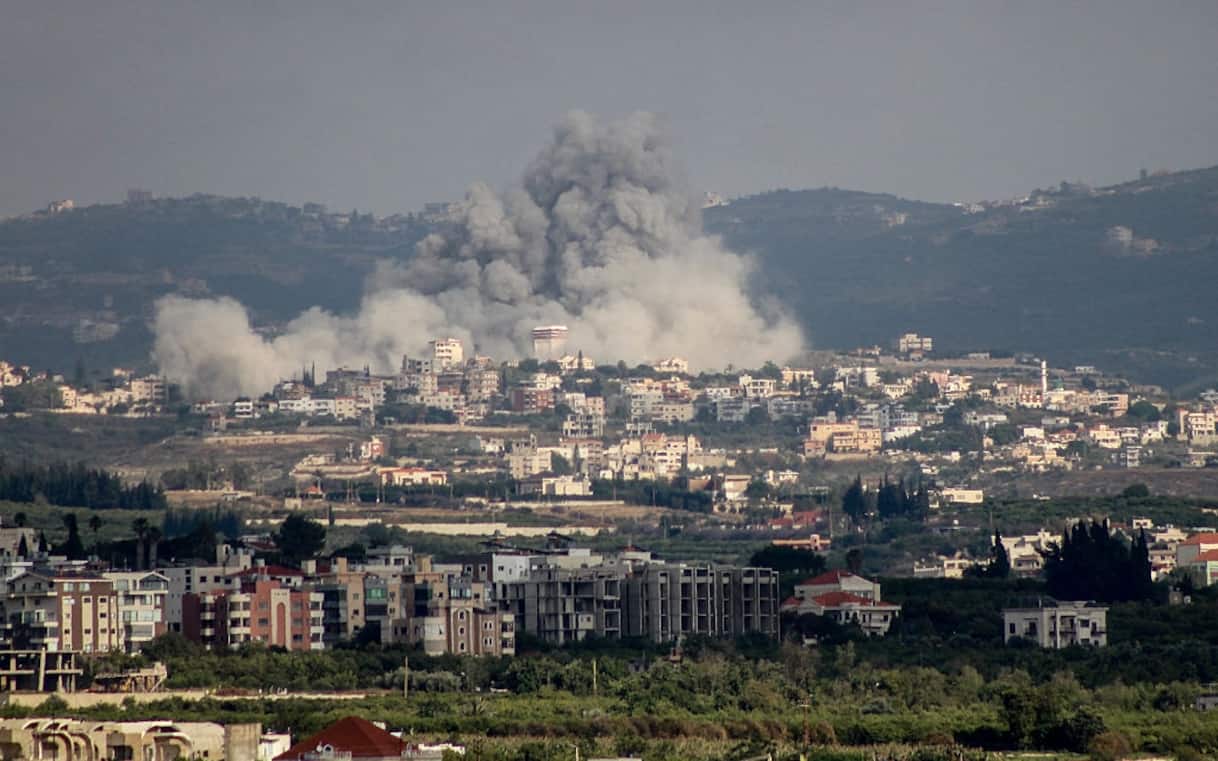
Sofia, Bulgaria — May 26, 2026 — The Israel Defense Forces (IDF) has escalated its military operations in southern Lebanon, deploying ground troops in a “limited and targeted” operation against Hezbollah’s terrorist infrastructure, according to official statements released March 16, 2026. The move follows weeks of heightened tensions along the Israel-Lebanon border, where cross-border attacks have left Israeli civilians in the Galilee and northern regions under threat. Defense Minister Israel Katz confirmed the operation, stating that its primary objective is to “eliminate threats and protect the residents of northern Israel.”
Visual evidence shared by the IDF shows soldiers engaging in combat operations near the Lebanese border, including the discovery of weaponry and ammunition caches. The operation marks a significant expansion of Israel’s military presence in Lebanon, raising concerns about regional stability as Hezbollah, backed by Iran, remains a dominant force in the area. While the IDF has framed the strikes as defensive and proportionate, Lebanese officials and regional observers warn of potential spillover effects, including civilian casualties and broader conflict.
The latest developments come amid a broader regional escalation, with Israel previously conducting airstrikes in Syria and Iran in recent weeks. The IDF’s operations in Lebanon are part of a wider strategy to counter what it describes as “terrorist threats” from multiple fronts, including Hamas in Gaza and Hezbollah along the northern border. However, the lack of a formal declaration of war and the limited scope of the current operation suggest Israel is seeking to avoid a full-scale confrontation—at least for now.
Below: IDF footage of ground operations in southern Lebanon, released March 16, 2026.
Source: IDF official statement, March 16, 2026
Why Is Israel Targeting Hezbollah in Lebanon?
Israel’s operation is directly tied to Hezbollah’s repeated cross-border attacks since October 2023, which have killed Israeli soldiers and civilians. The IDF cites Hezbollah’s stockpiling of rockets and missiles in southern Lebanon as a direct threat to northern Israel, particularly the Galilee region. In a statement, Defense Minister Katz emphasized that the operation is “not an invasion” but a “precise, surgical strike” aimed at dismantling Hezbollah’s military capabilities near the border.
Hezbollah, designated a terrorist organization by Israel, the United States, and several other nations, has denied responsibility for recent attacks but has not ruled out further retaliation. The group’s leader, Hassan Nasrallah, has previously vowed to respond to Israeli actions, though no direct response has yet materialized following the latest ground incursion.
How Has the IDF Justified the Ground Operation?
The IDF has framed its actions as a necessary measure to “protect Israeli civilians” from Hezbollah’s rocket and missile threats. In a public statement, the military highlighted the discovery of weaponry during the operation, including a bag containing arms—evidence it claims demonstrates Hezbollah’s ongoing preparations for further attacks.
Israel’s Chief of the General Staff, Eyal Zamir, has stated that the operation is being conducted with “maximum restraint” to avoid escalation. However, analysts warn that any ground incursion into Lebanese territory risks triggering a broader conflict, especially given Hezbollah’s deep ties to Iran and its history of large-scale retaliation during past clashes, such as the 2006 Lebanon War.
What Are the Risks of Escalation?
The current operation carries significant risks for regional stability. Lebanon’s fragile political landscape, combined with Hezbollah’s influence over the government, means any Israeli military action could lead to unintended consequences, including:

- Civilian casualties: Southern Lebanon is densely populated, and past Israeli strikes have resulted in non-combatant deaths, fueling international condemnation.
- Hezbollah retaliation: The group has a history of responding to Israeli operations with large-scale rocket barrages, potentially drawing Lebanon into a wider conflict.
- Iranian involvement: As Hezbollah’s primary backer, Iran could escalate support, including through proxy forces in Syria or direct military assistance.
- International pressure: The United Nations and Western powers may condemn the operation, though Israel’s right to self-defense under international law remains a key argument in its justification.
So far, there are no confirmed reports of Lebanese military involvement beyond Hezbollah’s forces. The Lebanese government, led by Prime Minister Najib Mikati, has called for restraint but has not directly addressed the IDF’s presence. The situation remains fluid, with no clear de-escalation pathway in sight.
Historical Context: Israel and Hezbollah’s Long-Standing Conflict
The current tensions are part of a decades-long conflict between Israel and Hezbollah, which began in the 1980s during Israel’s occupation of southern Lebanon. Key flashpoints include:
- 2006 Lebanon War: A 34-day conflict triggered by Hezbollah’s cross-border raid, resulting in thousands of casualties and widespread destruction.
- 2008–2000 “Dahiya Doctrine”: Israel’s strategy of disproportionate force to deter Hezbollah, named after a southern Beirut neighborhood targeted in 2006.
- Recent clashes (2023–2026): Since October 2023, Hezbollah has fired hundreds of rockets into northern Israel, leading to Israeli airstrikes in Lebanon and Syria.
Unlike past conflicts, the current operation appears to be more limited in scope, focusing on border areas rather than a full-scale invasion. However, the deployment of ground troops—rare in recent years—signals a shift in Israel’s approach to deterrence.
What Happens Next?
The immediate focus is on whether Hezbollah will respond militarily. If it does, the conflict could rapidly expand, drawing in other regional actors. Meanwhile, international mediators, including the United States and the United Nations, are likely to urge de-escalation. For now, the IDF has not announced a withdrawal timeline, suggesting the operation may continue until its stated objectives are met.
Residents of northern Israel remain under rocket alert, with sirens sounding intermittently as Hezbollah continues to fire projectiles. The Israeli government has urged civilians to remain in protected areas and follow emergency protocols.
Key Takeaways
- The IDF’s ground operation in southern Lebanon is “limited and targeted,” focusing on Hezbollah’s military infrastructure near the border.
- Defense Minister Israel Katz states the goal is to “eliminate threats” to northern Israel, not to occupy Lebanese territory.
- Hezbollah has not yet responded directly, but past history suggests retaliation is possible, risking broader conflict.
- Lebanon’s government has called for restraint, but Hezbollah’s influence complicates any diplomatic solution.
- The operation is part of Israel’s wider strategy to counter threats from Hamas, Hezbollah, and Iranian-backed proxies.
Next Steps to Watch
The situation will depend on several critical developments:

- Hezbollah’s response: Will the group launch a large-scale retaliation, or will it seek diplomatic channels?
- IDF’s objectives: Has the operation achieved its stated goals, or will it expand?
- International pressure: Will the UN Security Council or U.S. Intervene to de-escalate?
- Civilian impact: Are there reports of Lebanese or Israeli casualties that could shift public opinion?
For real-time updates, monitor:
What we have is a developing story. We welcome your insights and questions in the comments below. Share this report to ensure others stay informed.