Escalating Tensions in the Middle East Pose Growing Threat to Global Economy
The ongoing conflict involving the United States, Israel, and Iran is rapidly evolving, raising concerns about a wider regional war and its potential repercussions for the global economy. While the roots of the conflict are deeply embedded in longstanding disputes, particularly surrounding Iran’s nuclear program, a complex web of geopolitical, energy-related, and strategic interests is fueling the escalation and threatening prolonged instability. The situation demands careful monitoring as the economic fallout could be substantial and far-reaching, impacting everything from energy prices to global trade routes.
Recent days have seen a marked increase in hostilities, with the United States and Israel initiating attacks against Iranian targets. These actions have triggered retaliatory strikes from Iran, extending the conflict’s reach and heightening anxieties across the region. The potential for miscalculation and further escalation remains high, prompting international calls for de-escalation and diplomatic solutions. The conflict is not occurring in a vacuum; it’s interwoven with existing regional tensions and proxy conflicts, adding layers of complexity to an already volatile situation.
The current crisis stems, in part, from the 2015 Joint Comprehensive Plan of Action (JCPOA), commonly known as the Iran nuclear deal. Under the Obama administration, this agreement limited Iran’s uranium enrichment capabilities in exchange for sanctions relief. The deal, signed by Iran, the United States, China, France, Germany, Russia, and the United Kingdom, aimed to prevent Iran from developing nuclear weapons. Yet, in 2017, the Trump administration unilaterally withdrew the United States from the JCPOA, citing concerns that the agreement was too lenient and did not adequately address Iran’s ballistic missile program or its regional activities. Analysts are increasingly discussing the possibility of a third world war as a result of the escalating tensions.
The Geopolitical Landscape and Regional Alliances
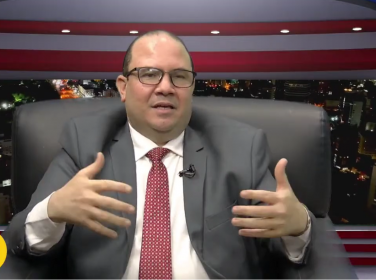
The withdrawal from the JCPOA and the reimposition of sanctions on Iran significantly altered the geopolitical landscape. Israel and Saudi Arabia, both staunch critics of the nuclear deal, reportedly pressured the Trump administration to abandon the agreement, believing it failed to sufficiently constrain Iran’s growing influence. These nations viewed Iran as a destabilizing force in the region, supporting proxy groups and pursuing policies that threatened their security interests. As political scientist Juan González explained, Israel and Saudi Arabia perceived Iran as accumulating resources through oil exports, which were then used to fund strategic allies in the region. González highlighted this dynamic in a recent interview.
These allies include the Syrian government led by Bashar al-Assad, as well as organizations such as Hezbollah in Lebanon, the Houthis in Yemen, and Hamas in Palestine. Iran’s support for these groups has been a source of contention with the United States and its allies, who accuse Iran of fueling regional conflicts and undermining stability. The complex network of alliances and rivalries in the Middle East makes it tough to isolate the conflict and increases the risk of wider escalation. The involvement of multiple actors, each with their own interests and agendas, further complicates efforts to find a peaceful resolution.
Economic Implications: Energy Markets and Global Trade
The escalating conflict is already having a tangible impact on global markets, particularly in the energy sector. The Middle East is a critical region for oil and gas production, and disruptions to supply could lead to significant price increases. Concerns about potential disruptions to shipping lanes, such as the Strait of Hormuz – a vital chokepoint for oil tankers – are also contributing to market volatility. CNN Español reports that the conflict has already led to increased oil prices and concerns about the global economy.
Beyond energy, the conflict could disrupt global trade routes, impacting supply chains and increasing transportation costs. The region is a key transit hub for goods moving between Asia, Europe, and Africa. Any disruption to these routes could have significant consequences for businesses and consumers worldwide. The potential for a prolonged conflict raises the specter of a broader economic slowdown, as businesses postpone investment decisions and consumers reduce spending. The International Monetary Fund (IMF) and the World Bank are closely monitoring the situation and assessing the potential economic impact.
Juan González, the political scientist, warned that the conflict could seriously affect the global economy, pointing to the complex interplay of geopolitical, energy, and strategic interests that could prolong the war. This assessment aligns with concerns expressed by other economists and analysts, who emphasize the interconnectedness of the global economy and the potential for contagion effects. The conflict’s impact will likely be felt unevenly across different regions and sectors, with some countries and industries being more vulnerable than others.
Recent Developments and Military Actions
As of March 5, 2026, the conflict continues to escalate. The United States and Israel have conducted further airstrikes against targets in Iran and Syria, while Iran and its proxies have responded with missile and drone attacks. Reports indicate at least 20 people have been killed, including six U.S. Military personnel, in the region and in Israel. U.S. President Donald Trump has stated he believes the conflict will last “four weeks,” though military officials caution that further casualties are expected and that this is not a one-time operation. Three U.S. Military aircraft reportedly crashed in Kuwait due to an apparent friendly fire incident, with all crew members safely ejecting.
The situation remains fluid and unpredictable. Diplomatic efforts to de-escalate the conflict are ongoing, but have yet to yield significant results. The United States, Israel, and Iran have all signaled their willingness to continue military operations if necessary, raising the risk of a further escalation. The involvement of other regional actors, such as Saudi Arabia and Turkey, could further complicate the situation. The international community is urging all parties to exercise restraint and engage in constructive dialogue to find a peaceful resolution.
Looking Ahead: Potential Scenarios and Economic Outlook
The future trajectory of the conflict remains uncertain. Several scenarios are possible, ranging from a limited escalation to a full-scale regional war. A limited escalation could involve continued airstrikes and proxy conflicts, with a contained impact on the global economy. However, a full-scale regional war could have catastrophic consequences, leading to widespread destruction, mass displacement, and a significant disruption to global energy supplies and trade routes. The economic impact of such a scenario would be severe, potentially triggering a global recession.
The economic outlook is highly dependent on the duration and intensity of the conflict. If the conflict can be contained and resolved quickly, the economic impact is likely to be limited. However, if the conflict drags on, the economic consequences could be far-reaching and long-lasting. Businesses and investors are closely monitoring the situation and adjusting their strategies accordingly. The demand for diversification and risk management is paramount in the current environment. The coming weeks will be critical in determining the course of the conflict and its ultimate impact on the global economy.
The next key development to watch will be the outcome of ongoing diplomatic efforts, particularly any potential negotiations between the United States, Iran, and other regional powers. Continued monitoring of oil prices and global trade flows will also be crucial in assessing the economic impact of the conflict. Stay informed and engaged as this situation unfolds.
Worth a look
- EU AI Act: New Regulations, Strict Penalties, and Mandatory Labeling Start August 2nd
- Company Educational Programs: Empowering Schools and Teachers
- US Warns Citizens to Leave Middle East Amid Potential Iran Escalation (newsdirectory3.com)
- Amateur Astronomer Discovers 390-Million-Year-Old Impact Crater in Quebec (archyworldys.com)