
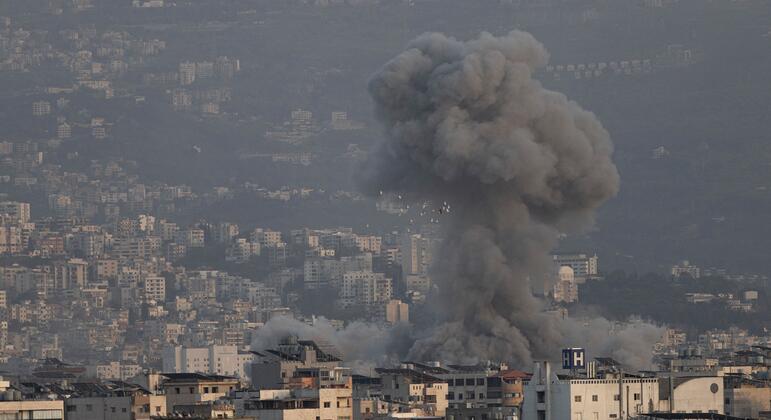
The Middle East remains in a state of extreme volatility as a newly announced ceasefire between the United States and Iran is overshadowed by a wave of devastating military strikes across Lebanon. Whereas the diplomatic community had hoped the truce would signal a broader de-escalation, the reality on the ground in Lebanon suggests a starkly different trajectory, with massive airstrikes resulting in heavy civilian casualties and widespread infrastructure damage.
The United Nations has issued strong condemnations of the violence in Lebanon, warning that the humanitarian needs in the region are deepening rapidly. This surge in hostilities comes at a critical juncture, occurring just as the international community began to process a fragile glimmer of hope provided by the US-Iran agreement. The disconnect between the diplomatic progress in one theater and the escalation in another underscores the precarious nature of peace in the region.
For global markets and economic policy observers, this instability introduces significant risk. The volatility in the Levant, coupled with the fragile status of the US-Iran truce, continues to threaten regional stability and the security of critical infrastructure. As the UN Secretary-General welcomes the ceasefire as a step toward peace, the reports of mass casualties in Lebanon serve as a grim reminder of how quickly diplomatic gains can be undermined by active combat.
The US-Iran Ceasefire: A Fragile Step Toward Peace
After nearly 40 days of intense hostilities characterized by rising civilian casualties and damage to critical infrastructure, a two-week ceasefire between the United States and Iran has been announced. The UN Secretary-General welcomed the move, describing it as a potential stepping stone toward a broader and more sustainable peace agreement.

The ceasefire is intended to provide a window for diplomatic efforts to intensify and for the immediate cessation of direct hostilities between the two powers. Although, the brevity of the agreement—spanning only fourteen days—reflects the deep mistrust and the highly volatile environment in which these negotiations are taking place. While the truce offers a reprieve from direct US-Iran conflict, it has not yet translated into a region-wide cessation of violence.
Devastating Escalation in Lebanon
Hours after the US-Iran truce was announced, Israeli forces launched what the Israeli military described as its largest coordinated assault on Lebanon since the start of a new military operation on March 2. The bombardment targeted more than 100 Hezbollah command centres and military sites, according to military statements.
The human cost of these strikes has been severe. Lebanon’s Ministry of Health reported that at least 203 people were killed and 1,000 others wounded in airstrikes that hit multiple regions, including Beirut, the Bekaa Valley, Mount Lebanon, Sidon, and various villages in southern Lebanon. These figures were echoed and expanded upon by the country’s Civil Defence, which placed the death toll at over 250 people on Wednesday.
The scale of the destruction has pushed Lebanon’s healthcare system to a breaking point. Elias Chlela, the head of Lebanon’s syndicate of doctors, issued an urgent appeal for physicians of all specialties to report to hospitals to provide emergency aid. In Beirut, one of the city’s largest hospitals reported a critical need for donations of all blood types to treat the influx of wounded civilians.
Diplomatic Friction Over the Scope of the Truce
A significant point of contention has emerged regarding whether the US-Iran ceasefire was intended to extend to Lebanon. The conflicting narratives between key political actors and mediators highlight a dangerous lack of consensus on the terms of the agreement.
- Israeli and US Positions: Israeli Prime Minister Benjamin Netanyahu stated that Lebanon was not part of the US-Iran truce. This position was supported by US President Donald Trump, who described Lebanon as “separate” and not included in the agreement.
- Mediator Position: In contrast, Pakistan, acting as a mediator, stated that the ceasefire did include Lebanon.
- UN Perspective: The UN has condemned the massive strikes in Lebanon, expressing growing concerns over the fragility of the ceasefire and the deepening humanitarian crisis.
This discrepancy in interpretation suggests that while a ceasefire may exist on paper between the US and Iran, the lack of a unified understanding regarding regional proxies and allied territories allows for continued, high-intensity conflict in Lebanon.
Humanitarian Impact and Regional Volatility
The UN has emphasized that the situation remains highly volatile, with humanitarian needs deepening as airstrikes cause widespread destruction of civilian infrastructure. The combination of mass casualties and the collapse of essential services in targeted areas has drawn strong international condemnation.
From an economic and policy standpoint, the continued violence in Lebanon complicates the “glimmer of hope” offered by the US-Iran truce. The instability threatens not only the immediate safety of millions of civilians but also the potential for any long-term economic recovery in the Levant. The volatility makes it demanding for international organizations to coordinate aid and for diplomatic missions to establish a comprehensive peace framework that encompasses all regional actors.
Key Developments Timeline
| Date | Event | Details |
|---|---|---|
| March 2, 2026 | Military Operation Start | Israel begins a new military operation in Lebanon. |
| April 8, 2026 | US-Iran Ceasefire | A two-week ceasefire is announced after nearly 40 days of hostilities. |
| April 8, 2026 | Lebanon Bombardment | Largest coordinated Israeli assault on Lebanon; 200-250+ killed. |
| April 9, 2026 | UN Condemnation | UN condemns strikes in Lebanon as concerns grow over ceasefire fragility. |
As the two-week window of the US-Iran ceasefire progresses, the international community will be watching closely to observe if the truce can be expanded or if the violence in Lebanon will trigger a wider collapse of diplomatic efforts. The next critical checkpoint will be the expiration of the two-week ceasefire period, at which point the parties must decide whether to renew the truce or return to direct hostilities.
We invite our readers to share their perspectives on the regional stability of the Middle East in the comments below. Please share this report to keep others informed on the evolving humanitarian situation.