First responders and utility crews across the Midwest worked extensively following severe storms that spawned tornadoes, heavy rains, and flash flooding, leaving hundreds of thousands of customers without electricity, according to reports from ABC News and WNDU. The violent weather system, which preliminary data from the National Weather Service’s Storm Prediction Center indicated qualified as a derecho, inflicted widespread structural damage, triggered water rescues, and disrupted regional transportation from the Chicago area into western Pennsylvania.
The severe weather caused multiple fatalities and injuries across several states. According to the Jennings County Sheriff’s Office, a 4-year-old boy was killed in Geneva, Indiana, when a tree fell on a home during the Tuesday storms. In Ohio, Governor Mike DeWine reported that a resident of Roseville died during a health emergency when first responders could not reach the home because of flooded roads. Officials in Portage, Indiana, also began investigating whether the storms contributed to a fatal house explosion.
Additional injuries occurred southwest of Cleveland, where lightning struck a prison complex, injuring 16 incarcerated individuals who were subsequently hospitalized, according to the Ohio Department of Corrections. Governor DeWine stated that four people remained hospitalized, including one with severe injuries. In response to the crisis, DeWine deployed 40 members of the Ohio Army National Guard to assist in two counties east of Columbus, while local agencies from neighboring regions, including West Virginia, mobilized to aid in emergency response.
Tornadoes, Derechos, and Widespread Structural Damage
The National Weather Service confirmed that at least three tornadoes touched down in counties south of the Chicago area, while intense straight-line winds associated with the derecho produced destructive gusts throughout the region. Forecasters recorded a wind gust of 99 mph (159 kph) in Gary, Indiana, with personal weather stations registering multiple readings of 80 mph (128 kph) or higher. The heavy rainfall also shattered long-standing historical benchmarks, such as in Dayton, Ohio, which recorded a daily rainfall total of 2.07 inches (5.25 cm), breaking a record previously set in 1915.
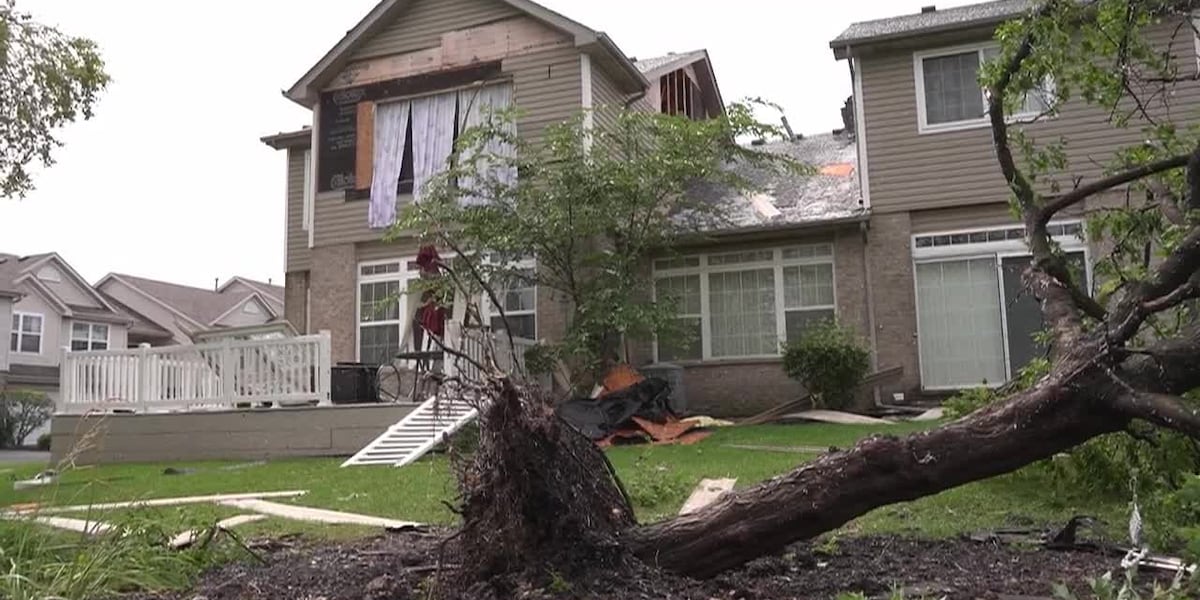
Residents across Illinois and Indiana reported severe property damage. Kerry Hourigan, a homeowner in Tinley Park, Illinois, described total devastation to her property after the storm ripped away her roof. In Chicago suburbs, residents took shelter in basements as tornado warning sirens sounded. Javid Jenkins of Homewood, Illinois, noted the intensity of the storm system, telling reporters that local infrastructure is built for cold and snow rather than severe convective weather events.
Power Outages and Emergency Declarations
Electrical infrastructure sustained heavy damage as utility poles snapped and power lines became entangled in fallen trees. Poweroutage.us data indicated that more than 650,000 to 700,000 customers across Illinois, Indiana, Ohio, Kentucky, and West Virginia were without electricity in the wake of the storms. American Electric Power, based in Columbus, Ohio, reported more than 100 broken utility poles, roughly 650 downed wire spans, and another 85 lines entangled in trees while work crews labored to restore service to tens of thousands of affected accounts.
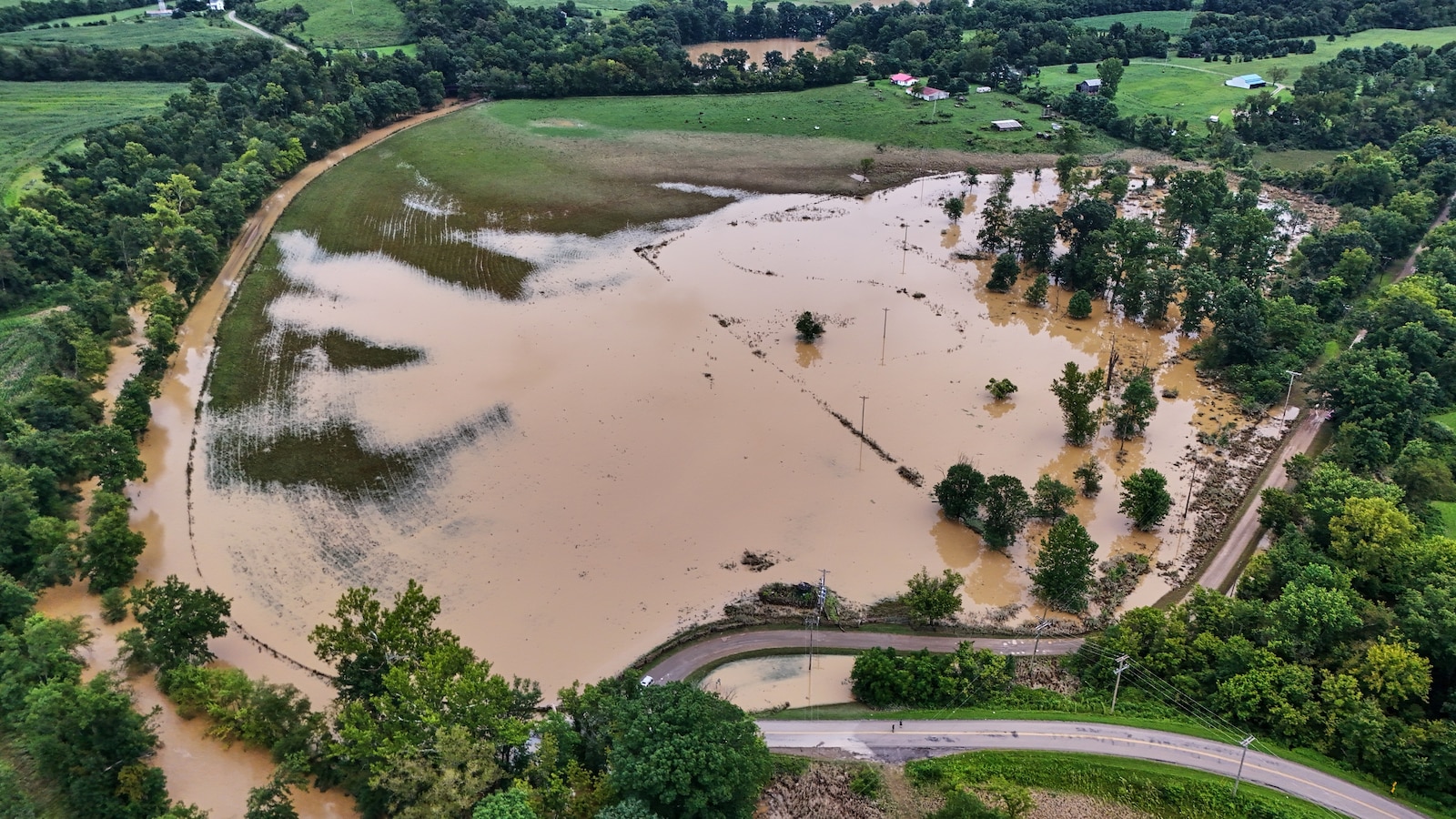
To facilitate cleanup efforts and manage local recovery operations, Columbus Mayor Andrew Ginther declared an emergency for the city. Governor DeWine conducted aerial surveys of the hardest-hit areas by helicopter, describing the extent of the flooding in Perry County and surrounding communities as historic and severe.
Ongoing Flood Warnings and Safety Advisories
Meteorologists warned that threats of severe thunderstorms and heavy rainfall will persist across the Plains, the Midwest, the Ohio Valley, and the central Appalachians over subsequent days. Flood warnings stretched from northern Illinois into eastern Indiana, while flash flood watches covered areas from Indiana through parts of Ohio, Kentucky, West Virginia, Virginia, and Tennessee. Emergency management officials urged residents to monitor local weather alerts and avoid driving through standing water as high waters continued to flow toward major river systems.